The Asphalt Shingle Roof: Not an Upgrade, a Gate Your Sale Must Pass Through
No buyer ever fell in love with a roof. But plenty of buyers, and more importantly their insurance carriers, have walked away from one. That asymmetry is the entire economics of this project.
Prefer to watch? Press play below. My video walkthrough runs under seven minutes, including the same house sold twice, once with the roof question open and once with it answered.
The numbers, with their year stamps
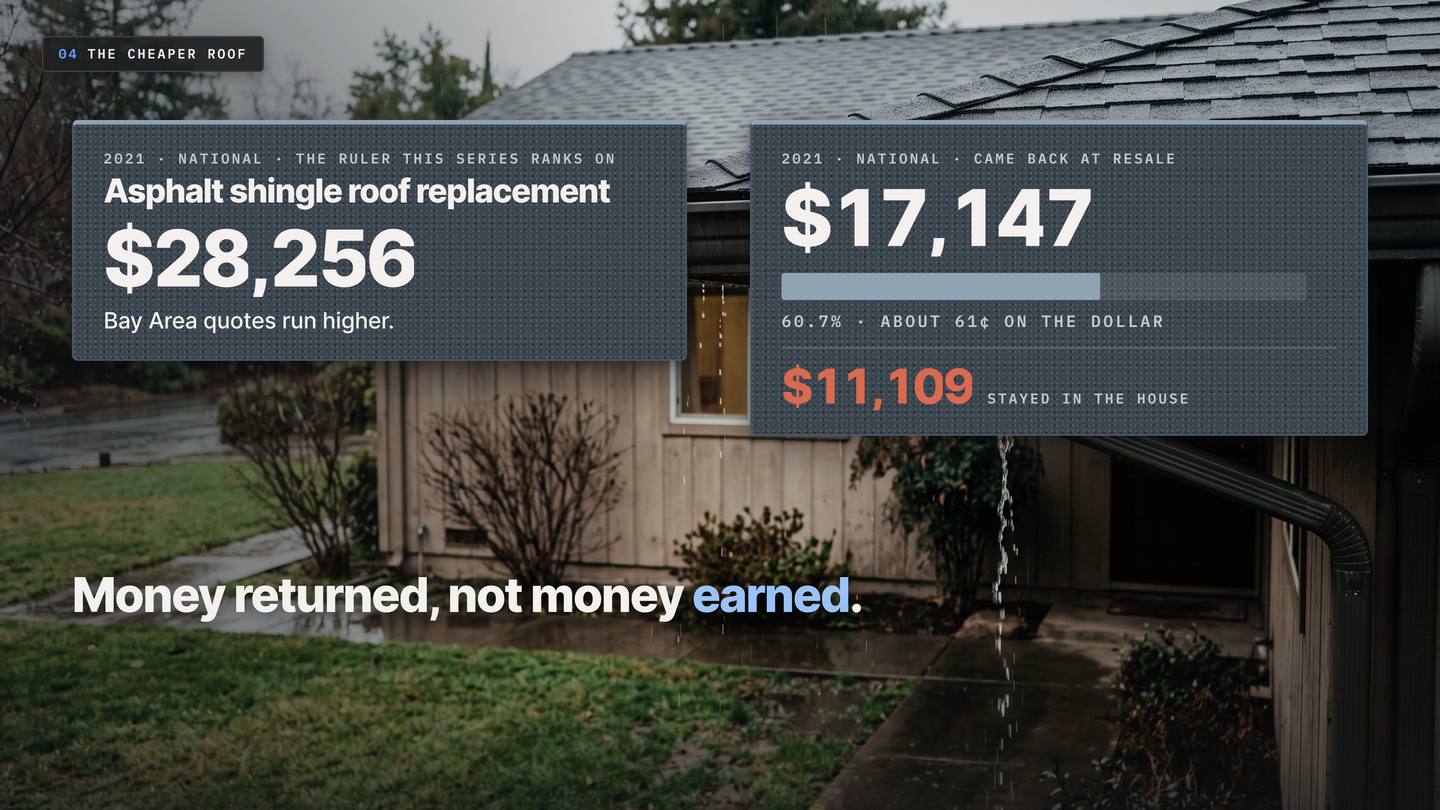
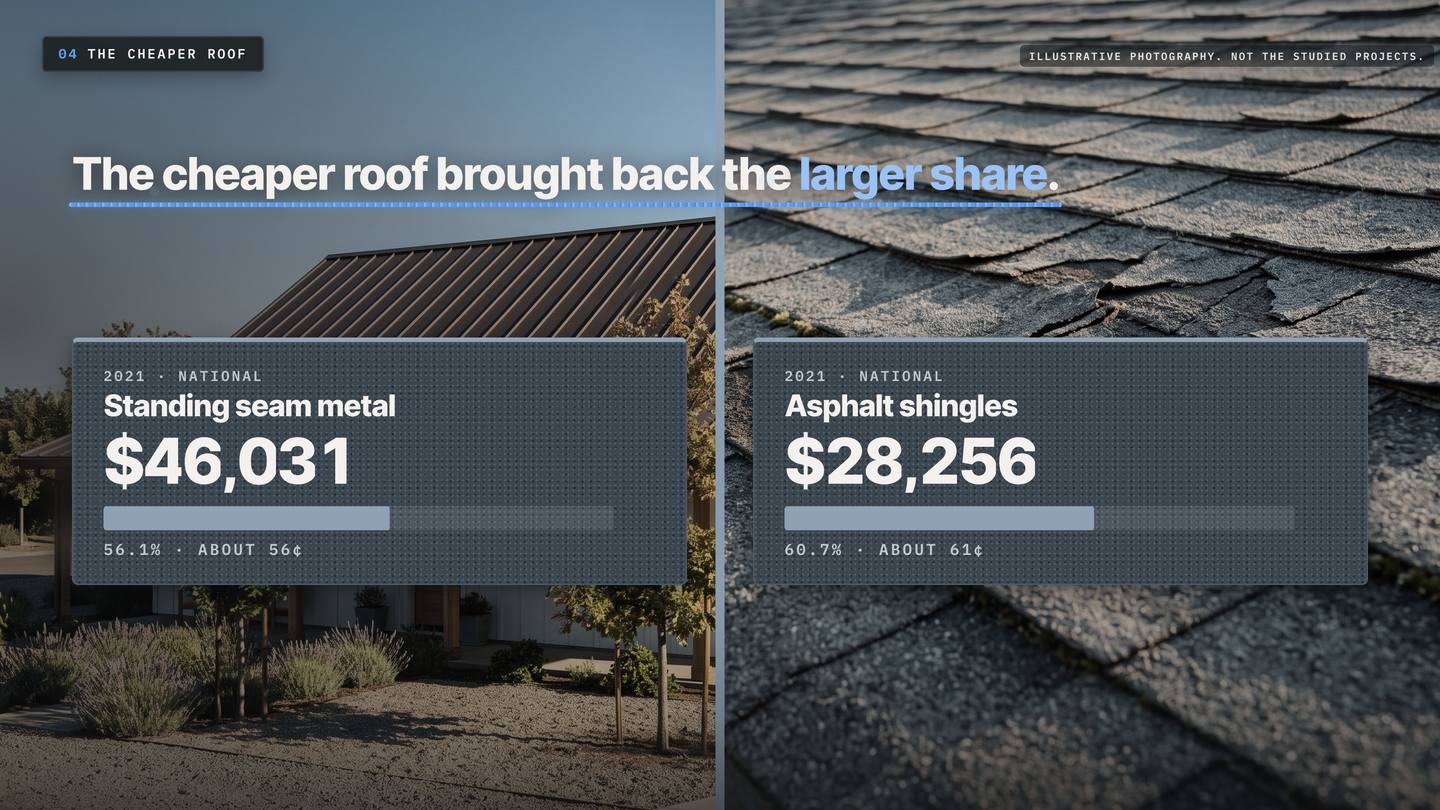
The 2021 national edition the course studied priced asphalt shingle replacement at 28,256 dollars with a 60.7 percent recoup. About 17,147 dollars came back and 11,109 stayed in the house, and Bay Area quotes run higher than that national average.
The 2025 edition uses a different method, and this is its San Francisco metro column, the one that covers Fremont, Newark and Union City: about 38,289 dollars, about 27,747 dollars back, 72.5 percent, twelfth of the twenty projects in this series.
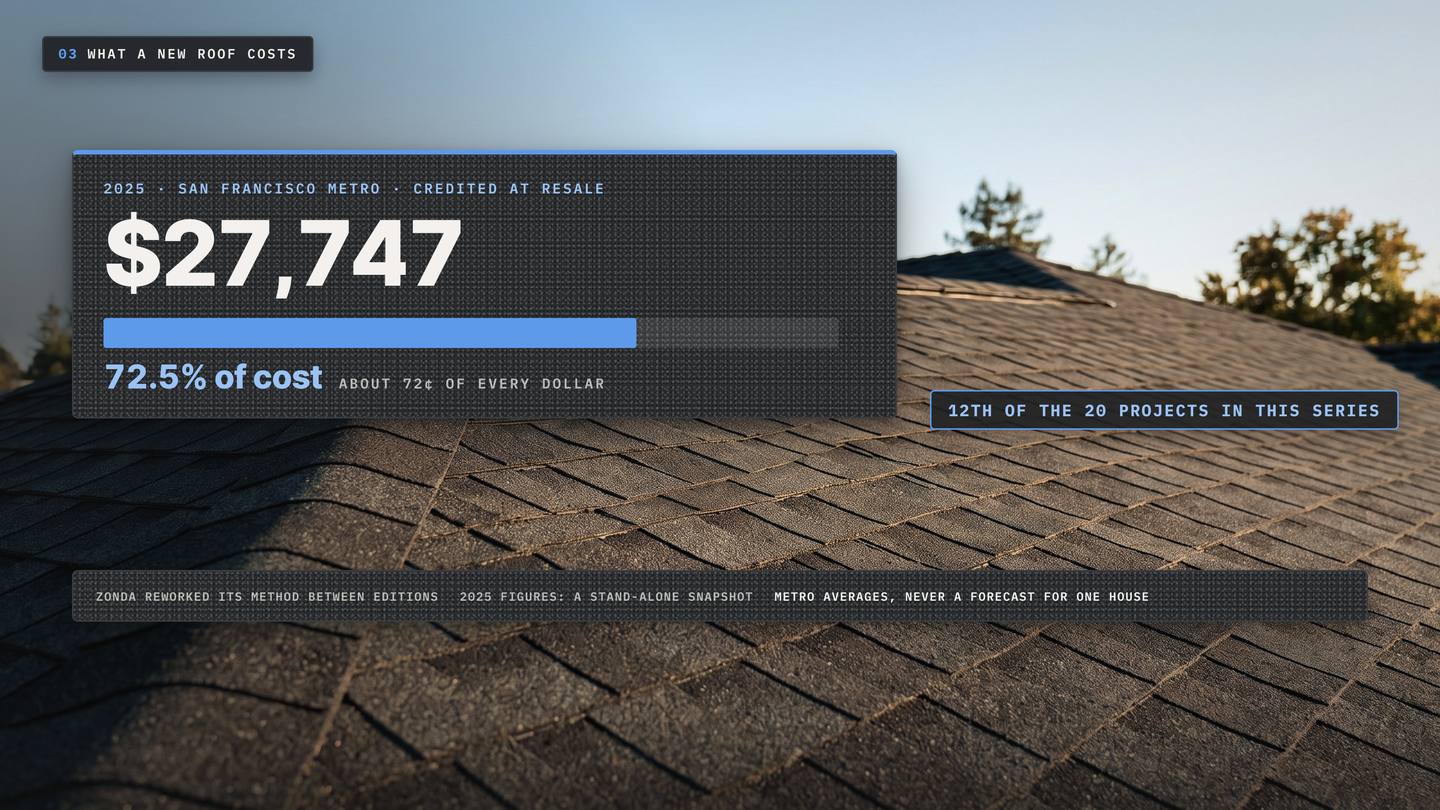
They are two rulers, not one trend line, so do not read the gap between those percentages as roofs getting better. Both are published averages for a studied job, not a promise for your house.
Asphalt shingle roof: the 2025 payback picture
Source: 2025 Cost vs. Value Report, Zonda Media / Remodeling. San Francisco metro, Pacific region and national data as published at jlconline.com. © 2025 Zonda Media, a Delaware corporation. Percentages are averages for professionally installed projects across a whole metro, and the report's methodology changed between editions, so treat every figure as a planning signal with a year stamp, never a promise for any specific house.
Within every edition, roofing sits mid board: most of the money comes back, none of it earns a premium. That is why the course behind this series teaches return of investment, not return on investment.
The cheaper roof also wins the share contest. On the 2021 national ruler, standing seam metal cost 46,031 dollars and came back at about 56 cents on the dollar, against about 61 cents for shingles. On the 2025 metro board, which is its own ruler, metal sits at 47.3 percent against 72.5 percent for shingles.
What the money actually bought
A percentage is only as useful as the job behind it. The 2025 report priced this: strip the old roofing down to bare wood sheathing and haul it away, then install 30 squares, which is 3,000 square feet, of laminated shingles, the kind roofers also call architectural shingles, with new underlayment, a galvanized drip edge and aluminum flashing. It assumes a 5 square hip roof, custom flashing at two skylights and a custom cap at a vented ridge.
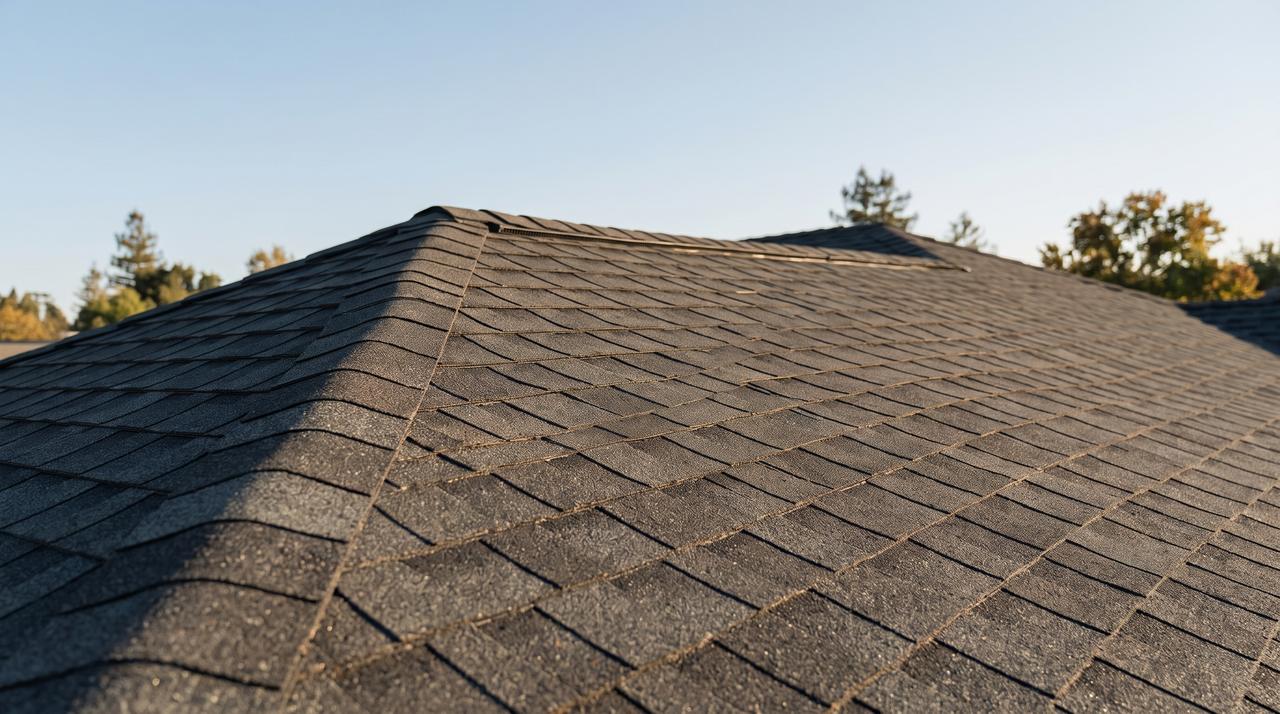
Hold your quote against that list. A smaller roof, a new layer over the old one or a roof with no skylights is a different job, so the report's figure will not map onto it cleanly.
The number that actually runs the show
Roof age has quietly become one of the most consequential facts about a Bay Area house, because insurance underwriting made it so. Here is how that lands in a sale: lenders generally require proof of homeowners insurance, so a buyer with a loan almost always needs it in place to close. Their carrier asks about the roof, and a roof past the comfort line turns your escrow into a scramble of quotes, credits and cold feet.
There is no single cutoff, because each carrier writes its own rules, and those rules change. A May 2026 San Francisco Chronicle review of the underwriting guidelines filed by California's 20 largest home insurers lists roofs past their expected life among the most common restrictions. Some carriers generally will not insure a roof older than 25 years, tile and slate aside. Another can limit an asphalt roof older than 15 years to actual cash value, meaning a payout reduced for depreciation instead of full replacement cost. With shingle roofs, the conversation often starts around twenty years, and an older roof can mean a higher premium, a separate look at the roof or a polite no.
So the pre sale roof question is not does it look bad. It is will it pass underwriting. A roof with documented life left has an answer ready. A roof at the edge needs a strategy before you list, not after the appraisal.
California just made that paperwork matter more. SB 1301, signed September 27, 2026, says that starting January 1, 2028, an insurer cannot refuse to issue or renew a policy solely because of the roof's age if the policyholder pays for an independent inspection confirming at least five years of useful life left. It is not in force yet, and carriers can still weigh the roof's age, but the direction is clear: a report in writing is how you answer the question.
The same house, sold twice
Picture a sale. This is an illustration, not a client.
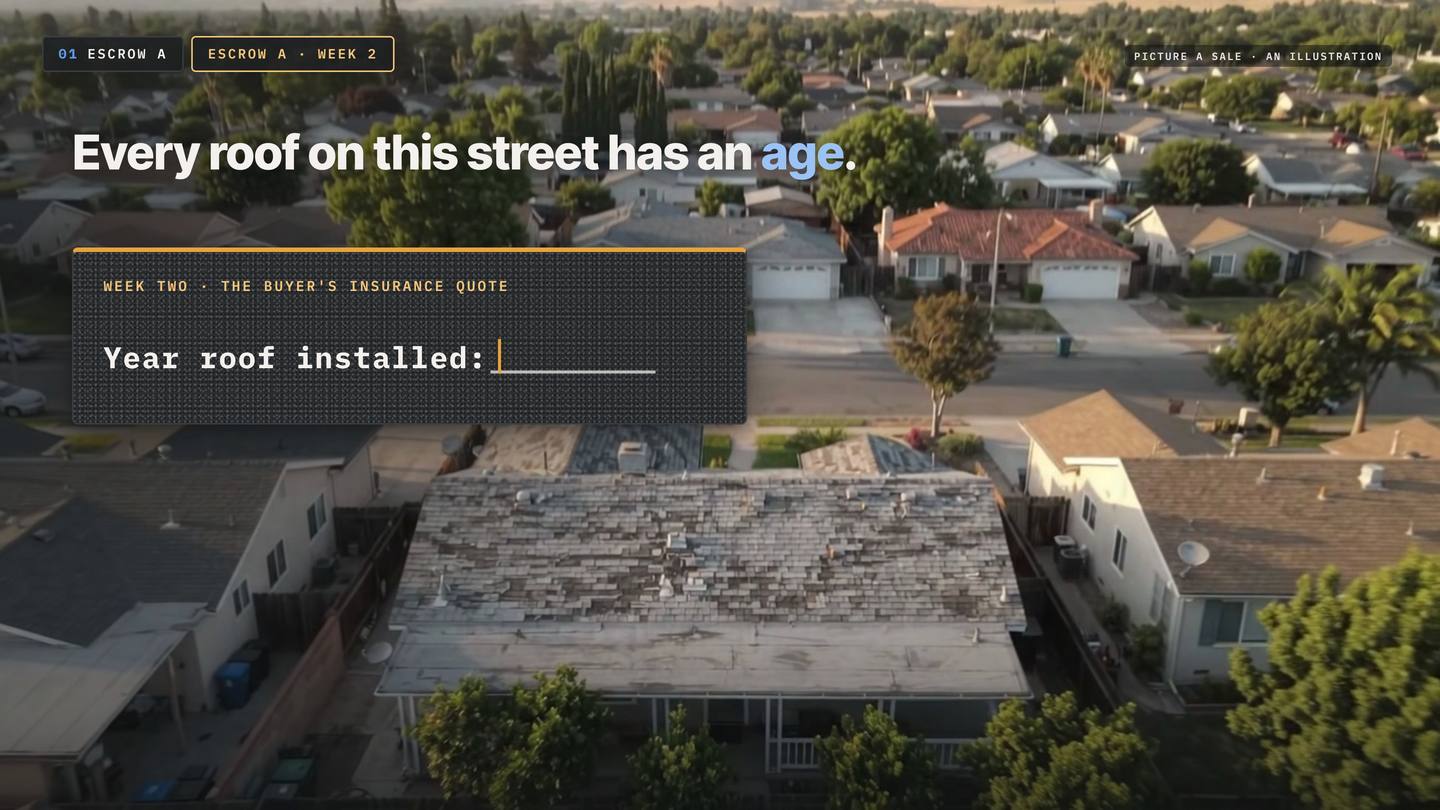
Escrow A: a tidy ranch house, a good offer and a shingle roof with some years on it. In week one, the buyer's inspector climbs up and meets your roof personally. Curled tabs. Bare patches where the granules washed off. Nothing leaks, and it goes in the report anyway.
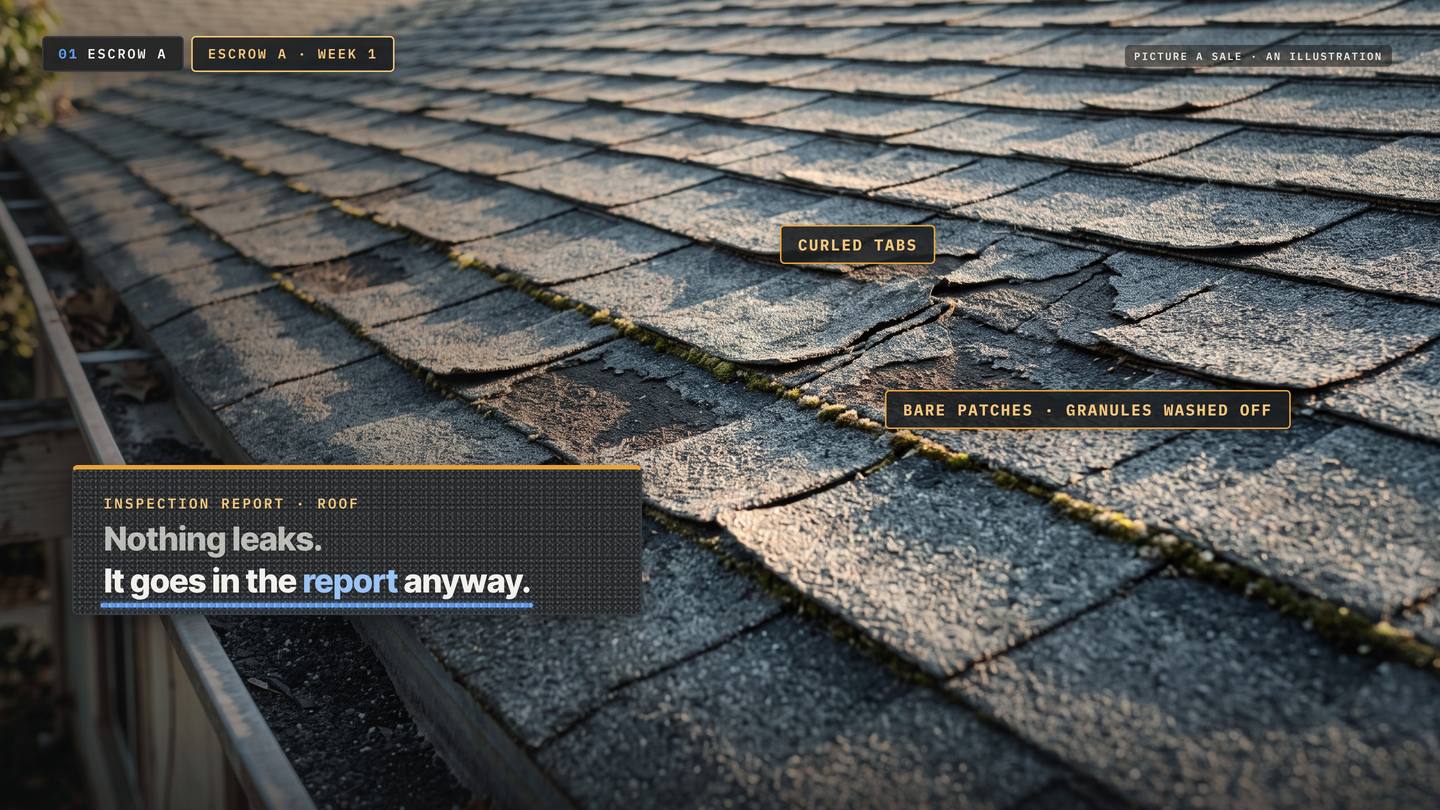
In week two, the buyer's carrier wants the roof's age. If regular carriers say no, the fallback is the California FAIR Plan, the insurer of last resort. It is basic fire coverage. Water damage, theft and liability need a separate difference in conditions policy, which the FAIR Plan does not sell, and the buyer has to confirm with the lender that the coverage works for the loan.
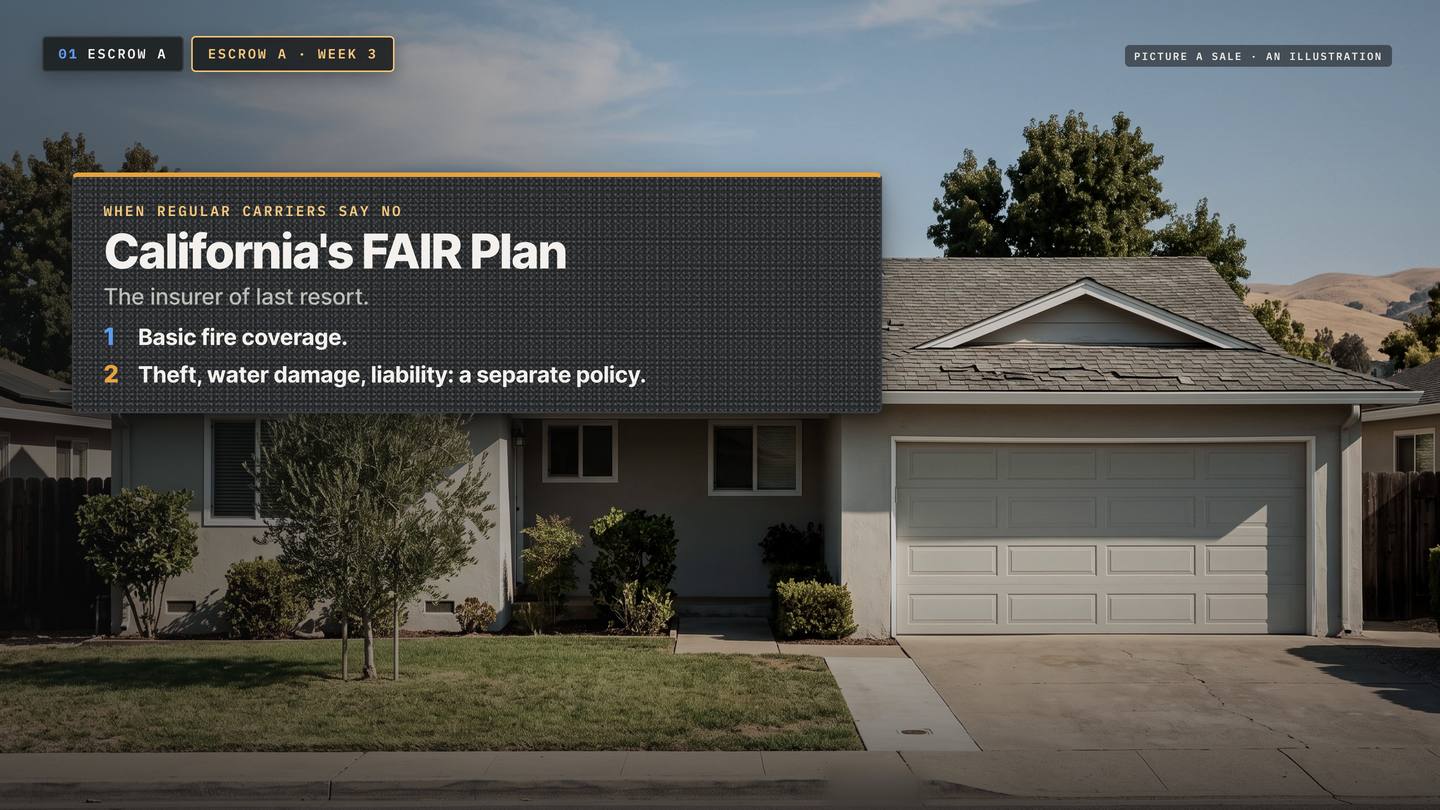
Now the escrow is a scramble. Quotes. Repair credits. Cold feet. The deadline slips, or the buyer does.
Escrow B is the same house with the roof question answered before you list: a roofer's honest assessment, an insurability read from an insurance agent, then a documented repair or a replacement, whichever the facts call for, all of it disclosed up front. The inspector still goes up. The carrier still asks. This time the answer is on paper.
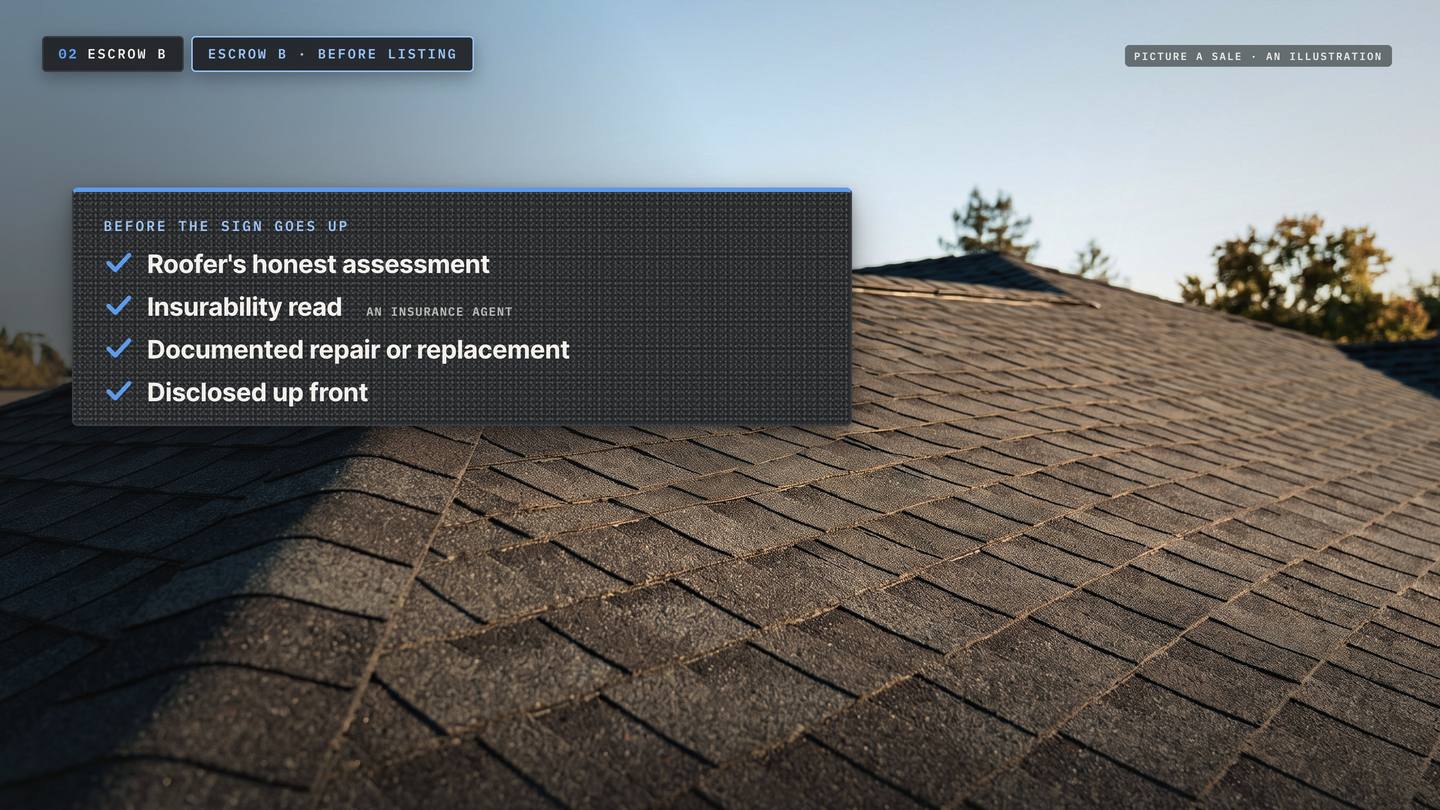
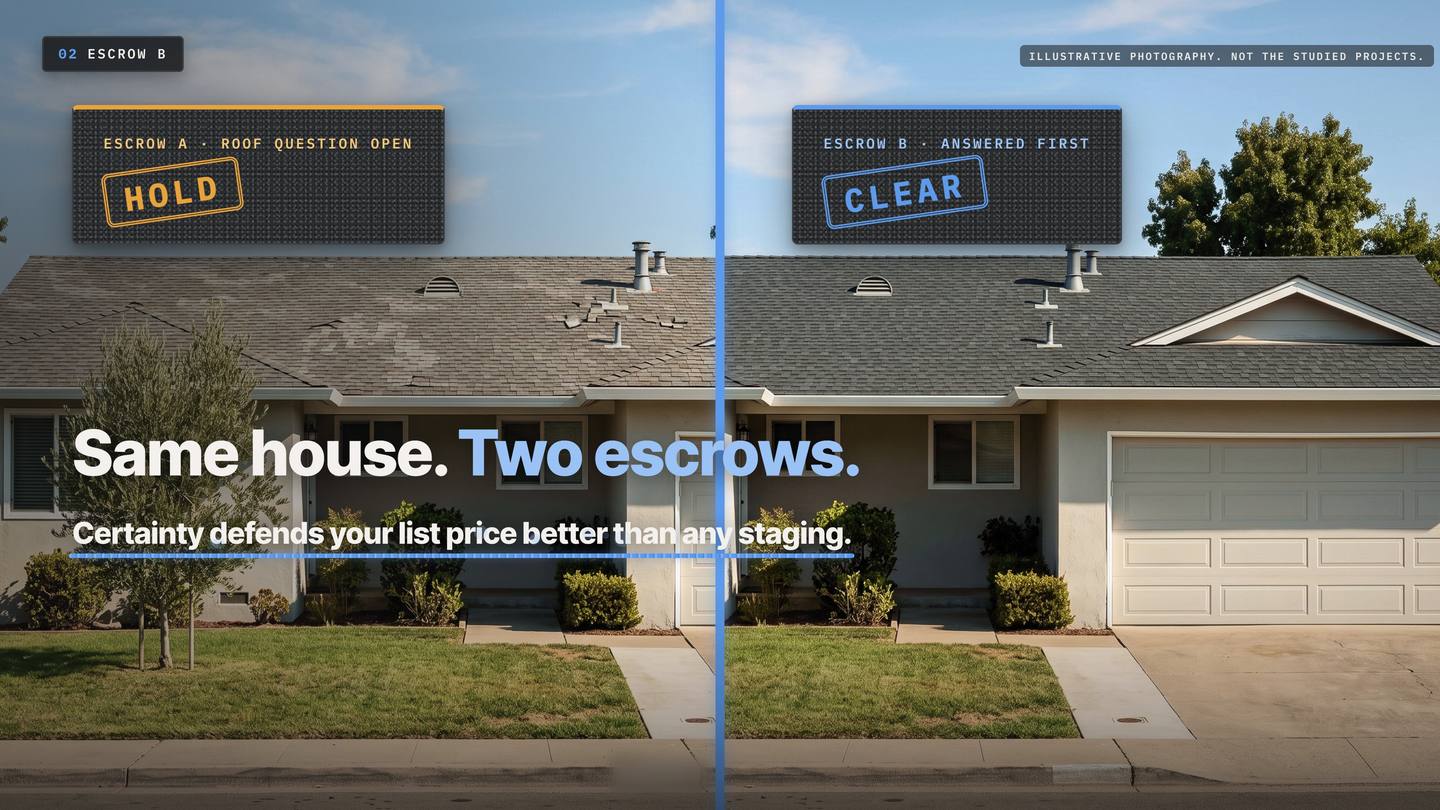
Same house, two escrows. One stalls on a question nobody answered, and the other has the answer in a folder.
The local wrinkles
Four California notes.
First, permits. A full re roof is permitted work, and the exact line moves by city. Fremont lists re roofing among the projects that need a permit, and San Jose requires one when 25 percent or more of the roof is replaced or repaired. Ask your building department, and make sure the permit gets signed off.
Second, the energy code splits the area. Under the 2025 California Energy Code, replacing more than half of a steep roof in Climate Zone 4, which takes in San Jose, Milpitas, Santa Clara and Sunnyvale, usually means new roofing that meets the state's cool roof standard. There are exceptions, such as at least R-38 ceiling insulation, a radiant barrier in the attic or no ducts in the attic. Most of Fremont, Newark and Union City sits in Climate Zone 3, outside that rule, and so does most of Hayward apart from a sliver of its east hills. Either way, quotes should name compliant products rather than hand waving.
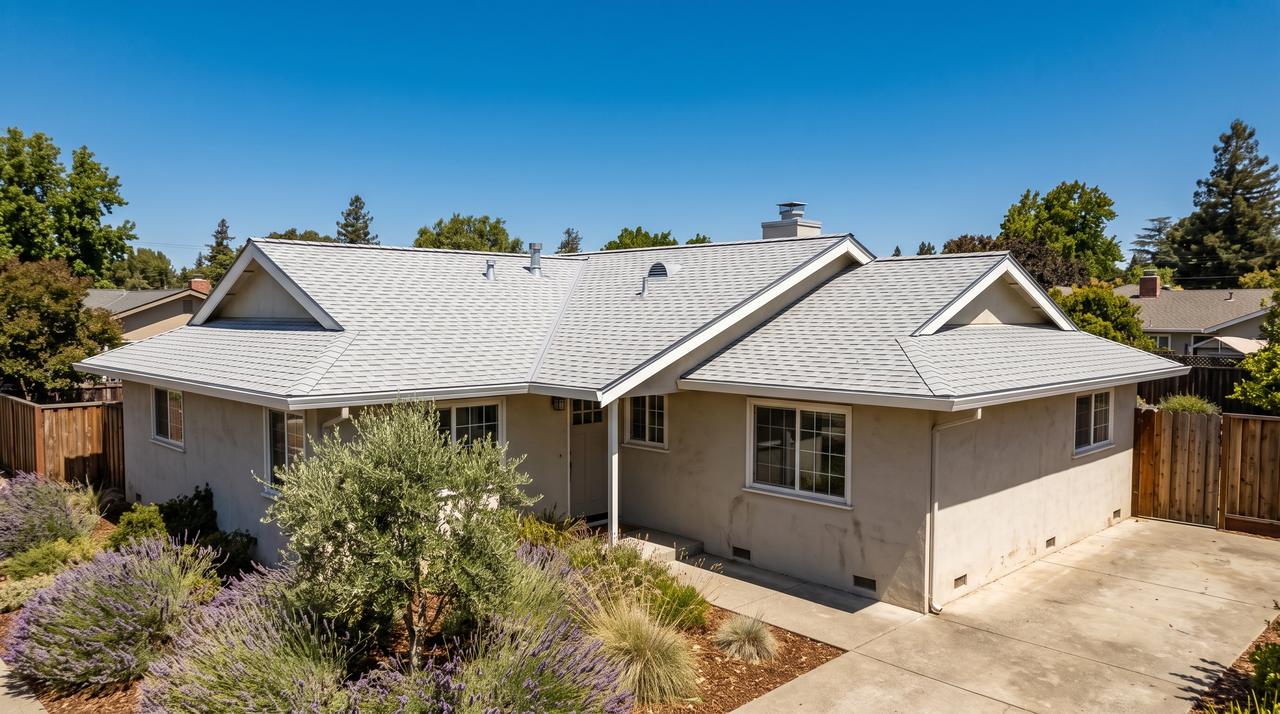
Third, embers. California updated its fire hazard maps in 2025, mostly across the hills, so check your address first. In a mapped High or Very High fire hazard severity zone, replacing a roof, or half or more of it within twelve months, generally means a Class A roof under California's wildfire building rules, which since January 1, 2026 live in the California Wildland-Urban Interface Code. The state insurance department says most roofs qualify as Class A, asphalt shingles included, but get the rating in writing, because shingle choice and edge detailing matter there. A shingle roof's metal roofed cousin handles that conversation differently, at a very different price.
Fourth, disclosure. Roof facts you know are material facts, and they belong on your disclosures: the roof's age, leaks past or present and repairs. California's Transfer Disclosure Statement has its own line for the roof's type and approximate age, and the buyer's inspector will meet your roof personally either way.
My read, by your timeline
Selling soon with a tired roof: get a roofer's honest assessment and an insurability read from an insurance agent first. Sometimes the answer is a documented repair and tune up plus transparent disclosure, which costs a fraction of replacement. When replacement is unavoidable, do it, price accordingly, and market the certainty; certainty defends your list price better than any staging.
Staying a while: replace on the roof's schedule, not the market's, and keep every receipt. That paper trail is what you hand over on the day the whole board matters.
Hand buyers a file, not a mystery
Here is the folder that helps an older roof get through escrow:
- The install date and the invoice
- The permit, signed off
- The product, its fire rating and the warranty
- The roofer's inspection report
- Repair receipts, with photos
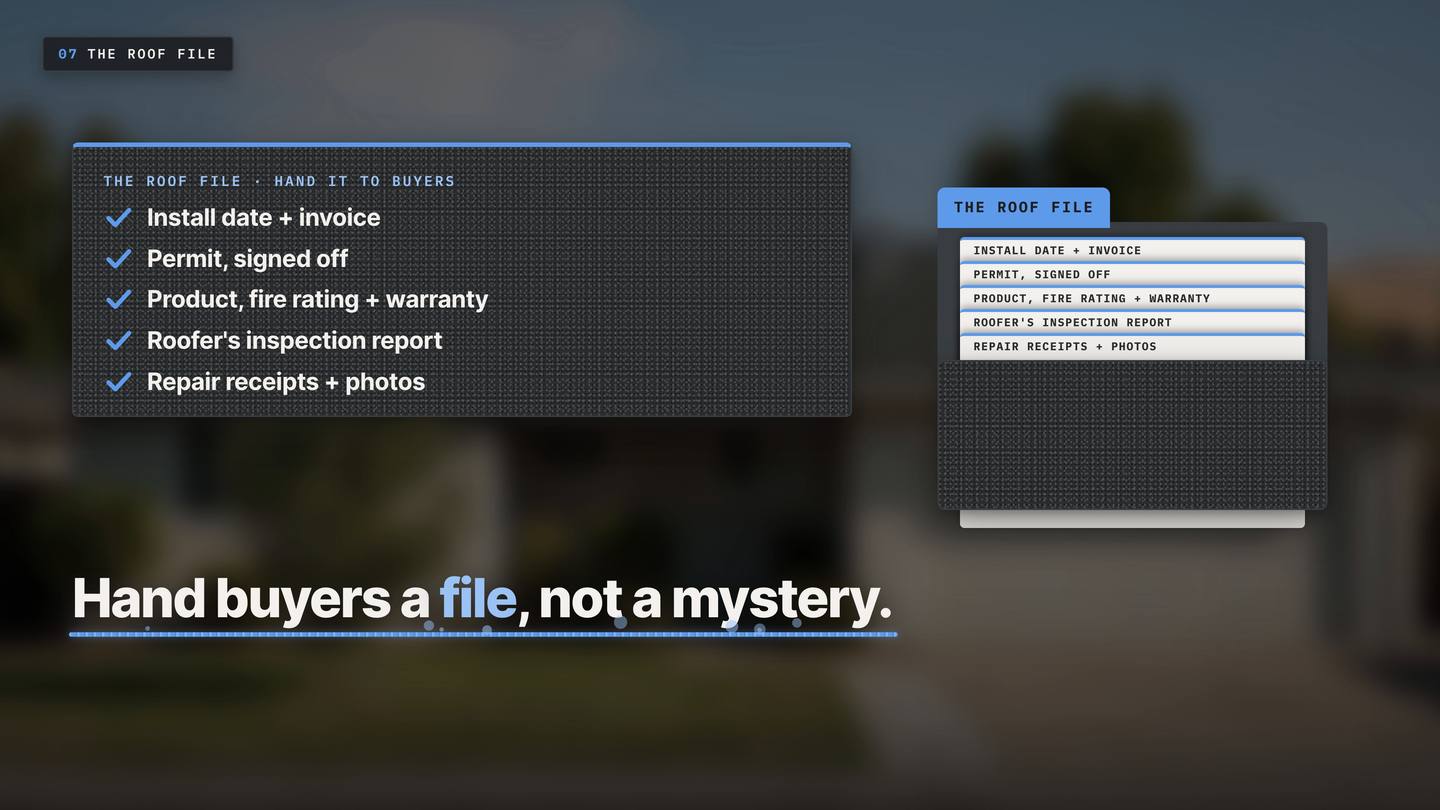
California helps with the third item: the law has the installer give the building owner certification of the roof covering's fire classification, so ask for it and keep it.
Listing within two years? Run your quote through the calculator below, and I can tell you if your roof needs a plan first.
What would this asphalt shingle roof quote get back?
I apply the 2025 San Francisco metro recoup average for this project, about 72.5 percent, to your real number. A planning picture before you sign, not a valuation.
Plan on about $10,542 of this quote staying in the house on the metro average. If the sale is this close, that money usually works harder in prep, paint and pricing than in a project the next owner reprices anyway.
A planning illustration, not a valuation, appraisal or promise of any outcome. It applies one published metro average (2025 Cost vs. Value Report, Zonda Media / Remodeling, San Francisco metro) to the number you typed, nothing more. Whether a specific project pays on your specific house depends on condition, block and timing; that conversation belongs in a pre listing consult with real comparable sales.
Sources
- Cost vs. Value Report 2025, San Francisco metro (Zonda Media / Remodeling): jlconline.com/cost-vs-value/2025/pacific/san-francisco-ca
- Cost vs. Value Report 2021, national averages: jlconline.com/cost-vs-value/2021
- Consumer Financial Protection Bureau, why homeowners insurance is required: consumerfinance.gov
- San Francisco Chronicle, California's largest insurers won't cover these types of roofs, May 2026: sfchronicle.com, summary at Insurance Business
- SB 1301, Chapter 693, Statutes of 2026 (Insurance Code section 676.14): leginfo.legislature.ca.gov
- California FAIR Plan: cfpnet.com, difference in conditions policies
- 2025 California Energy Code, section 150.2(b)1I (cool roofs on re roofs): energy.ca.gov
- California Wildland-Urban Interface Code (2025), chapter 5, sections 504 and 507: codes.iccsafe.org
- California Health and Safety Code, section 13132.7 (roof covering classes and the installer's certification): leginfo.legislature.ca.gov
- Office of the State Fire Marshal, Fire Hazard Severity Zones: osfm.fire.ca.gov
- California Department of Insurance, Safer from Wildfires: insurance.ca.gov
- City of Fremont, Building and Safety FAQs: fremont.gov
- City of San Jose, When Is a Building Permit Required? sanjoseca.gov
- Transfer Disclosure Statement, Civil Code section 1102.6: California Department of Real Estate guide
Harv Balu, REALTOR®
- Cell / Text: (510) 600-3425
- Email: homes@HarvRealtor.com
- Web: HarvRealtor.com
- REALTY EXPERTS®, 41051 Mission Blvd, Fremont, CA 94539, DRE# 02195792
Disclosures
This information is educational and general in nature and is not a bid, valuation, appraisal, or guarantee of any outcome. Cost and resale figures are published averages from the Zonda Media and Remodeling magazine Cost vs. Value Report, cited by edition year and geography in the text, current as of November 2026; the report's methodology changed between editions, so figures from different years are not comparable. Insurance, disclosure and code notes describe general California practice as of November 2026 and are not legal or underwriting advice; verify with your local building department, your insurer, your lender and a qualified professional. Equal Housing Opportunity. Information deemed reliable but not guaranteed.
About the images: the header image is a stock photograph. The other pictures in this post come from my video on this topic. The scenes are AI illustrations generated with Google Gemini, the street is a still from an AI clip generated with Google Veo, and the cards over them are drawn in code, with figures from the published Cost vs. Value averages. None of them shows a real home, a listing or a project from the Cost vs. Value study.
Roof questions that decide Bay Area sales
Should I replace my roof before selling my house?
Run the insurability test first, not the cosmetics test. There is no single cutoff, because each carrier writes its own rules, but with shingle roofs the conversation often starts around twenty years. If the roof is near or past the age where carriers balk, the buyer's insurance quote can blow up the deal in escrow no matter how the shingles photograph. In that situation, replacing or negotiating the roof up front keeps you in control. If the roof has honest years left with documentation to show it, disclose the age, share the reports, and let the price reflect reality instead of guesswork.
How much of a roof replacement comes back at resale?
The 2025 Cost vs. Value Report puts an asphalt shingle replacement in the San Francisco metro at about 38,289 dollars with about 27,747 dollars credited at resale, a 72.5 percent recoup. The report changed its method between editions, so do not set that beside a 2021 figure, when the same job came back at about 61 cents on the dollar nationally, and these are published averages for a studied job, not a promise for your house. Roofs behave less like improvements and more like prerequisites: a new roof rarely wins a premium, while a failing one repels offers, invites brutal repair credits and can cost you the buyer's insurance approval entirely. Think of the recoup number as the visible part of a mostly defensive investment.
Do I have to disclose roof problems when selling in California?
Yes. Known material facts about the roof, its age if you know it, leaks past or present, repairs made, belong on your Transfer Disclosure Statement, which has its own line for the roof's type and approximate age, and the buyer's inspector will be on that roof regardless. Attempting to sell around a known roof issue is how sellers buy themselves post closing disputes. The stronger play is the opposite: get your own roof inspection before listing, price with the facts, and hand buyers a file instead of a mystery. Certainty is worth money in this market.

Harv Balu
REALTOR® | GRI, CIPS, PSA, FTBS · REALTY EXPERTS®
CA DRE# 02195792
Read every post in HarvRealtor, my free app, and the words read offline. Download it free from the App Store® (opens in new tab) or Google Play™ (opens in new tab).