Title and Escrow Ghost Stories, and the Red Flags I Watch For Now
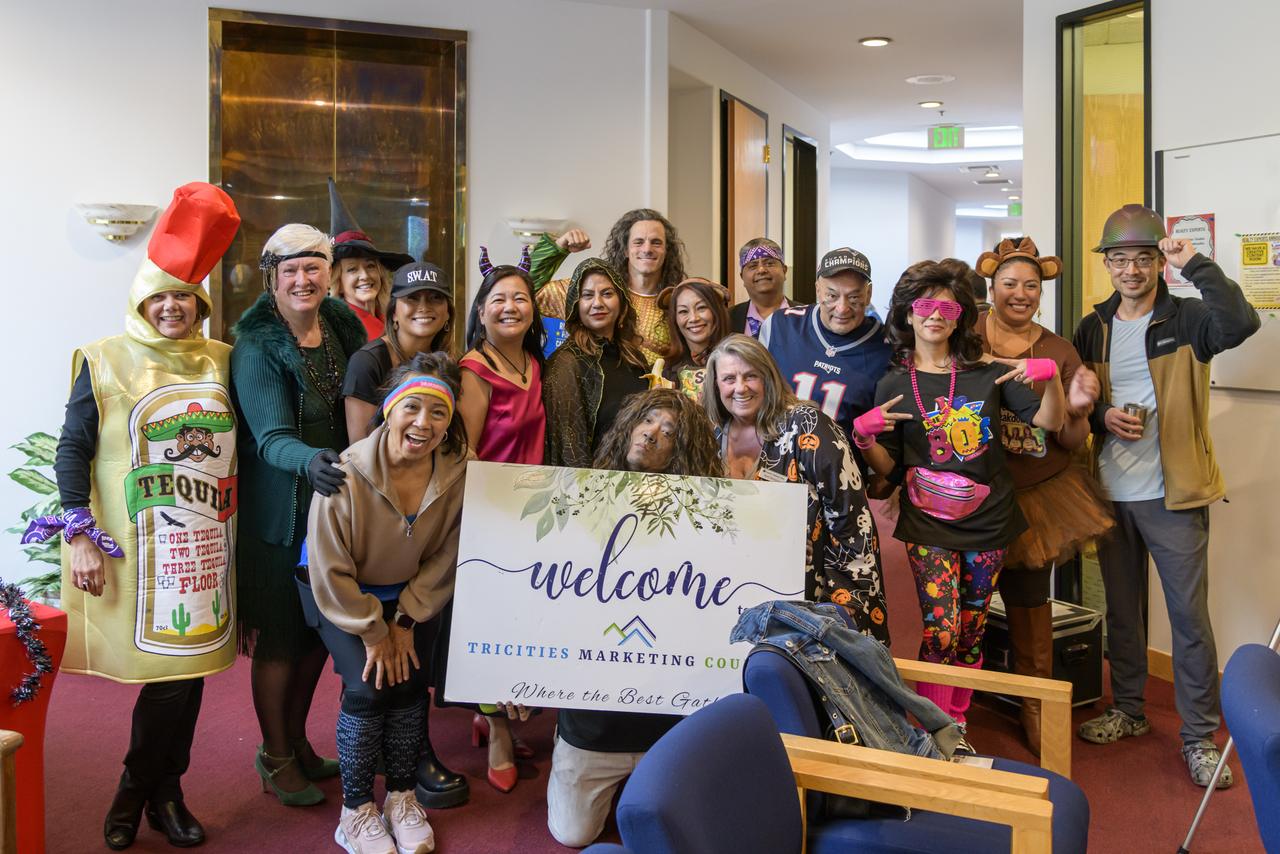
I'm on the Tri-Cities Marketing Council committee, and our Thursday meeting on October 29, 2026 landed two days before Halloween. Our chair, Anthony Geha, came as Aquaman. I came with my camera. The guests were four title and escrow pros, the people who make sure a buyer really ends up owning the house, and the theme was their scariest stories.
On the panel were Sal Covarrubias of First American Title, Farid of Fidelity National Title, Nancy Salas of WFG National Title and Kristin Hart of Old Republic Title, with our vice chair, Tom Bigley, asking questions in a safari hat. The council's own recap and the full recording are on the Tri-Cities Marketing Council blog. This is my take as an agent. The group photo at the top is by Scott Capen of Scott Capen Photography, and every photo in the gallery below is one I took.
The best ghost story of the morning shows what a title policy is for
Sal told the story everyone will be repeating. A Cupertino homeowner flew to Chile to care for his ailing mother, and a few months there turned into two years. While he was away, his adult children produced a Chilean death certificate in his name and sold his house. About eight months after that sale, he came home and knocked on the door of a house that now belonged to someone else.
Title insurance is what sorted it out. Everyone with a stake, from the father to the new owners and two lenders, had to be compensated, there was litigation along the way, and he settled for cash instead of moving back in. By Sal's estimate, title work stops about 99% of these before they ever close, and the few that get through are usually forgery or fraud. That is what the buyers' and the lenders' title policies are for.
Fraudsters go looking for property nobody is watching
Every panelist had a fraud story, and the fake seller ones had a lot in common:
- The seller in quarantine. Kristin had an all-cash, fast sale of vacant land. One seller emailed that he had tuberculosis, was quarantined, and would sign with a mobile notary he'd arrange himself. The second seller couldn't be reached at all. Kristin found the real owners, who weren't selling, and the deal was canceled.
- Messenger only. Nancy's seller owned a home free and clear, didn't live in it, and would talk to his agent only on Facebook Messenger. She insisted he come to her office to sign rather than use his own notary. He pushed back, the standoff cost about a week, and he turned out to be genuine.
- Same name, different man. Farid's office spotted signatures that didn't match the ones on file at the county and sent a FedEx to the house. The real owner answered. His son, who has the same name, was the one trying to sell.
Sal added that a fraudster turned away by one title company just walks into the next, which is why the companies share fraud alerts with each other. One recent case he mentioned ended with more than $2 million borrowed against a paid-off property, and the elderly owners learned about it only when they saw the lien.
Put the panel's stories together and the red flags line up: vacant land or a home the owner doesn't live in, no loan on it, an elderly or faraway owner, a cash buyer in a hurry, a seller you can only reach by text, email or social media, and a seller who insists on a notary of their own choosing. The American Land Title Association warns about the same targets: vacant lots and properties with no loan on them.
If you own a lot, a rental or a second home with no loan on it, keep the mailing address the county has for you current, so notices about the property reach you, and check on it in person now and then. In Kristin's file, title's routine notice to the owner of record reached the real owners too. Some counties will also alert you when a document is recorded against your property. The California Department of Real Estate keeps a list of the ones it knows about, and if your county isn't on it, look on your county recorder's website.
An inherited home left in a trust can come back to haunt the sale
Nancy's other story is one I expect to see more often. Her seller had received a home through a trust and lived in it for years, keeping up with the mortgage payments and the property tax, but the house was never transferred out of the trust's name. When it came time to sell, the county reset the assessment to the value on the date of death, and the tax owed for the years in between arrived as one large bill.
Here's the part I want families to know. For property tax, the owner's death counts as a change in ownership even while the deed still sits in the trust. The trustee or the person inheriting has to file a change in ownership statement with the county within 150 days of the death, under Revenue and Taxation Code section 480. Filing on time puts the new value on the roll when it belongs there, and it's the moment to ask whether a parent-to-child exclusion applies. Nancy's advice was to bring in a CPA early, and I agree. My post on what our county assessor told us about property taxes covers how an inherited home is taxed in Alameda County.
A fast escrow needs a calendar, not a promise
Two of the stories were about the clock. The day before one closing, Farid's team ran a final title search and found a newly recorded $310,000 credit line the seller had taken out to buy their next home; escrow got a payoff, and the buyer still received clear title. Sal's team once had five days to close and learned that the previous sale had been recorded with the wrong legal description. One of his escrow officers tracked down the earlier seller, had the fix recorded, and the sale still finished on schedule. Escrow, as Sal put it, can close anything if it has two things: time and money.
So before I write a short escrow into an offer, this is my checklist:
- Call the escrow officer first. Nancy said they'll work to meet whatever date you write, but they know what can hold a file up.
- Count working days. A 10-day clock that starts at acceptance runs through weekends and holidays. Nancy once had four office days on a 10-day escrow, on a file that also carried a trust dispute and a reverse mortgage, and it closed two days late.
- Leave room for an estate sale. Kristin had a seller selling from an estate who agreed to a fast escrow, then the executor's notice to the heirs, called a notice of proposed action, set a date later than the contract's closing day. The heirs and others entitled to that notice must get it at least 15 days before the sale can go ahead (Probate Code section 10586).
- Return the statement of information right away. It's how title tells your liens from someone else's with a similar name. Kristin said an IRS lien alone can take 30 days to clear.
- Bring up solar and HOA paperwork on day one. Each solar company has its own transfer process, and a transfer can't start until there's a buyer.
I'm changing five things in how I work after that morning
- Asking every seller at the start whether there's a trust, a recent death, an owner overseas or a co-owner who'll be hard to reach, and telling escrow the same day.
- Calling the escrow officer before I put a short escrow in any offer.
- Getting the statement of information, solar and HOA paperwork moving in the first days of escrow.
- Slowing down when a seller I've never met wants cash, speed and their own notary, and letting title verify first.
- Telling owners of vacant lots and paid-off rentals about these red flags, and whether their county offers recording alerts.
The rest of the morning was a costume party
Don came as Anthony, wig and all, a tequila bottle and a flapper won the costume parade, and several first-timers introduced themselves, Nancy among them. Jackie asked the room to help Adopt-an-Angel, which matches donors with children in foster care and in low-income households for holiday gifts, due by November 24.
Every picture here is one I took that morning
I filed the morning the way a title officer would see it: each photo is a recorded document, stamped and numbered, in books for each part of the meeting. Open any page to see it full size.
Book 1CostumesDocs 01 to 05
Book 2BreakfastDocs 06 to 11
Book 3LiveDocs 12 to 15
Book 4New facesDocs 16 to 23
Book 5Title panelDocs 24 to 27
Book 6Costume paradeDocs 28 to 31
Book 7AnnouncementsDocs 32 to 34
Photographs by Harv Balu. Select a page to open it; the arrow keys move between them.
Thank you to our panel
My thanks to Sal, Farid, Nancy and Kristin for opening their files to a room full of agents, and to Tom for keeping the questions coming. Our council meets Thursday mornings in Fremont, guests are welcome, and the council's speaker calendar shows who's next. If you own a vacant property, my last council post, on safety at showings and in vacant listings, pairs well with this one, and if you're handling a parent's home, start with helping a parent downsize and move.
If you own a lot, a rental or an inherited home in Fremont, Newark, Union City or anywhere in the Tri-Cities and you're thinking about what's next, call or text me at (510) 600-3425, or email homes@HarvRealtor.com. I'll get title involved on day one, not the week of closing. A home value estimate is a good place to begin.
Harv Balu, REALTOR®
- Cell / Text: (510) 600-3425
- Email: homes@HarvRealtor.com
- Web: HarvRealtor.com
- REALTY EXPERTS® · 41051 Mission Blvd, Fremont, CA 94539 · DRE #02195792
Disclosures
This post is general information, not legal, tax, title or escrow advice. Harv Balu is a REALTOR® and California real estate licensee, not an attorney, CPA or escrow officer. Each story is the panelist's own account, shared at the Tri-Cities Marketing Council meeting on October 29, 2026, without the names of the people involved; the panelists and their companies did not review this post, and no company mentioned is an endorsement. Your own sale may be different, so check with your escrow officer, an attorney or a CPA.
Group photo © 2026 Scott Capen Photography. Gallery photos © 2026 Harv Balu. All taken at the meeting.
Equal Housing Opportunity. Harv Balu, CA DRE #02195792. REALTY EXPERTS® (CA DRE #00414413) is independently owned and operated. © 2026 Harv Balu, REALTY EXPERTS®.
Fake sellers and fast escrows: common questions
What is seller impersonation fraud?
It's when someone poses as the owner of a property and tries to sell it or borrow against it. The targets are usually properties nobody checks on often: vacant land, a rental or second home, especially with no loan on it and an owner who is older or lives far away. Warning signs include a cash buyer and a rush, a seller you can only reach by email, text or social media, and a seller who wants to use their own notary. Title companies compare signatures with the recorded documents and send notice to the owner of record, which is often how a real owner finds out.
Is a 10-day escrow realistic?
Sometimes, but call the escrow officer before you write one. Ten calendar days from acceptance may take in a weekend or a holiday, so the officer may only get a handful of working days, and lenders, lien holders and HOAs keep business hours too. A trust, a recent death, an owner overseas, a sale from an estate or a solar contract can each add time. Getting the statement of information back early is the simplest thing a buyer or seller can do to help.
What happens if an inherited home is never moved out of the trust?
For property tax, the owner's death is a change in ownership even while the deed stays in the trust's name. California requires the trustee or the person inheriting to file a change in ownership statement with the county within 150 days of the death (Revenue and Taxation Code section 480). If nobody does, the assessor can reassess back to the date of death once it learns of the transfer, often at a sale, and bill the difference for the years in between. Whether a parent-to-child exclusion applies is a question for a CPA, and the earlier the better.

Harv Balu
REALTOR® | GRI, CIPS, PSA, FTBS · REALTY EXPERTS®
CA DRE# 02195792
Read every post in HarvRealtor, my free app, and the words read offline. Download it free from the App Store® (opens in new tab).