The 2,700 Dollar Front Door That Outearns Six Figure Remodels
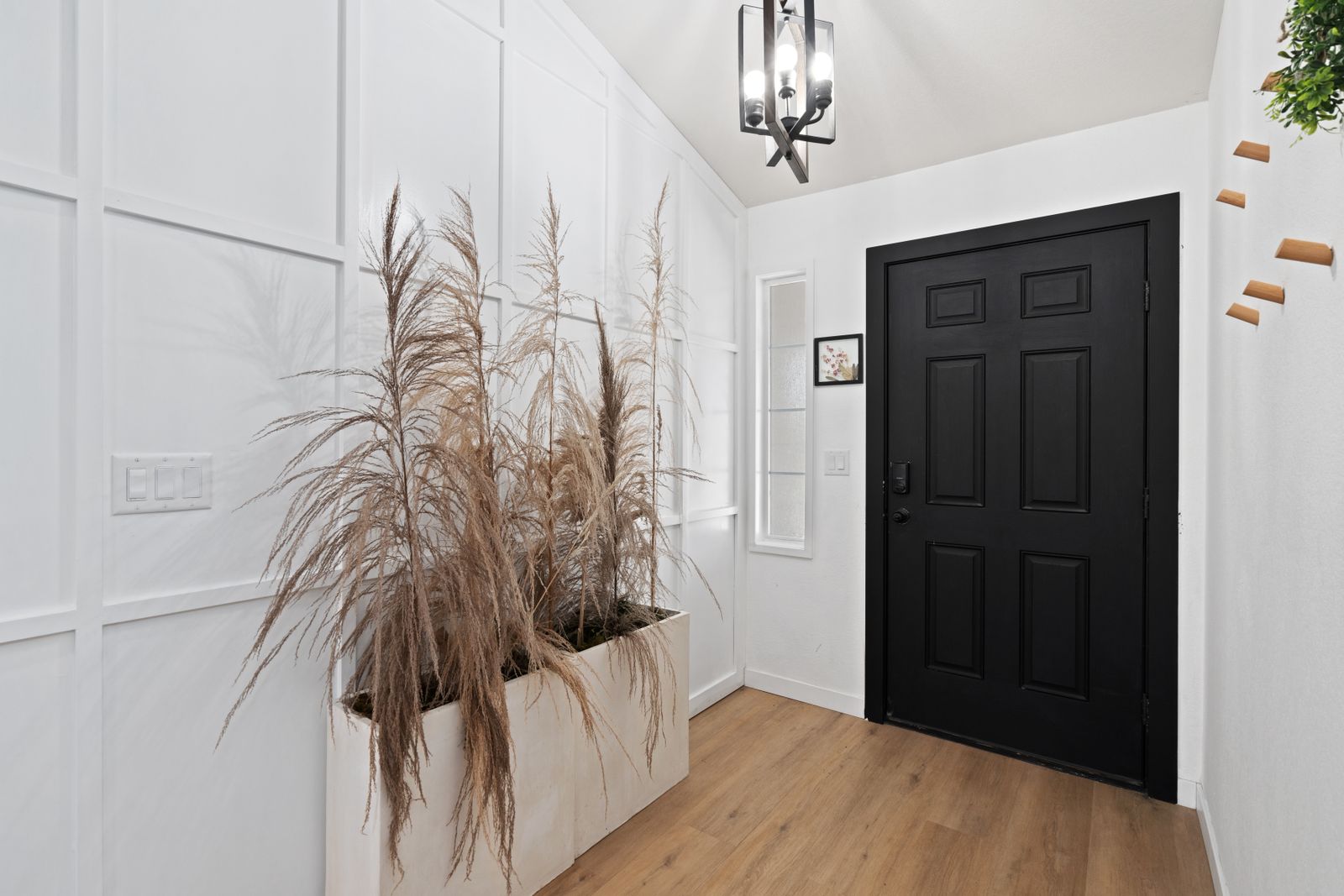
Here is the least glamorous secret in the remodeling data: the highest recoup percentage on the entire 2025 San Francisco metro board does not belong to a kitchen, a bath, or anything with a designer attached. It belongs to a steel front door.
Prefer to watch? Press play below. My video walkthrough runs under six minutes, including a plain steel door side by side with the fiberglass grand entrance.
The numbers, with their year stamps
In the 2021 edition, the one the real estate continuing education course was built on, a steel entry door cost 2,082 dollars nationally and returned 1,353 dollars, a 65 percent recoup that placed it mid pack. The 2025 edition uses a different method, and this is its San Francisco metro column, the one that covers Fremont, Newark and Union City: about 2,714 dollars installed, about 6,438 dollars credited at resale.
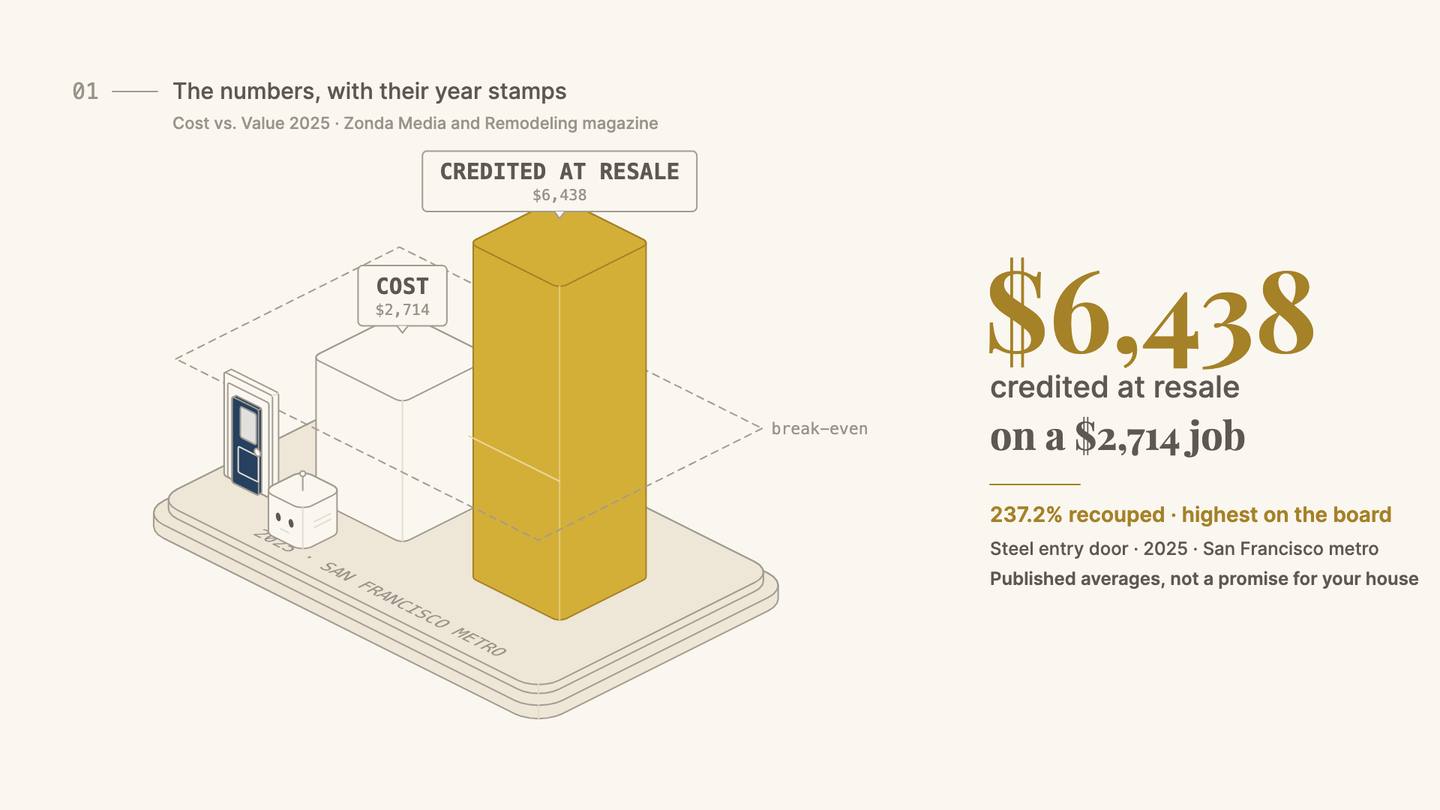
Steel entry door: the 2025 payback picture
Source: 2025 Cost vs. Value Report, Zonda Media / Remodeling. San Francisco metro, Pacific region and national data as published at jlconline.com. © 2025 Zonda Media, a Delaware corporation. Percentages are averages for professionally installed projects across a whole metro, and the report's methodology changed between editions, so treat every figure as a planning signal with a year stamp, never a promise for any specific house.
Different editions use different measurement methods, so do not read that as the same door tripling in value. They are two rulers, not one trend line. Read the 2025 figure as what it is: in the current data, for our metro, this is the single best ratio of dollars out to dollars back that Zonda publishes, and it leads by half a point, 237.2 percent to the garage door's 236.7. In the same report's Pacific and national columns, the garage door comes first. These are published averages for professional jobs across a whole market, not a promise for your street or your house.
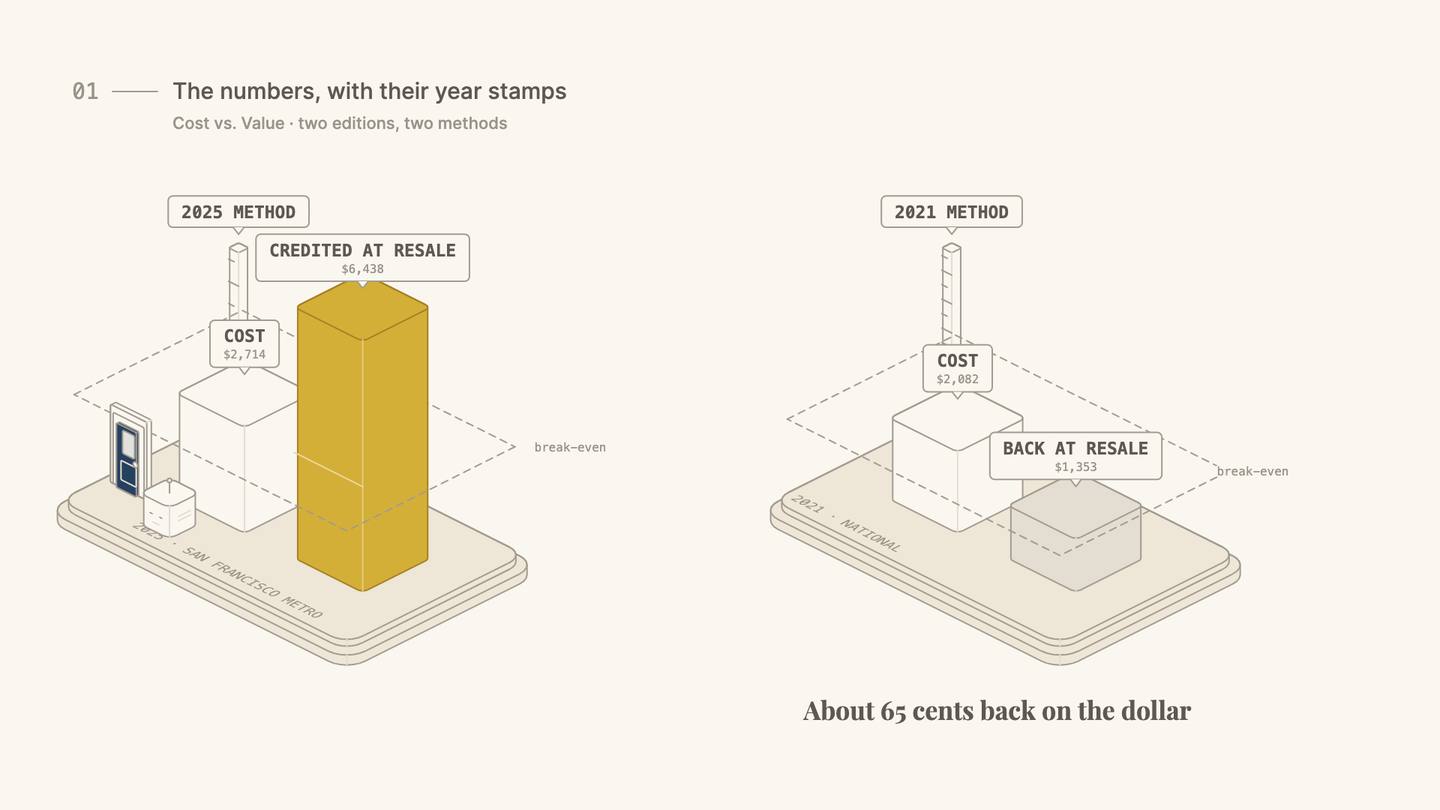
And keep the 2021 number in your head. On that ruler the door left 729 dollars on the table, and it was the cheapest project in the series. That is why the course behind this series teaches return of investment, not return on investment.
Why a door can outearn a kitchen
Because the door is not competing with the kitchen. It is competing with the buyer's first moments on your porch, while the agent works the lockbox. A faded, dinged entry whispers deferred maintenance before anyone reaches the foyer, and buyers who suspect deferred maintenance discount everything that follows.
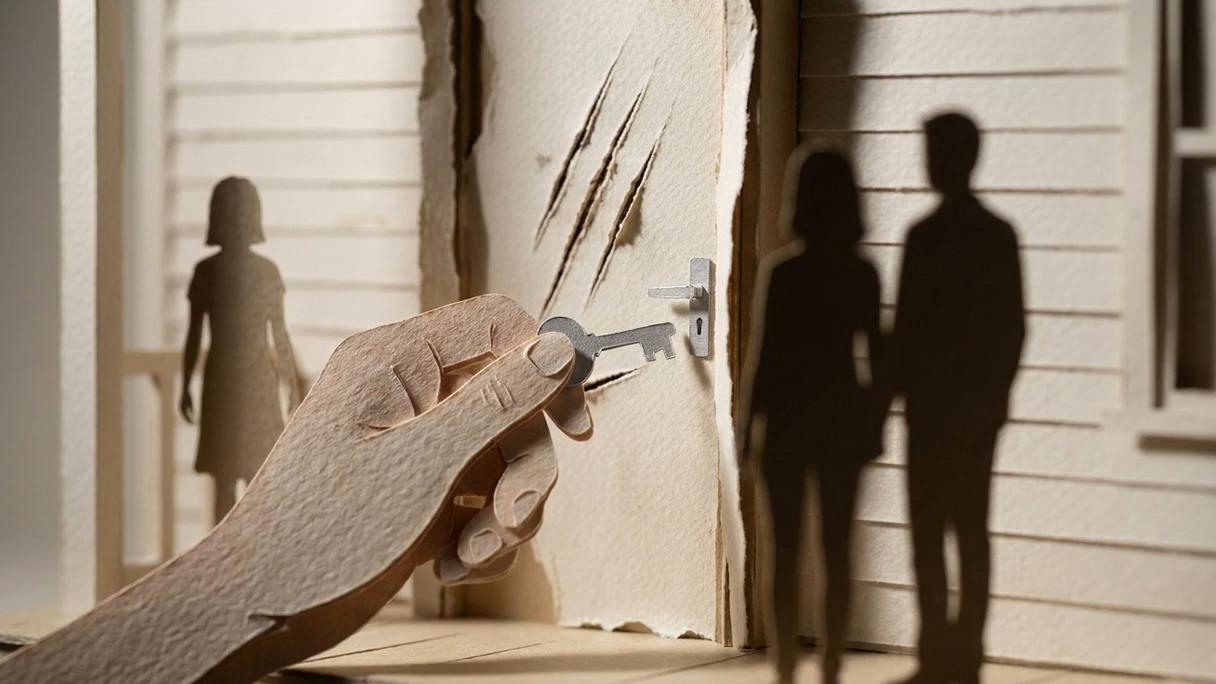
If the owner skipped the part everyone can see, what else got skipped? Once that doubt is planted, the buyer quietly marks down every upgrade inside. A fresh door in a confident color stops that before it starts, at about 2,714 dollars on the 2025 metro average against about 97,667 for a midrange major kitchen. The door's real job is to protect the kitchen you already have.

What the money actually bought
A percentage is only as useful as the job behind it. The 2025 report priced this: take out a 3 foot by 6 foot 8 entry door and its jambs, then install a 20 gauge steel unit with a clear dual pane half glass panel, new jambs, an aluminum threshold, matching casings and a new lockset, factory finished in the same color on both sides. No sidelights, and the new unit goes into the same opening.
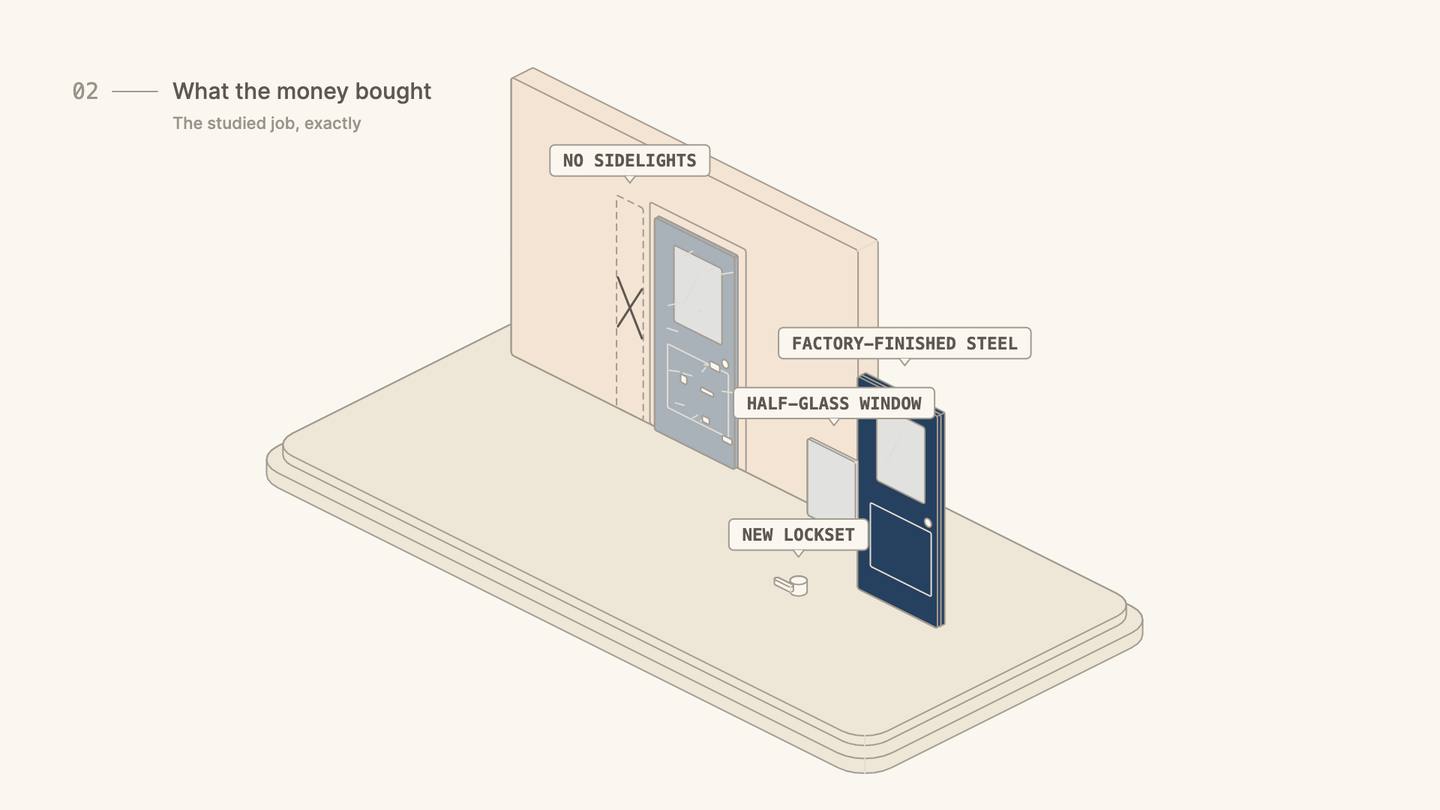
Two details matter. The frame comes out too, so this is a full replacement, not a new slab on old hinges. And that half glass panel is part of the job behind the 237.2 percent, which matters in California, as you will see below. If your quote is for something else, compare it with care.
The cheaper door won, so ask which tier, not which room
The report also prices the glamorous version: a fiberglass grand entrance that cuts and reframes the opening for a door with two sidelights, moves an electrical box and adds decorative glass. On the 2021 national ruler it cost 10,044 dollars, about five times the steel door, and got back a smaller share, 60.9 percent against 65 percent. On the 2025 metro board, which is its own ruler, the grand entrance runs 13,327 dollars at 77.5 percent.
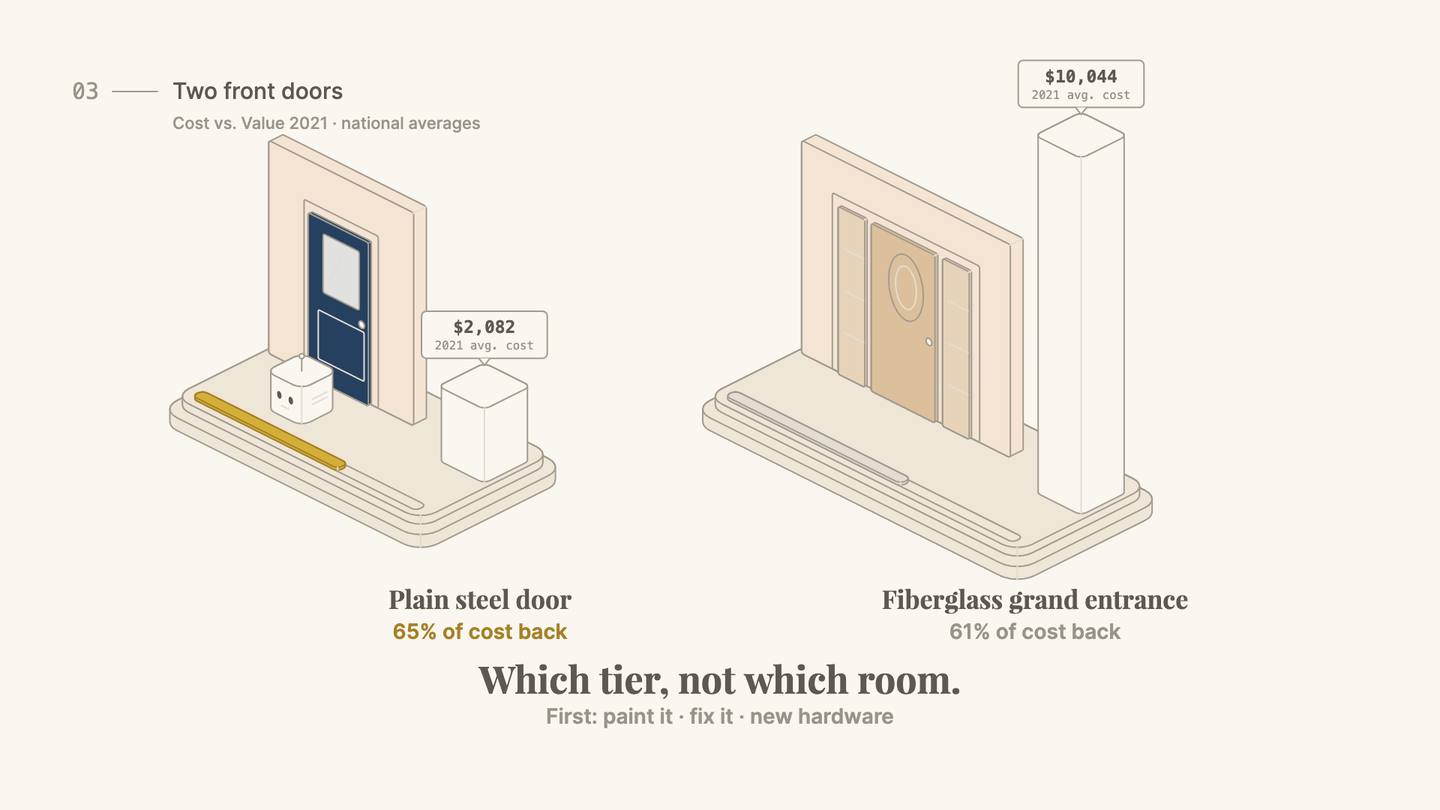
Before you replace anything, though, the course's own advice comes first: paint what you have, fix what you have and put new hardware on it. If the door itself is sound, that may be the whole job.
The local wrinkles
Three things I tell Tri-City owners.
First, watch the glass. Under California's 2025 Energy Code, part of Title 24, an exterior door with 25 percent or more glass is a glazed door, and a glazed door has to meet window requirements, not door requirements. A half glass panel can land on that side of the line, so check the door you are quoted. Buy a rated unit rather than a bargain slab and leave the label on until the inspector has seen it. In Fremont, the city's express plan lists a maximum U factor of 0.27 and a solar heat gain coefficient of 0.23 for retrofit windows, so a glazed door labeled at or below both is the easy path. Go easy on big glass, because putting glass where a solid door stood can turn a door swap into a window project.
Second, keep the swap a swap, because our stucco neighborhoods punish scope creep. Widen the opening even a few inches and you have bought a structural header, a permit and a stucco patch that must be color matched. Your door budget just became a wall budget.
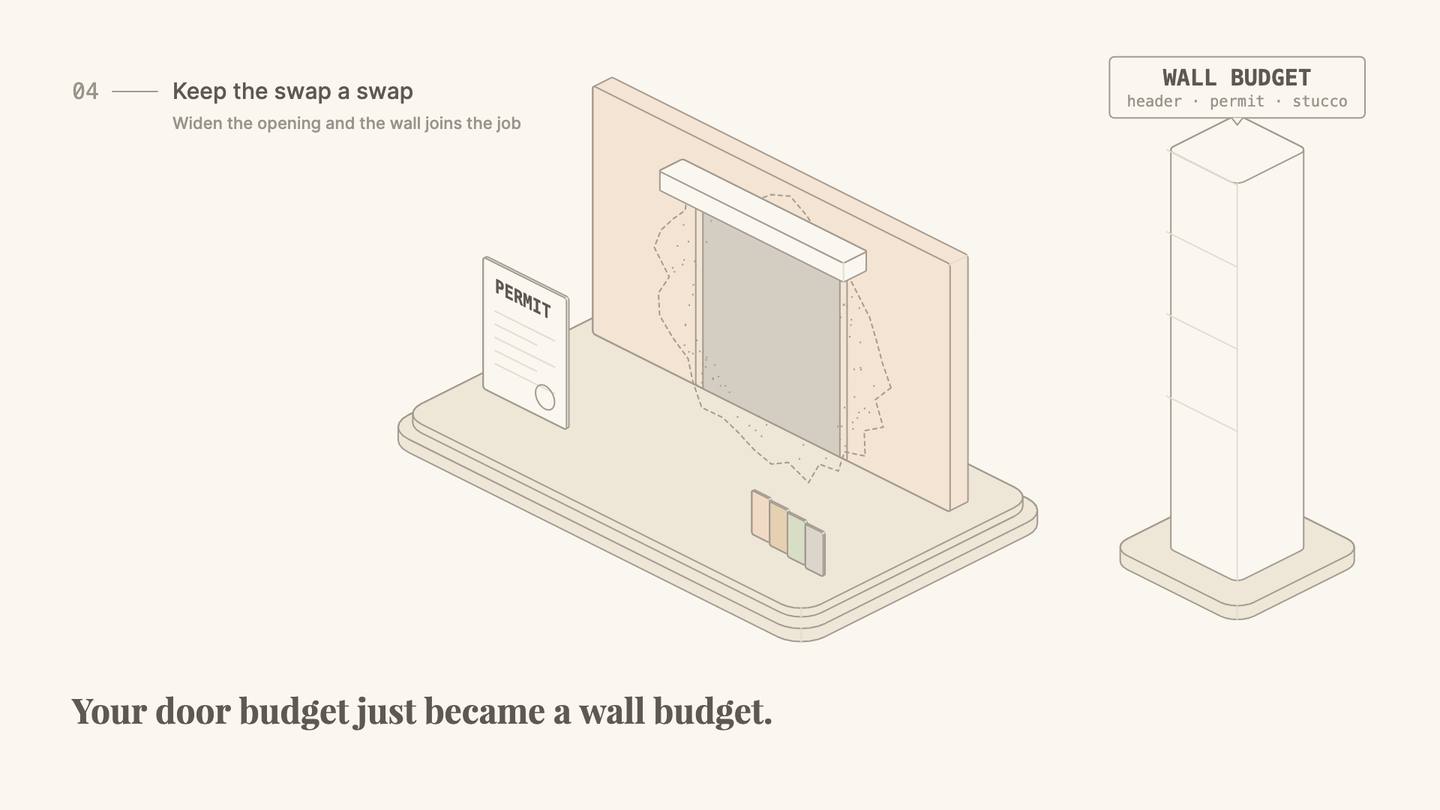
Even a plain swap deserves a call first. Fremont's list of work you can do without a permit does not include a door, and the city has an express plan for like for like window and door replacement, with no wall alterations allowed under it. Hayward's exemption list does not name doors either, and San Jose's exempts window replacements that leave the framing, flashing and exterior wall alone but does not name doors. Ask your building department before you order.
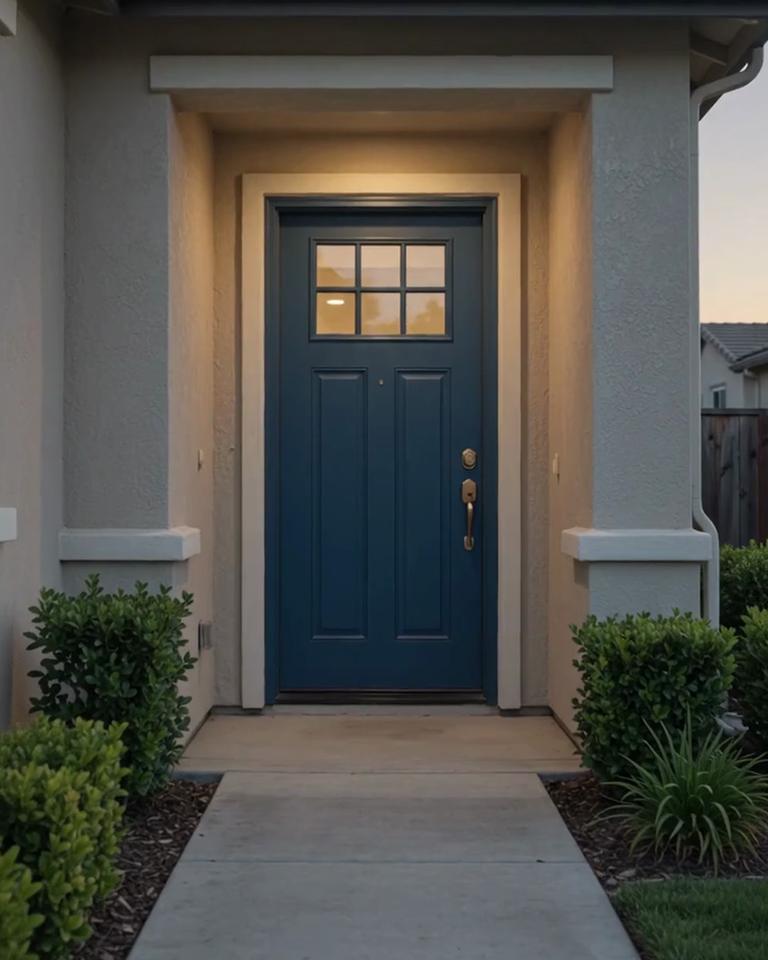
Third, color courage pays here. Against the beige and sage stucco palettes of Fremont and Union City, a deep ink blue or oxblood door photographs beautifully, and the photograph is the point.
My read, by your timeline
Selling soon: keep it simple, and book the install the week before your listing photos so the door looks brand new in every shot. Start that conversation six to twelve months before you plan to list, and know what your home is worth before you spend a dollar on it.
If there is a little more budget, pair it with exactly one other project, the garage door if yours is tired. On the same 2025 metro averages that is about 7,560 dollars for the pair, and together they refresh most of what a buyer sees from the curb.
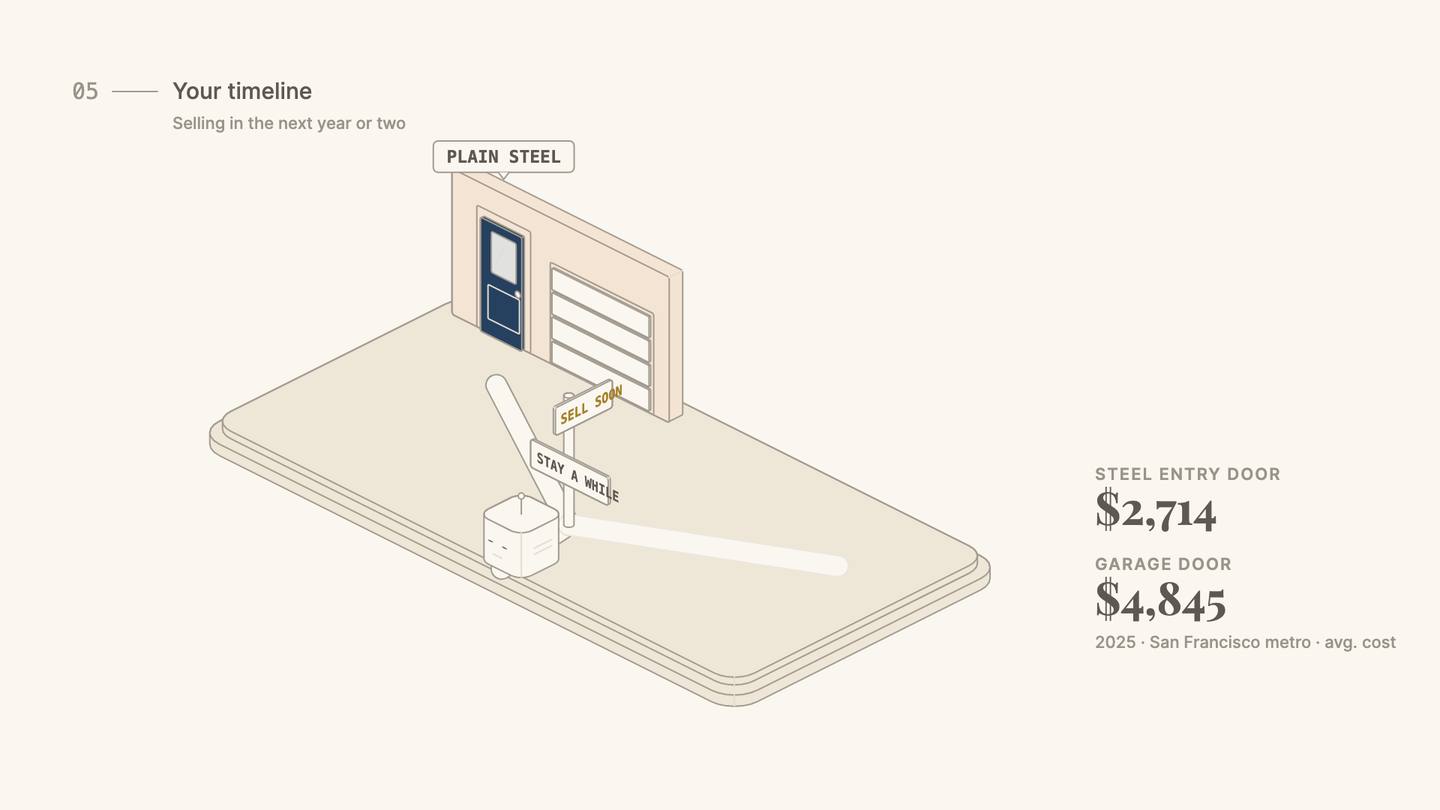
Staying a while: then the math is not the point. You open that door every day, so choose the steel, fiberglass or real wood you actually love, for the look, the weight and the feel in your hand. Resale becomes a bonus, not the reason. If you are dreaming bigger than a single door, read the grand entrance breakdown before you commit, because the payback math changes fast when the opening widens.
The full twenty project ranking lives in the Remodel Math pillar. Check your own quote below.
What would this steel entry door quote get back?
I apply the 2025 San Francisco metro recoup average for this project, about 237.2 percent, to your real number. A planning picture before you sign, not a valuation.
On the 2025 San Francisco metro average, this project carries its own cost and then some. Timed just before listing, it is one of the few checks that can come back larger than it went out.
A planning illustration, not a valuation, appraisal or promise of any outcome. It applies one published metro average (2025 Cost vs. Value Report, Zonda Media / Remodeling, San Francisco metro) to the number you typed, nothing more. Whether a specific project pays on your specific house depends on condition, block and timing; that conversation belongs in a pre listing consult with real comparable sales.
Sources
- Cost vs. Value Report 2025, San Francisco metro (Zonda Media / Remodeling): jlconline.com/cost-vs-value/2025/pacific/san-francisco-ca
- Cost vs. Value Report 2021, national averages: jlconline.com/cost-vs-value/2021
- 2025 California Energy Code, sections 100.1, 110.6, 150.1(c) and 150.2(b): energy.ca.gov
- City of Fremont: Construction Work You Can Do Without a Permit, Express Residential Window and Door Replacement Plan
- City of Hayward: Do I Need a Building Permit?
- City of San Jose: When Is a Building Permit Required?
Harv Balu, REALTOR®
- Cell / Text: (510) 600-3425
- Email: homes@HarvRealtor.com
- Web: HarvRealtor.com
- REALTY EXPERTS®, 41051 Mission Blvd, Fremont, CA 94539, DRE# 02195792
Disclosures
This information is educational and general in nature and is not a bid, valuation, appraisal, or guarantee of any outcome. Cost and resale figures are published averages from the Zonda Media and Remodeling magazine Cost vs. Value Report, cited by edition year and geography in the text, current as of October 2026; the report's methodology changed between editions, so figures from different years are not comparable. Building code and energy code notes describe general California practice; verify current requirements with your local building department before contracting work. Equal Housing Opportunity. Information deemed reliable but not guaranteed.
About the images: the header image is a stock photograph. The other pictures in this post come from my video on this topic. The data cards are drawn in code from the published Cost vs. Value averages, the paper style scenes are AI images from Google NotebookLM, and the dusk entry is a still from an AI clip generated with Google Veo. None of them shows a real home, a listing or a project from the Cost vs. Value study.
Front door questions before you sign a quote
Is replacing a front door worth it before selling?
On the 2025 San Francisco metro averages, yes, if your door is worn. That edition of the Cost vs. Value Report shows a steel entry door replacement costing about 2,714 dollars and returning about 6,438 dollars of resale value, a 237.2 percent recoup and the top of that metro's board, half a point ahead of the garage door. The report changed its method between editions, so do not set that beside a 2021 figure, when the same door came back at about 65 cents on the dollar nationally. These are published averages for a studied job, not a promise for your house. The mechanism is not magic: every buyer touches the front door, every listing gallery features it, and a crisp new door signals a cared-for house at the exact moment first impressions form. If your current door is sound, paint it, fix it and put new hardware on it first. If it is worn, this is the cheapest strong signal you can buy.
Steel versus fiberglass versus wood front door: which should I choose?
Steel wins the payback math because it costs the least while delivering the same visual reset; it is strong, secure and takes paint beautifully. Fiberglass costs more, resists dents and can convincingly imitate wood grain, and it anchors the fancier grand entrance projects. Wood is the premium look with the premium maintenance schedule, and in direct sun exposures it demands regular refinishing. For a pre sale refresh, steel is usually the answer. For a house you will enjoy for a decade, choose the material you want to live with.
Do I need a permit to replace my front door in the Bay Area?
Ask before you order, because cities differ. Fremont's published list of work you can do without a permit does not include a door, and the city has an express plan for like for like window and door replacement. Hayward's exemption list does not name doors either, and San Jose's exempts window replacements that leave the framing, flashing and exterior wall alone but does not name doors. The moment you widen the opening or change the structure around it you are into regular permit territory with a header, inspections and stucco repair. Energy code also cares: under California's 2025 Energy Code, an exterior door with 25 percent or more glass is a glazed door and has to meet window requirements, so buy a rated, labeled unit and leave the label on for the inspector. Your installer should know the local rules cold; if they wave the question off, get a different installer.

Harv Balu
REALTOR® | GRI, CIPS, PSA, FTBS · REALTY EXPERTS®
CA DRE# 02195792
Read every post in HarvRealtor, my free app, and the words read offline. Download it free from the App Store® (opens in new tab) or Google Play™ (opens in new tab).