Strangers in Your Home: What a Code of Ethics Instructor Taught Me About Privacy
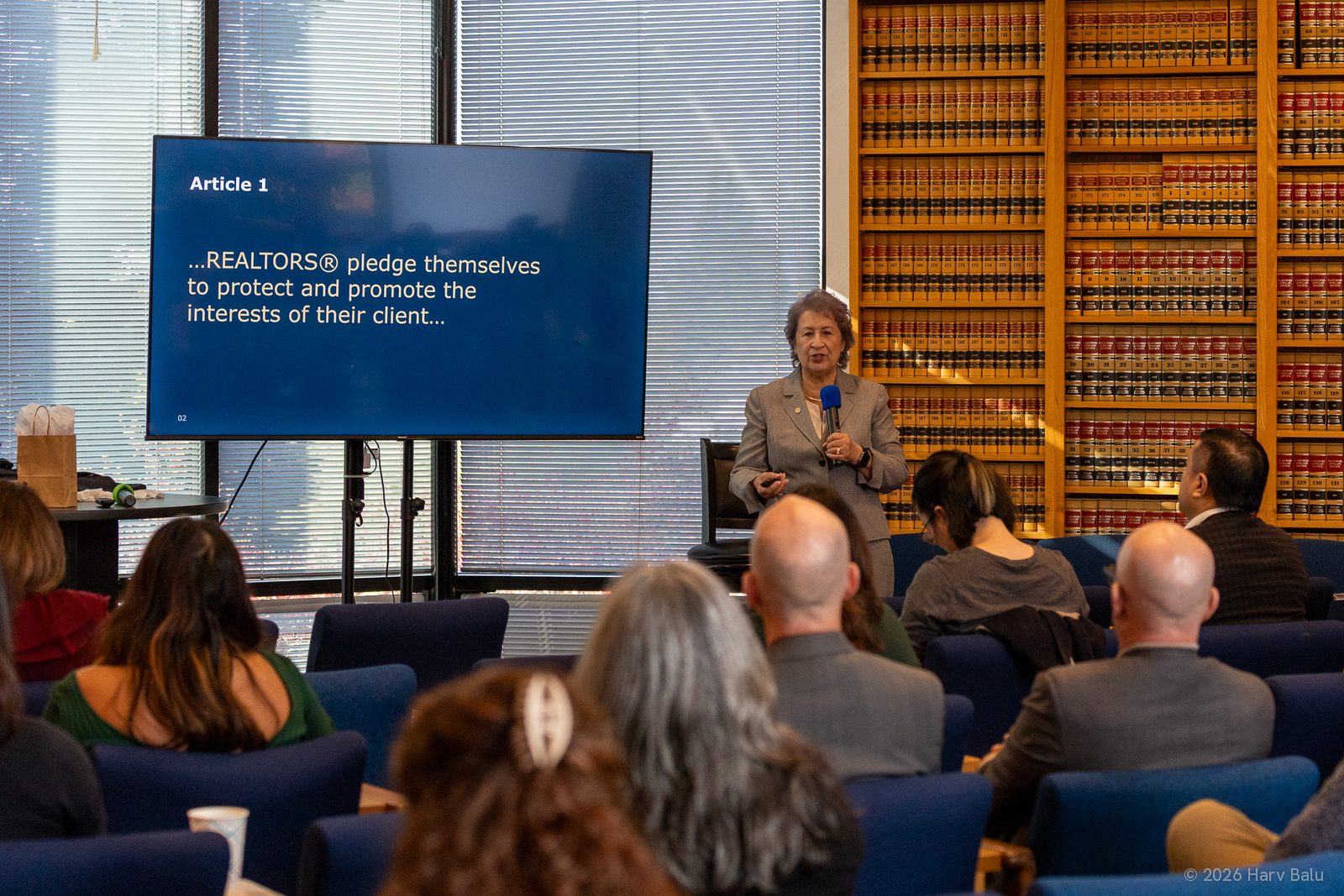
I'm on the committee that runs the Tri-Cities Marketing Council, a group of REALTORS® and real estate affiliates that meets Thursday mornings in Fremont. On November 12, 2026, our speaker was Doreen Roberts, a past president of her local REALTOR® association who is certified to teach the Code of Ethics of the National Association of REALTORS®, and who has served on professional standards committees for her local association, the state and NAR. She came because a member asked how Union City Police Chief Jared Rinetti's October advice on safety at showings fits with the Code of Ethics, and the rest of us wanted the answer too.
My notes from the chief's talk were about locks and safety. This one is about privacy, cameras and what an agent owes a seller when the public walks through their home. The council's own recap and the recording are on the Tri-Cities Marketing Council blog. What follows is my take as an agent who lists homes and tours them with buyers. Every photo here is mine.
Article 1 says protect, not just promote
Doreen started with the first article of the Code of Ethics: when we represent a client, REALTORS® "pledge themselves to protect and promote the interests of their client."
Promoting is the half every agent talks about: the pricing, the photos, the marketing. Doreen spent her talk on protecting, and most of that work happens on the days strangers come through the front door. A visitor who trips on a loose step, a net sheet photographed off the counter, a guest turned away in a way that becomes a complaint: in each case the owner can end up carrying it, and so can the agent. That's the lens for everything below.
Before anyone tours, I'll walk your home looking for trouble
Her first point was the simplest, and it matters most when you're hosting a listing that isn't your own: walk it first. What she looks for:
- Steps that change height, like one deep step followed by a shallow one.
- Decks with soft boards. The owner knows which board to step around. A visitor doesn't.
- Loose rugs and runners. If they aren't secured, they come up. No decor is worth a fall.
- Dark stairwells and basements. Light them.
- Exposed nails and wiring.
- A pool without a fence. One person stands at the door that leads to it, and I make sure every visitor knows there's a pool out back.
- Pets. Her rule was that pets leave once the listing goes live. Plenty of people are nervous around animals, and an overly friendly dog can rattle a visitor as much as an unfriendly one.
Signs help, she said, but some people don't read them and others ignore them, so tape the hazard off. Keep caution tape in your trunk, she told us, and I'm adding a roll to mine. She also warned that some people make a living by tripping on someone else's property and suing, which is one more reason to take the walk-through seriously.
Your net sheet is the most valuable paper in your home
Doreen asked how many of us had walked into a listing and found the listing paperwork still on the table, net sheet and all. That sheet shows what the seller hopes to walk away with, and every visitor carries a phone that can photograph it in a second. In a negotiation, that number is worth more than anything in the jewelry box.
So before the first showing, three things leave the home entirely. Not into a drawer, because drawers get opened.
- Medication, from every cabinet, not only the bathroom.
- Valuables, a small safe included if it can be carried.
- Personal papers: the listing paperwork, bank and tax statements, mail, and anything with a signature or an account number on it.
This isn't only for the weekend open house. A buyer on a private showing sees the same countertop. If I walk into one of my listings and find papers out, I'll put them somewhere safe and let you know.
Doreen reminded us that the listing agreement speaks to this too: the owner keeps the home insured while it's listed, takes reasonable precautions with valuables, and understands that visitors may take photos and video. I'll walk through that part with you at the listing appointment.
If your home has cameras, a notice goes up first
Doreen told us that in her own listings she ran audio and video cameras throughout the home, with a notice outside saying the home was under audio and video surveillance. People still say surprising things on camera, she said, even after reading the sign. The notice, she said, is about privacy: nobody can claim later that they weren't told.
Here's how I'll handle it. Tell me at the listing appointment what records in your home, the doorbell camera included, and we'll post a notice where every visitor sees it. Sound is where California law gets strict: Penal Code section 632 makes it a crime to eavesdrop on or record a confidential conversation without the consent of everyone in it, and its definition of confidential leaves out conversations people can reasonably expect to be recorded. A notice can help show visitors were told, but whether it's enough depends on the facts. My advice is still the one I gave after the chief's talk: switch off the microphone and any two-way audio unless an attorney has told you otherwise.
Touring as a buyer? Assume someone is recording
This part is for my buyers, and it's what I'll say in the car before every tour. Doreen's point was that a missing sign doesn't mean a missing camera. Cameras now hide in phone-charger cubes and stuffed animals, and plenty of homes have a doorbell camera at the front step. Assume every room can see and hear you.
- Save the strategy for the car. What you'd offer, how much you love it, what you'd change, how fast you could move. A seller who hears that is holding your cards.
- Look at the home, not the owner's things. Closets and kitchen cabinets show you storage. Dresser and desk drawers aren't part of the sale.
- Keep your group together. A busy showing is an easy place to get separated.
- Bring a contractor on a separate visit. A crawl under the home doesn't fit in a busy afternoon, so I'll book a time with the listing agent.
- Ask before you take pictures, and be ready for a no.
- Bringing an assistance animal? Just say so at the door.
The same goes for us agents. Doreen said some visitors wear devices that record the whole time they're in a home; she owns a couple herself. So I won't say anything about the owners, the street or the home itself that I'd mind hearing played back.
What I say when a visitor opens a drawer
Doreen ran the room through scenarios. Here's how I'll handle each one:
- A visitor pulls open a dresser drawer. I'll say something like, "The furniture doesn't come with the home. Let me show you the backyard." If it keeps happening, I'll get more direct.
- Children running through the rooms. I'll speak to the parents right away and ask them to keep their children with them.
- Someone wants their contractor under the home. We'll set up a separate appointment.
- A neighbor stops by and says the home is haunted. I'll write it down, note that the neighbor said it and that I haven't verified it, and pass it to the seller and my broker so we can decide what belongs in the disclosures. Doreen's reason: a neighbor who says it to me will say it to every buyer who comes after. As an expert witness, she worked on a lawsuit where a neighbor's story about a past owner holding off the county appraiser with a gun, from years before the current owners, became part of the case.
- A visitor whose behavior worries me. This was the question that brought Doreen in. The chief had told us it's fine to keep the door locked when someone coming up the walk makes you uneasy, so where does Article 10 come in? Her answer: judge what a person does, never who they are. Locking someone out because of race, religion or any other class protected by the Code or by fair housing law is off limits. You can ask anyone who's acting unsafely to go, and if they refuse, call the police. She told us about a visitor who arrived with an empty, flat bag and touched everything she passed, so Doreen stayed at her side through the whole home.
- After the last visitor leaves, I'll walk the home again and lock every door and window.
A shoes-off rule shouldn't turn a visitor away
Doreen told us about a real case. A seller with brand-new hardwood floors asked everyone to remove their shoes. A buyer's agent arrived with clients and explained that he couldn't: his shoe was attached to his prosthetic leg. The agent hosting turned him away.
The room's answer was shoe covers, and Doreen agreed: keep a box in your car. Her bigger worry was the seller, who could face a disability complaint after a day like that, which is the opposite of protecting them. A house rule is fine until it shuts someone out, so shoe covers will sit by the door at my listings.
Service dogs and support animals at the door
Pets stay out as a general rule. But when a visitor says their animal is an assistance animal, Doreen's advice was to let it in and not ask for paperwork. She said the disability seminars she has sat through, the Department of Real Estate's included, give the same advice.
The Department of Justice defines a service animal under the Americans with Disabilities Act as a dog individually trained to do work or perform tasks for a person with a disability, with a separate provision for miniature horses. When that isn't obvious, its rules allow two questions and no request for documentation. Support animals aren't service animals under the ADA, but housing law treats them differently, and Doreen admitted the guidance gets murky fast. My approach follows hers: it isn't the host agent's job to settle that on the porch, and a complaint costs a seller far more than a dog walking through the living room.
Why two agents beat one, and not just for safety
The chief recommended a second person when you can get one. Doreen has made it her rule for years: two agents at every open house, and not only for safety. Groups come in together and split up, one heading upstairs while another goes to the backyard, and one agent can follow only one of them. A second person covers the other rooms, handles the interruptions, and gives you a second set of eyes when something needs a decision.
Her expert witness work adds a sharper reason. One question attorneys put to agents, she told us, is how one person expected to watch a home that size alone.
A member pointed out that lenders and title reps are often glad to help staff an open house. Doreen called that an excellent option, with one condition: someone helping who isn't an agent can talk about anything on the property sheet and nothing beyond it. I'd add one more: check with your broker first, because federal RESPA rules and California's title inducement law limit what lenders and title companies can do for agents for free.
And the snack question
The last question of the morning was one Doreen said she couldn't answer: if a visitor has an allergic reaction to the snacks, who's responsible? Her practical advice was to skip the common allergens, the way airlines stopped handing out peanuts, and keep it simple. Fresh-squeezed lemonade got her vote.
Six things I'm changing after that morning
- A walk-through before every open house I host, with caution tape and shoe covers in my trunk.
- A paper sweep before every showing: net sheets, listing paperwork, mail and medication out of the home, not in a drawer.
- The camera conversation at the listing appointment: what records, where the notice goes, and the microphone switched off.
- Two people at every open house I host, and anyone helping who isn't an agent sticks to the property sheet.
- Assistance animals come in, with no questions about paperwork. Other pets wait outside.
- Anything a neighbor or visitor tells me about the home goes in writing, with who said it, to my seller and my broker the same day.
You can watch her talk on YouTube
The council's recording of the meeting is on the Tri-Cities Marketing Council YouTube channel. The link opens at 25:12, as Susan Munkner introduces Doreen, and the talk and the questions after it run about 25 minutes.
The rest of the morning
Scott Roberts, a Compass agent from Walnut Creek and one of our first-timers, told us ChatGPT is how he found the council. Jim Lopez showed off the golden ticket, and Samantha Granado returned as our room sponsor with a new venture, Call Samantha, for printing, design and promotional products. Adopt-an-Angel still had gift tags for children waiting on holiday gifts, Valerie G brought her new greeting cards, the Fremont Chamber of Commerce is planning a business awards gala, Fremont's first, for February 18, and Women's Council of REALTORS® Alameda County's 2027 president-elect, Dianna Novela, asked us to come to its events. Scott Capen, the council's photographer, told us about Youth Emerging Voices, the show now up at the Olive Hyde Art Gallery. After the drawing, the room sang Happy Birthday to Ingrid to close out the morning.
The morning on camera
Doreen's advice was to assume a camera is always running. At our meetings a few always are, mine among them. Here are my photos from November 12 as a wall of security feeds, one zone for each part of the meeting. Open any camera to watch it full screen.
Zone AWelcomeCam 01 to 02
Zone BSponsorsCam 03 to 04
Zone CThe talkCam 05 to 07
Zone DFrom the floorCam 08 to 09
Zone EAnnouncementsCam 10 to 15
Zone FThe drawingCam 16 to 19
Zone GBirthdayCam 20 to 22
Photographs by Harv Balu. Select a camera to watch it full screen; the arrow keys move between them.
Thank you, Doreen
Thank you to Doreen for a practical talk and for sharing what she has seen from the professional standards and expert witness side, and to Susan Munkner and Melrose Forde for bringing her in. Our council meets Thursday mornings in Fremont, guests are welcome, and the council's speaker calendar shows who's next. If you're getting a home ready for its first showings, my notes from the police chief's safety talk pair well with this one, and if privacy is the bigger worry, start with When the Address Is the Danger.
If you're getting ready to list in Fremont, Newark, Union City or anywhere in the Tri-Cities, call or text me at (510) 600-3425, or email homes@HarvRealtor.com. Before anyone else walks through your home, I'll walk it with you. A home value estimate is a good place to start.
Harv Balu, REALTOR®
- Cell / Text: (510) 600-3425
- Email: homes@HarvRealtor.com
- Web: HarvRealtor.com
- REALTY EXPERTS® · 41051 Mission Blvd, Fremont, CA 94539 · DRE #02195792
Disclosures
This post is general information, not legal advice. Harv Balu is a REALTOR® and California real estate licensee, not an attorney. Statements attributed to Doreen Roberts are from her presentation to the Tri-Cities Marketing Council on November 12, 2026, as she shared them; she and the council did not review this post. The Code of Ethics is quoted from the National Association of REALTORS® 2026 edition. Questions about recording, disability access, fair housing and liability depend on the facts of each case, so talk with your broker or a California attorney about your own situation.
Photographs by Harv Balu, taken at the meeting.
Equal Housing Opportunity. Harv Balu, CA DRE #02195792. REALTY EXPERTS® (CA DRE #00414413) is independently owned and operated. © 2026 Harv Balu, REALTY EXPERTS®.
Privacy, cameras and visitors: common questions
Why should sellers hide their net sheet before showings?
A net sheet shows what you hope to walk away with, and it's often left out on a table with the rest of the listing paperwork. Every visitor carries a phone that can photograph it in a second, and a buyer who knows your bottom line negotiates differently. Take it out of the home, along with your medication, your valuables and anything showing an account number. A drawer isn't safe, because visitors open drawers.
Should buyers assume they're being recorded at an open house?
Yes. Many homes have a doorbell camera, and indoor cameras can hide in things like phone chargers and stuffed animals, so a missing sign doesn't mean a missing camera. California Penal Code section 632 makes it a crime to eavesdrop on or record a confidential conversation without everyone's consent, which is why I ask sellers to post a notice for any camera and switch its microphone off. Either way, save the talk about price, offers and what you'd change for after you leave.
Do you have to let a service dog into an open house?
In practice, let it in. The Department of Justice defines a service animal under the Americans with Disabilities Act as a dog individually trained to do work or perform tasks for a person with a disability, with a separate provision for miniature horses, and when it isn't obvious, staff may ask only two questions and never for documentation. Support animals are handled differently under housing law, and the lines at a front door are far from clear. Code of Ethics instructor Doreen Roberts advised agents to let in an animal a visitor says is an assistance animal rather than ask for paperwork, because a complaint would land on the seller. Ask your broker or an attorney about your own situation.
Does a seller have to disclose that a neighbor says the home is haunted?
No California statute mentions ghosts, but sellers still have to disclose known facts that materially affect a home's value or desirability, and whether a neighbor's story rises to that depends on the facts. Civil Code section 1710.2 says a seller or agent doesn't have to disclose an occupant's death on the property, or how it happened, when it was more than three years before the buyer's offer, but it doesn't protect anyone who lies in answer to a buyer's direct question about deaths there. For anything else a neighbor says, Doreen Roberts's advice was to write it down, note who said it and that it hasn't been verified, and not wave it off, since the neighbor will likely tell the next buyer too. Talk with your broker about what belongs in your disclosures.

Harv Balu
REALTOR® | GRI, CIPS, PSA, FTBS · REALTY EXPERTS®
CA DRE# 02195792
Read every post in HarvRealtor, my free app, and the words read offline. Download it free from the App Store® (opens in new tab) or Google Play™ (opens in new tab).