The Midrange Bath Remodel: The Project I'm Asked About Most, and Its Honest Price
More Tri-City homeowners ask me about this project than any other, usually while standing in a hallway bath the house was born with. So here is the whole truth, numbers first, psychology second.
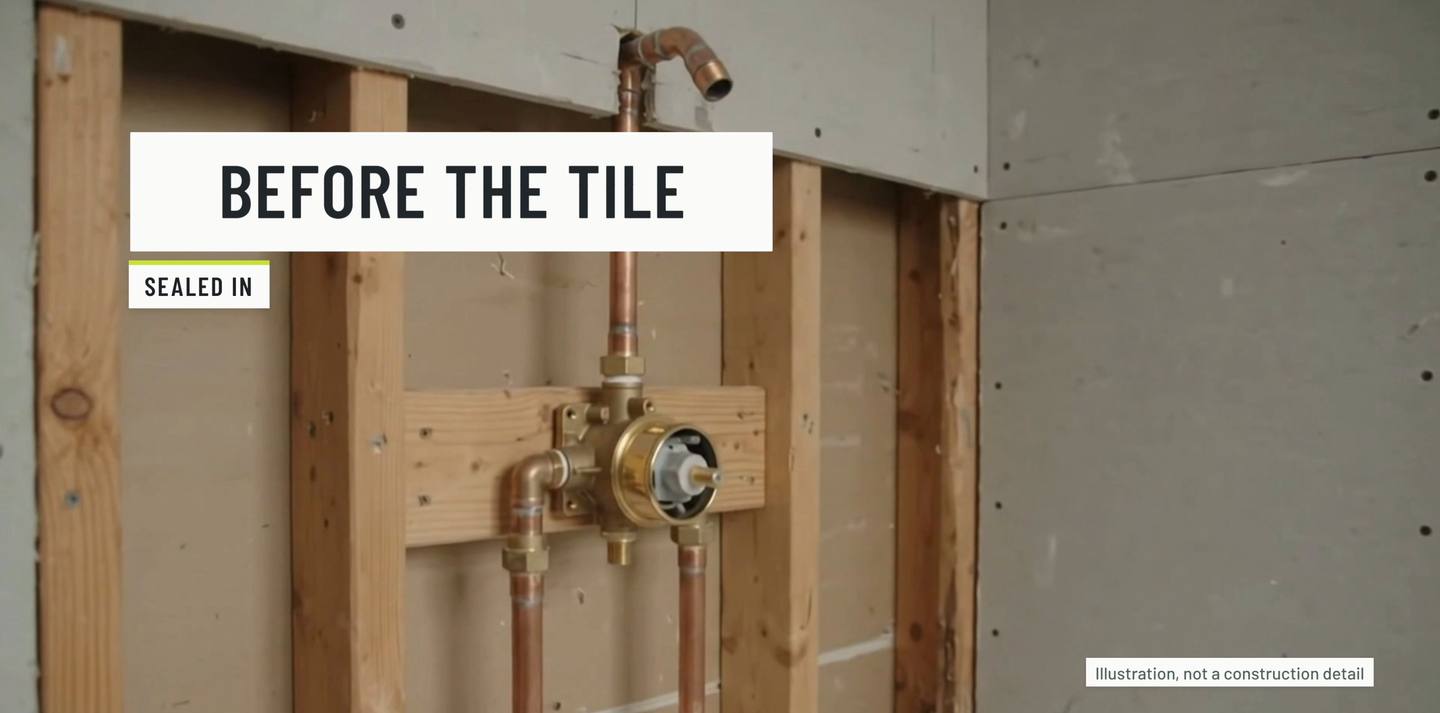
Then comes the part a cost table cannot show. The job the report priced reaches into the wall, so the mistakes I would look for first are the ones the tile is about to cover. Those are here too, from California's 2025 codes and the forms Fremont and Newark use.
Prefer to watch? Press play below. My video walkthrough runs a little over six minutes and ends with five words to find on your bid.
The numbers, with their year stamps
Start with the current edition. The 2025 San Francisco metro row, the column that covers Fremont, Newark and Union City: about 32,160 dollars spent, about 23,733 dollars credited, 73.8 percent.
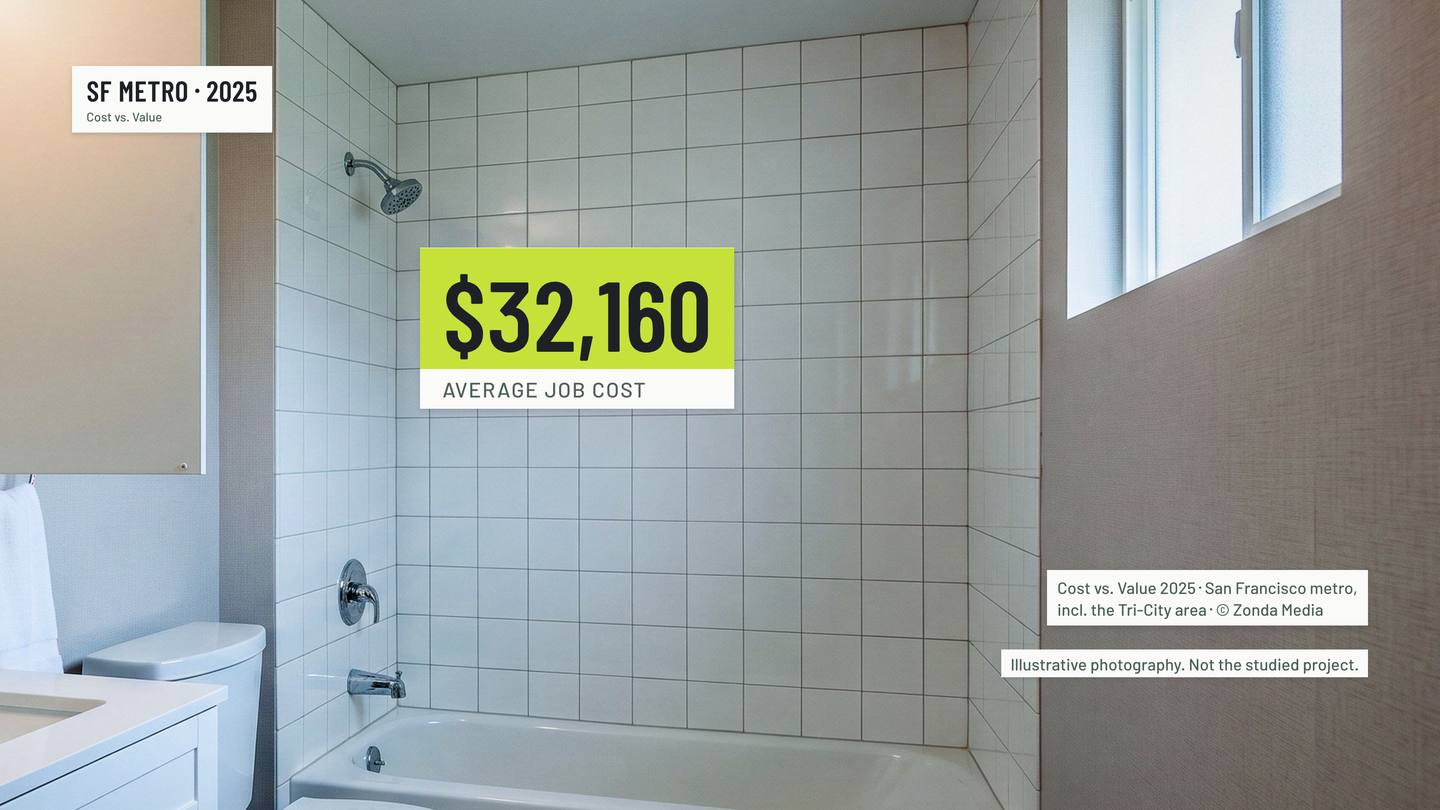
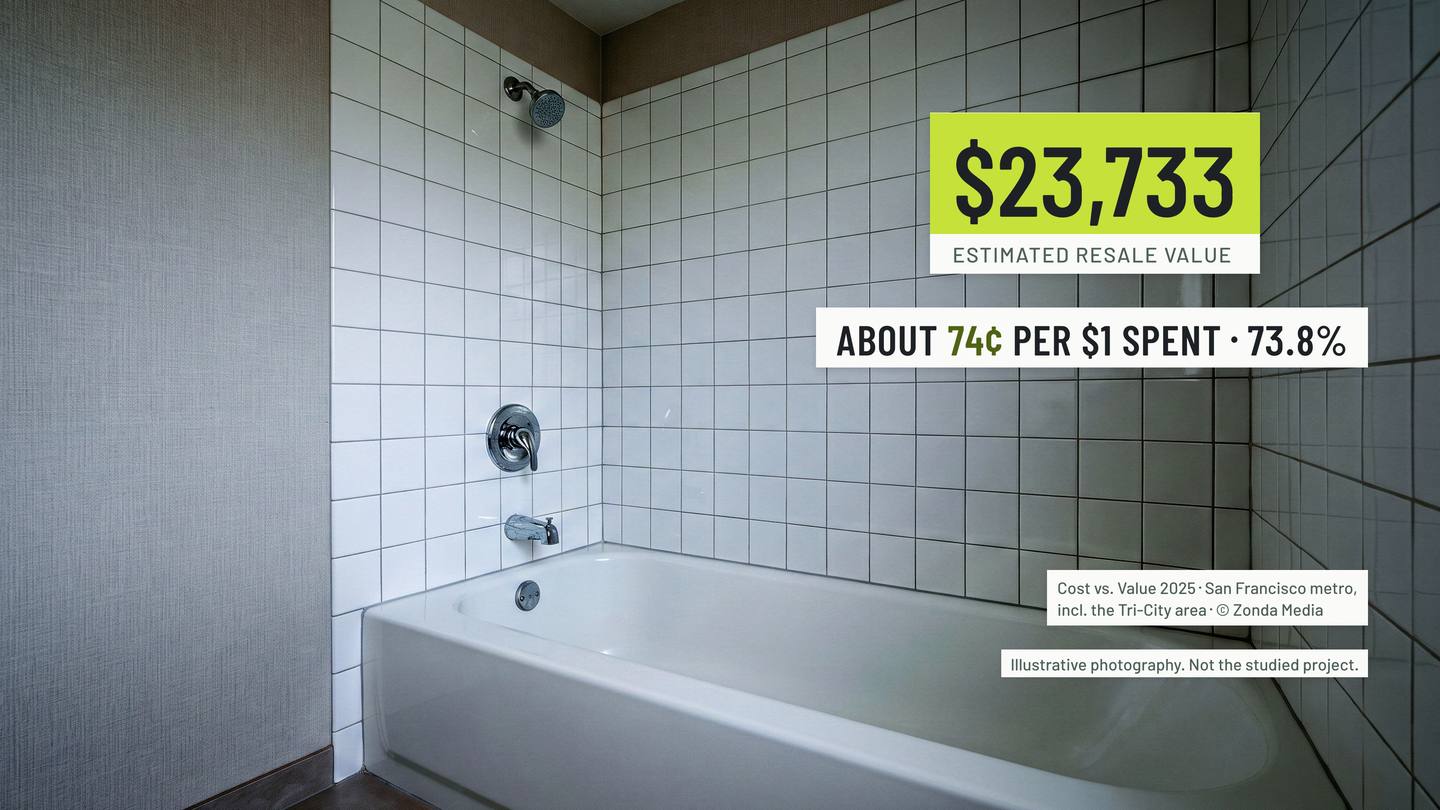
The resale side comes partly from surveys of real estate professionals, and the method changed between editions, so read it as a snapshot for a whole metro, not a promise about one house. The same edition put the Pacific region at 91 percent and the national average at 80, so the San Francisco figure is the lowest of the three columns in the chart below, not a law of bathrooms.
Midrange bath remodel: the 2025 payback picture
Source: 2025 Cost vs. Value Report, Zonda Media / Remodeling. San Francisco metro, Pacific region and national data as published at jlconline.com. © 2025 Zonda Media, a Delaware corporation. Percentages are averages for professionally installed projects across a whole metro, and the report's methodology changed between editions, so treat every figure as a planning signal with a year stamp, never a promise for any specific house.
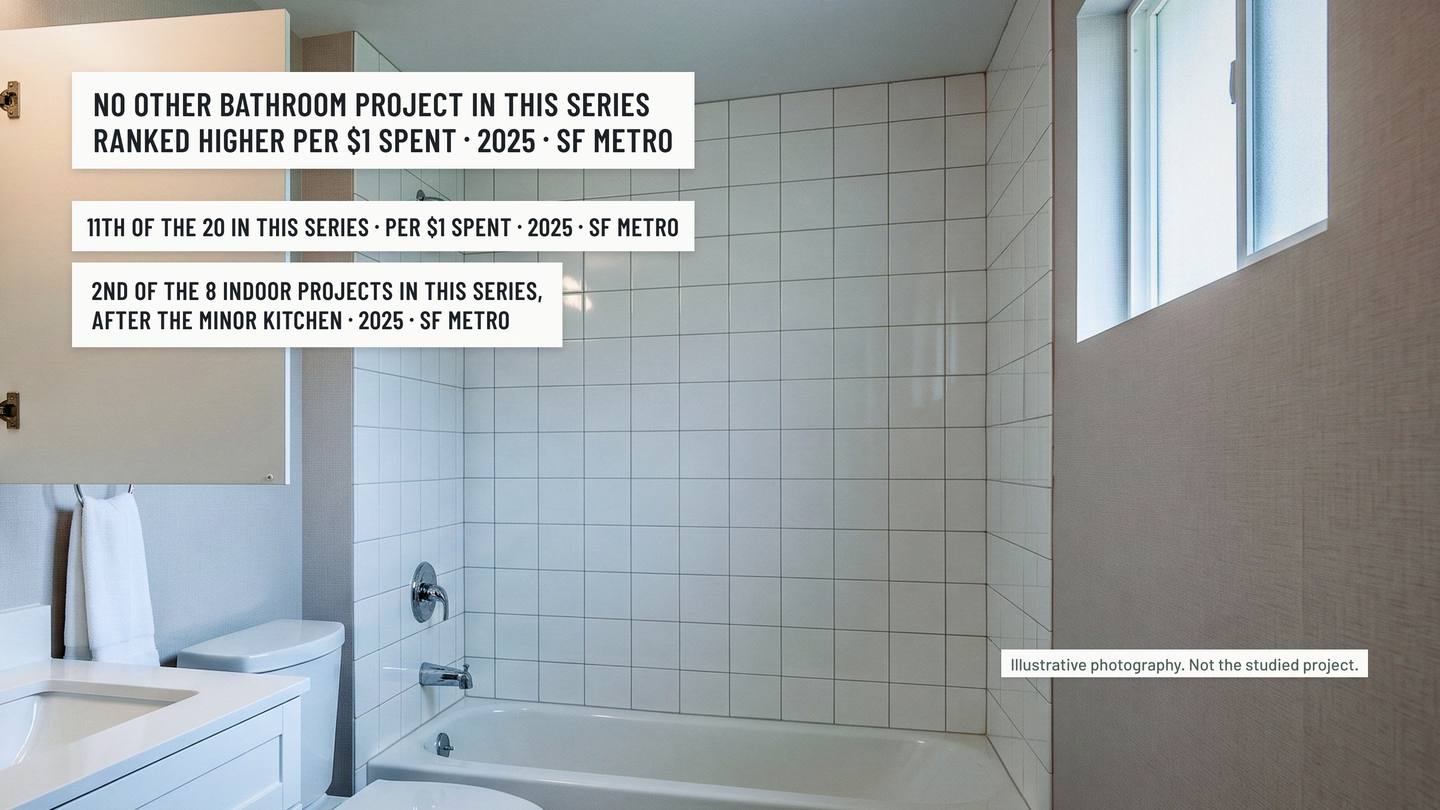
Read that honestly: in the 2025 San Francisco metro numbers, the estimated resale value of about 23,733 dollars sits well below the roughly 32,160 dollar cost. Also read it in context: in the same numbers it ranks eleventh of the twenty projects in this series and second of the eight indoor projects, behind only the minor kitchen, and far ahead of the upscale bath at 35.1 percent. In those 2025 San Francisco metro numbers, the least expensive bathroom project in this series kept the largest share of its cost in resale value.
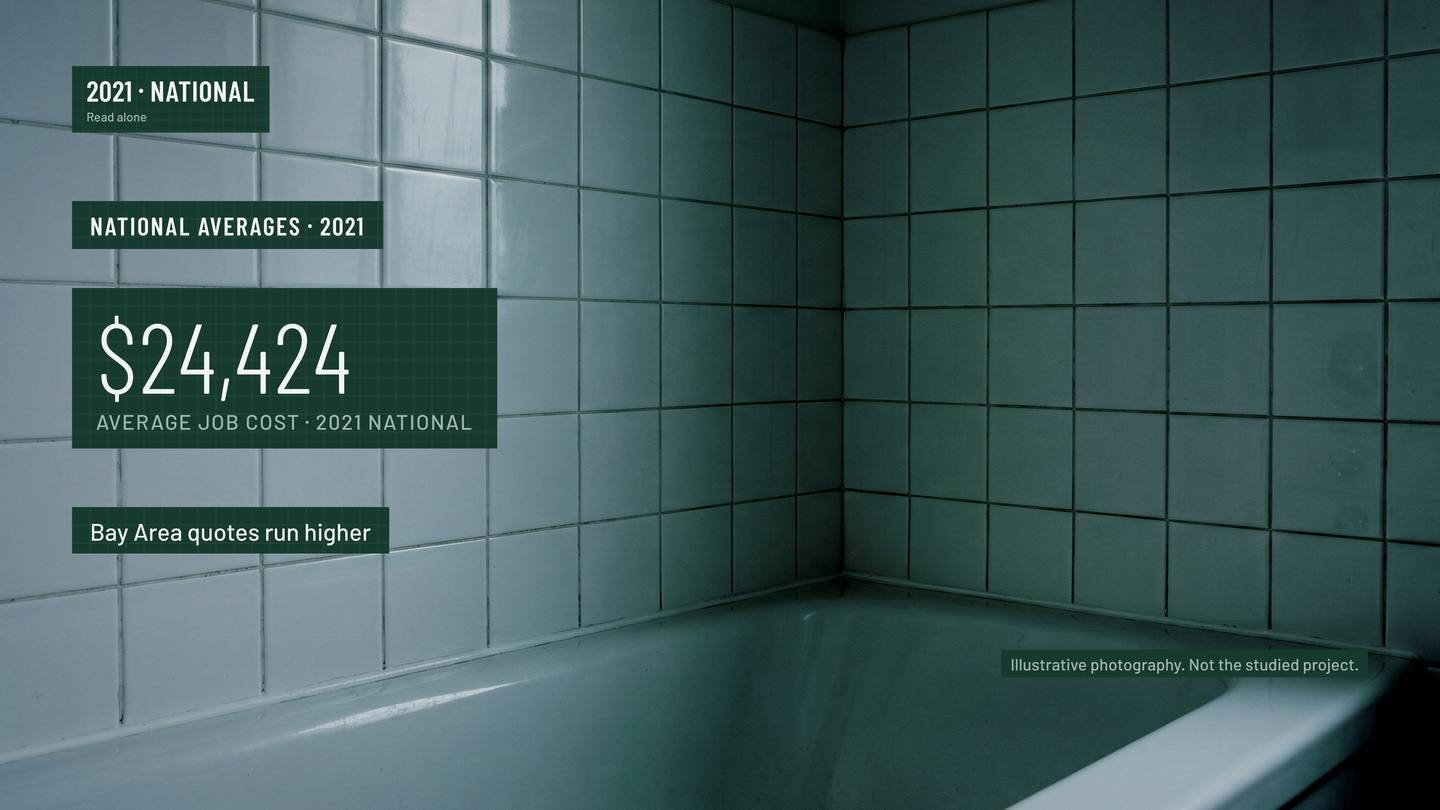
The 2021 national edition is a separate ruler, measured differently, so do not set it beside those 2025 figures. It priced the midrange bath remodel at 24,424 dollars, and Bay Area quotes usually run higher than that national price. About 14,671 dollars was credited at resale, a 60.1 percent recoup and thirteenth of the twenty projects in this series.
What the studied scope includes
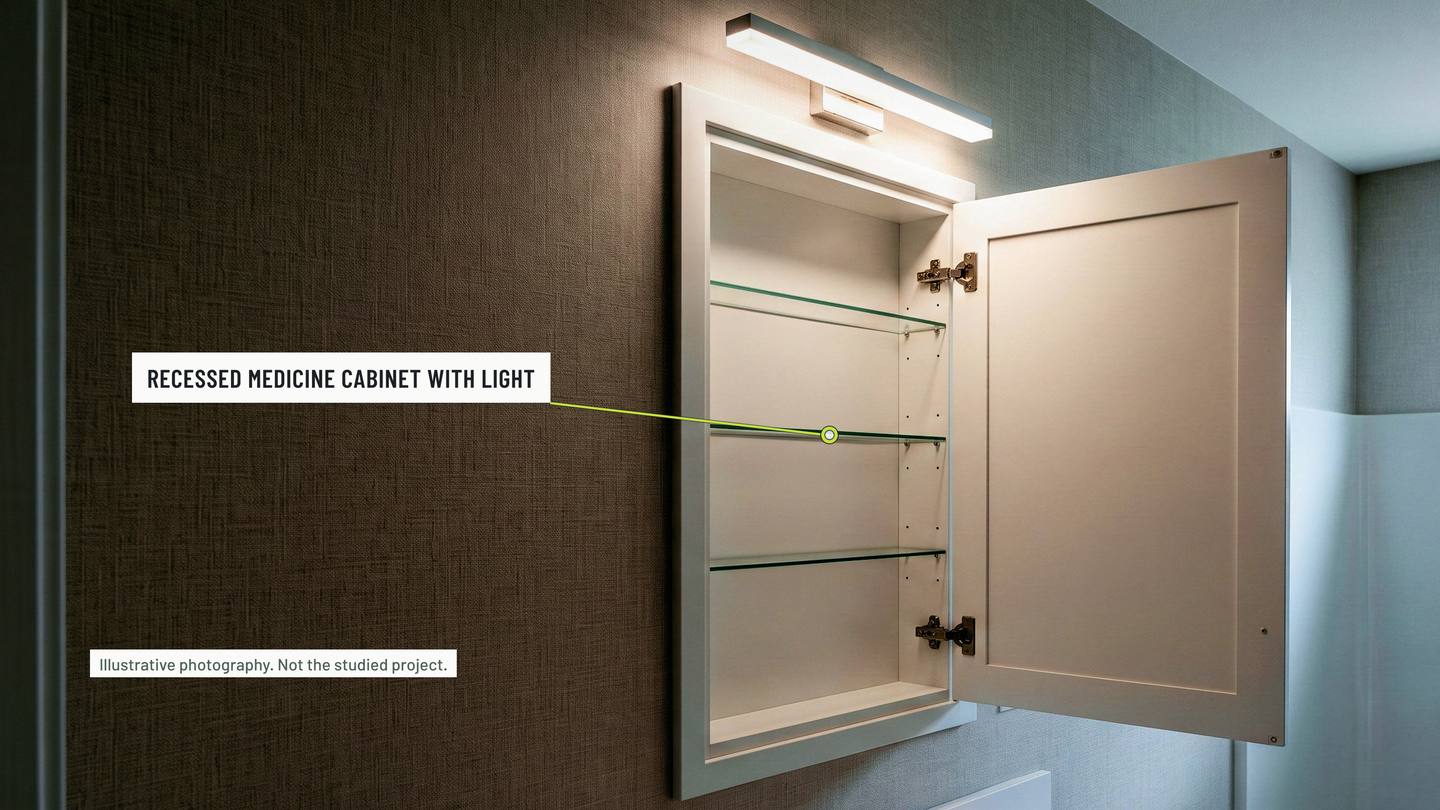
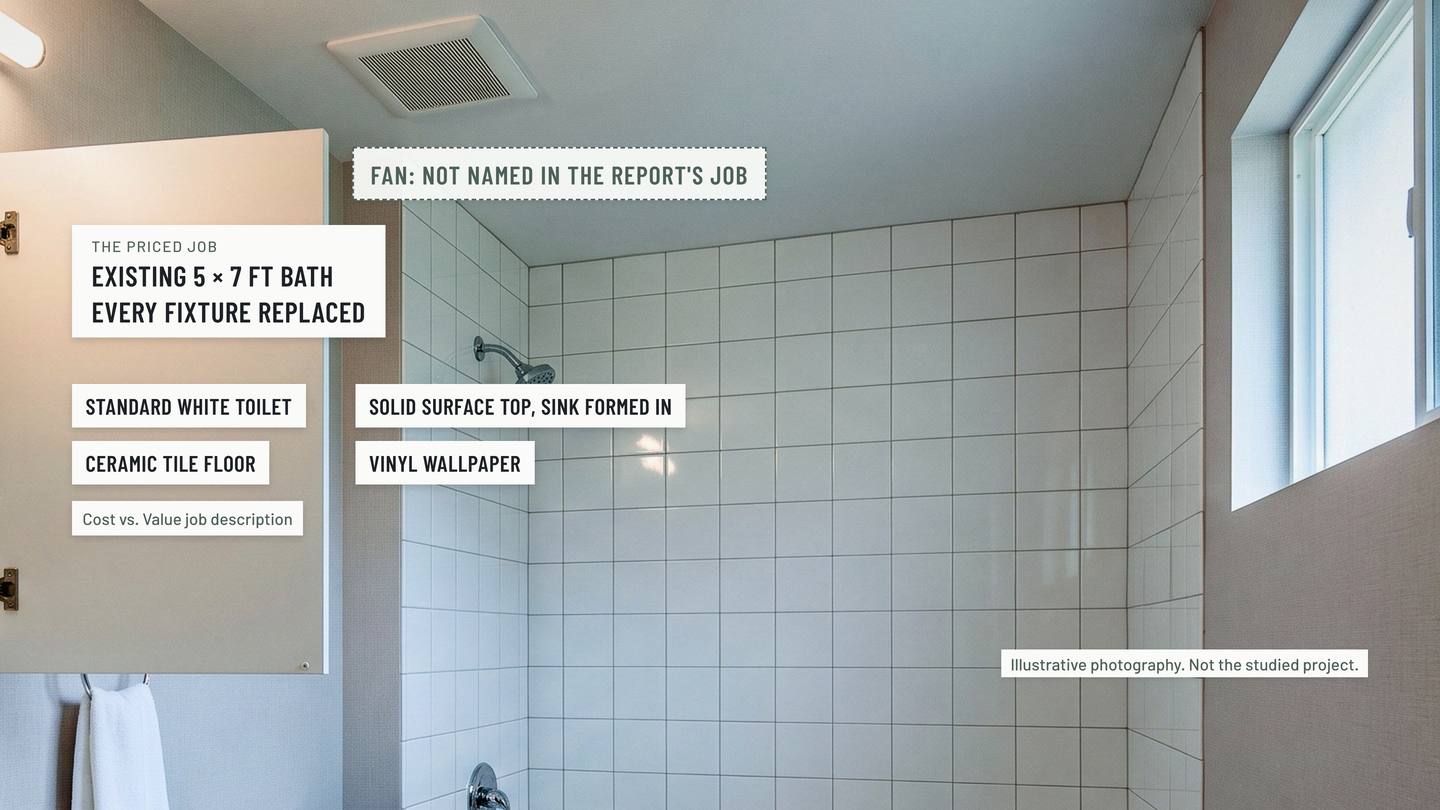
A full update of an existing 5 by 7 foot bath, with every fixture replaced: a 30 by 60 inch porcelain on steel tub with a 4 by 4 inch ceramic tile surround, a new single lever, pressure balanced shower control, a standard white toilet, a solid surface vanity counter with an integral sink, a recessed medicine cabinet with a light, a ceramic tile floor and vinyl wallpaper. That is a tub, not a shower stall, and wallpaper, not paint, so hold your quote against that list. Trading the tub for a curbless shower is a different job with a different price.
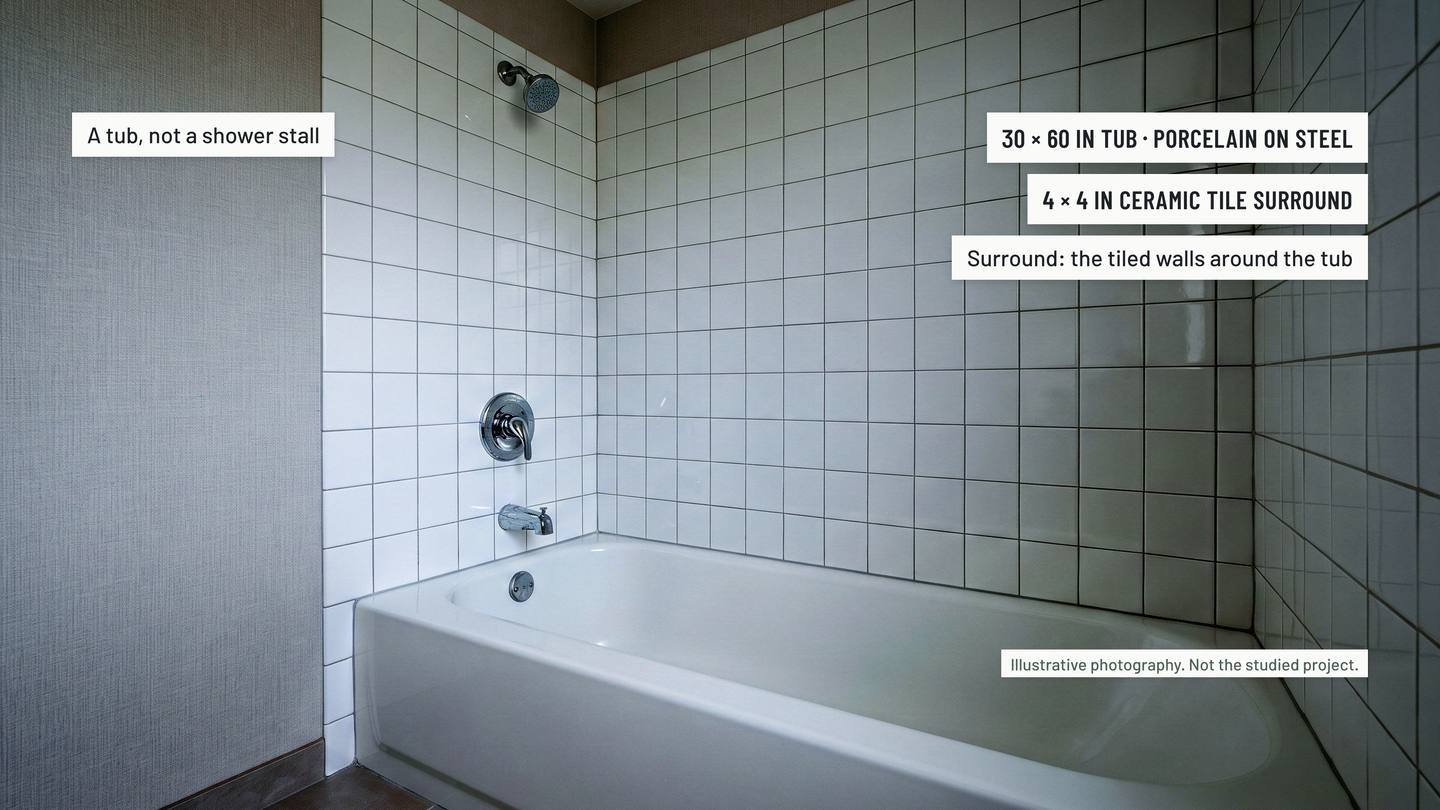
Nearly every surface a buyer sees is renewed, and some of the work sits in the walls: the new shower valve and the recessed medicine cabinet. The report's description does not mention moving any fixture, and in my experience, keeping the fixtures where they are is one of the biggest budget decisions in any bath project.
Five words to find on your bid while the wall is open
Tile goes up late, and it decides what you can still check. So I read the studied job next to California's 2025 codes and the remodel forms Fremont and Newark use, and five words came out of it. These rules bind the new work: both the plumbing code and the residential code say an alteration meets the rules for new work without making the rest of the house catch up.

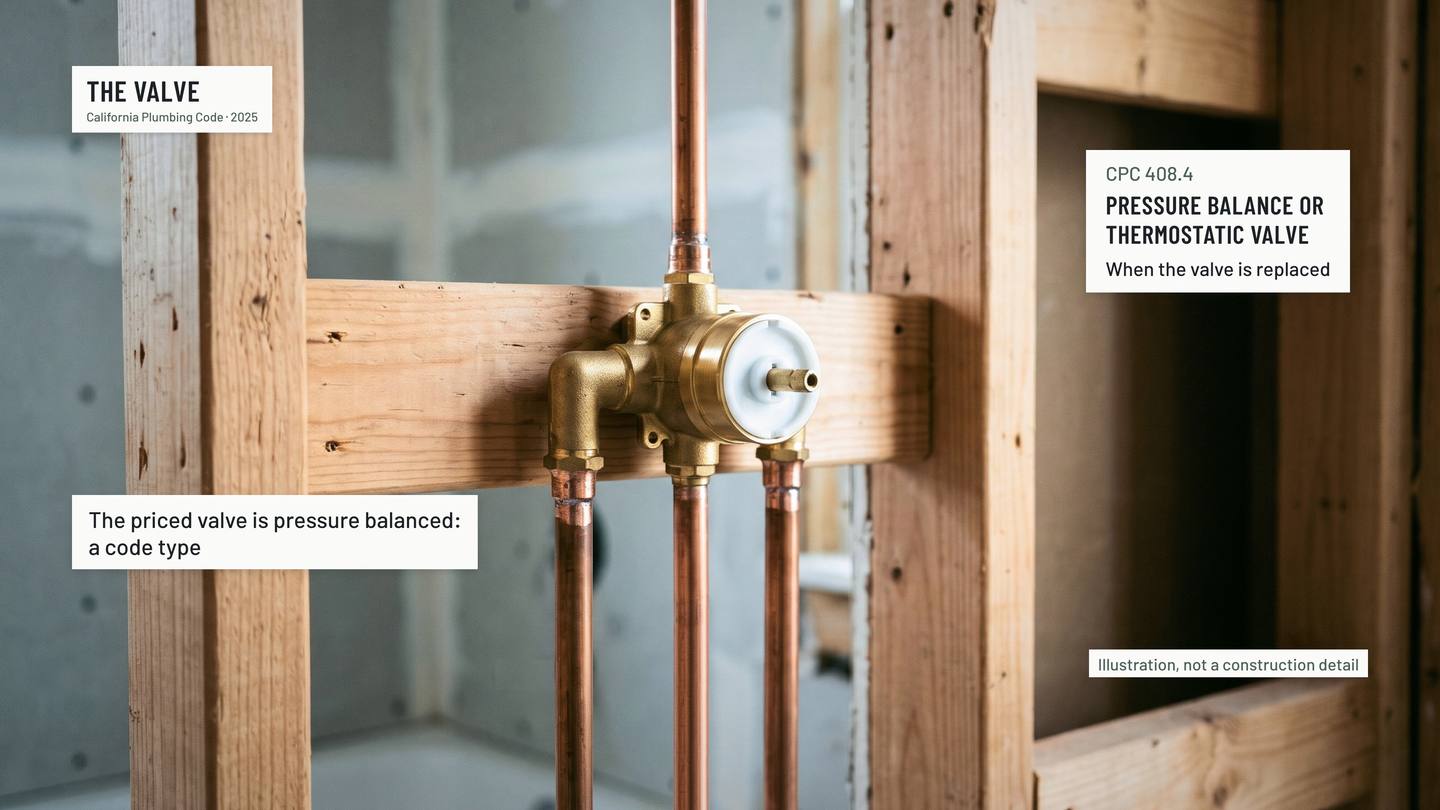
Pressure balance, or thermostatic
When the shower valve is replaced, California's 2025 plumbing code calls for a pressure balance or thermostatic type, built to guard against scalds and sudden swings in temperature. The valve the report priced is the pressure balanced kind.
The same code limits the water at the showerhead to 120 degrees, set at the valve.
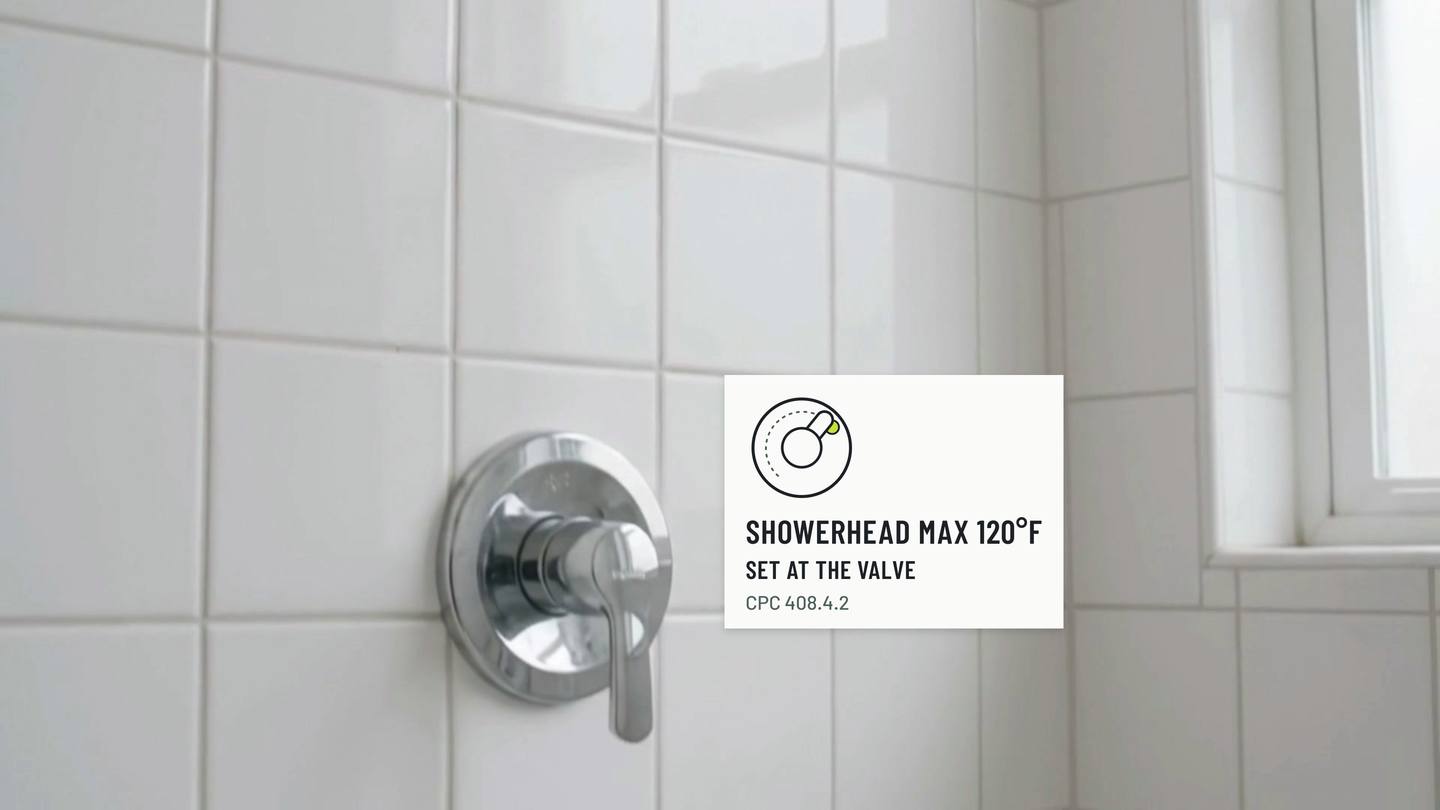
Fremont's remodel form puts it plainly: "The water heater thermostat cannot be used as the control for this temperature."
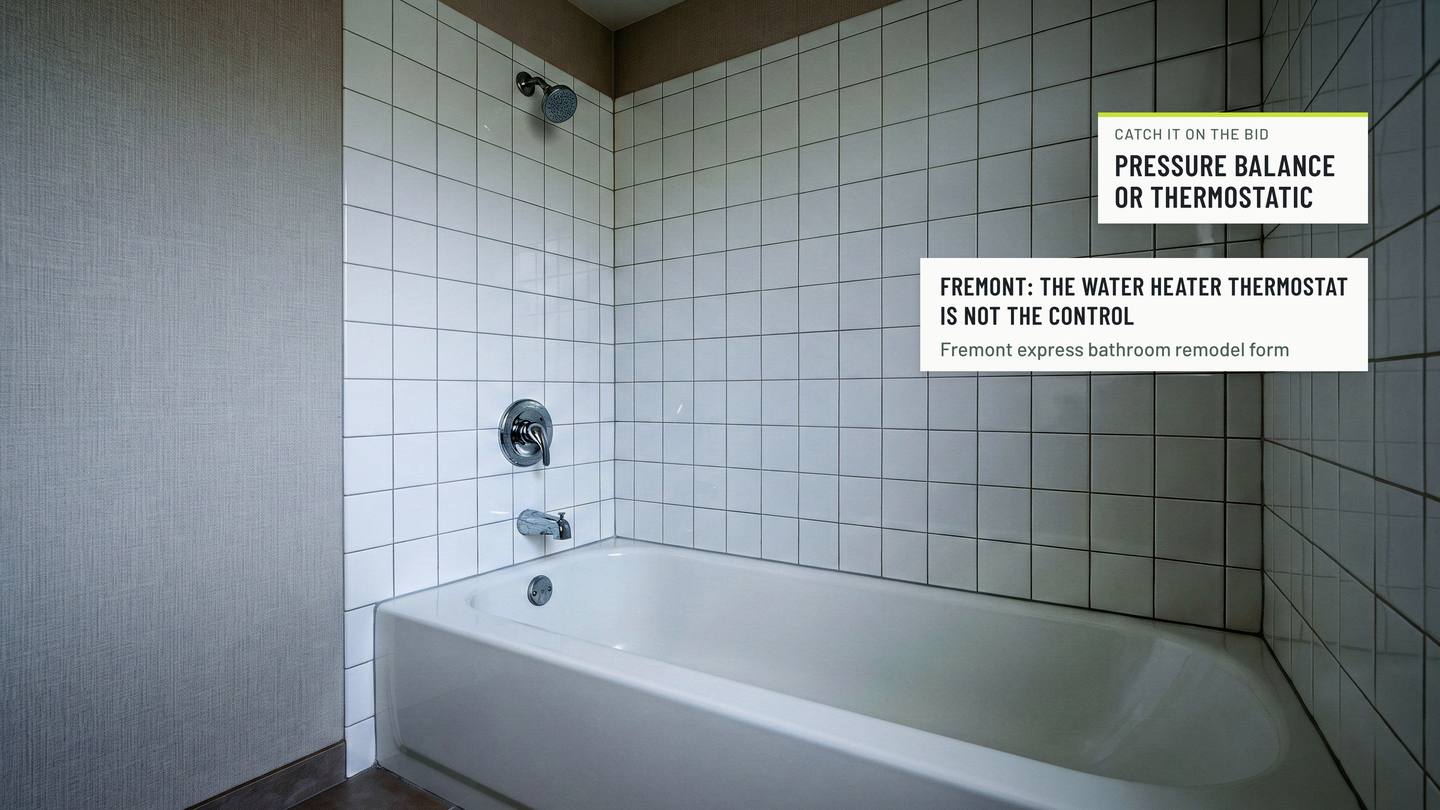
In my experience, that valve and its pipes end up sealed in the wall, under the tile, which is why this word comes first. While the wall is open, ask about the hot water lines too. Fremont's form holds "newly installed and existing accessible piping" to the state's pipe insulation rule, which has its own exceptions. My read: an open wall is about as accessible as a pipe gets, so ask what the bid does with them.
The backer board, by name
When tub walls are retiled, California's 2025 residential code allows four kinds of backer board, the panel the tile is set on: glass mat gypsum, fiber reinforced gypsum, fiber cement and cement backer units, each installed the way its maker says. It keeps water resistant gypsum board out of areas with direct exposure to water, and over a tub with a showerhead it wants a nonabsorbent finish at least 6 feet above the floor. If your bid says "tile" and stops there, ask it to name the board.
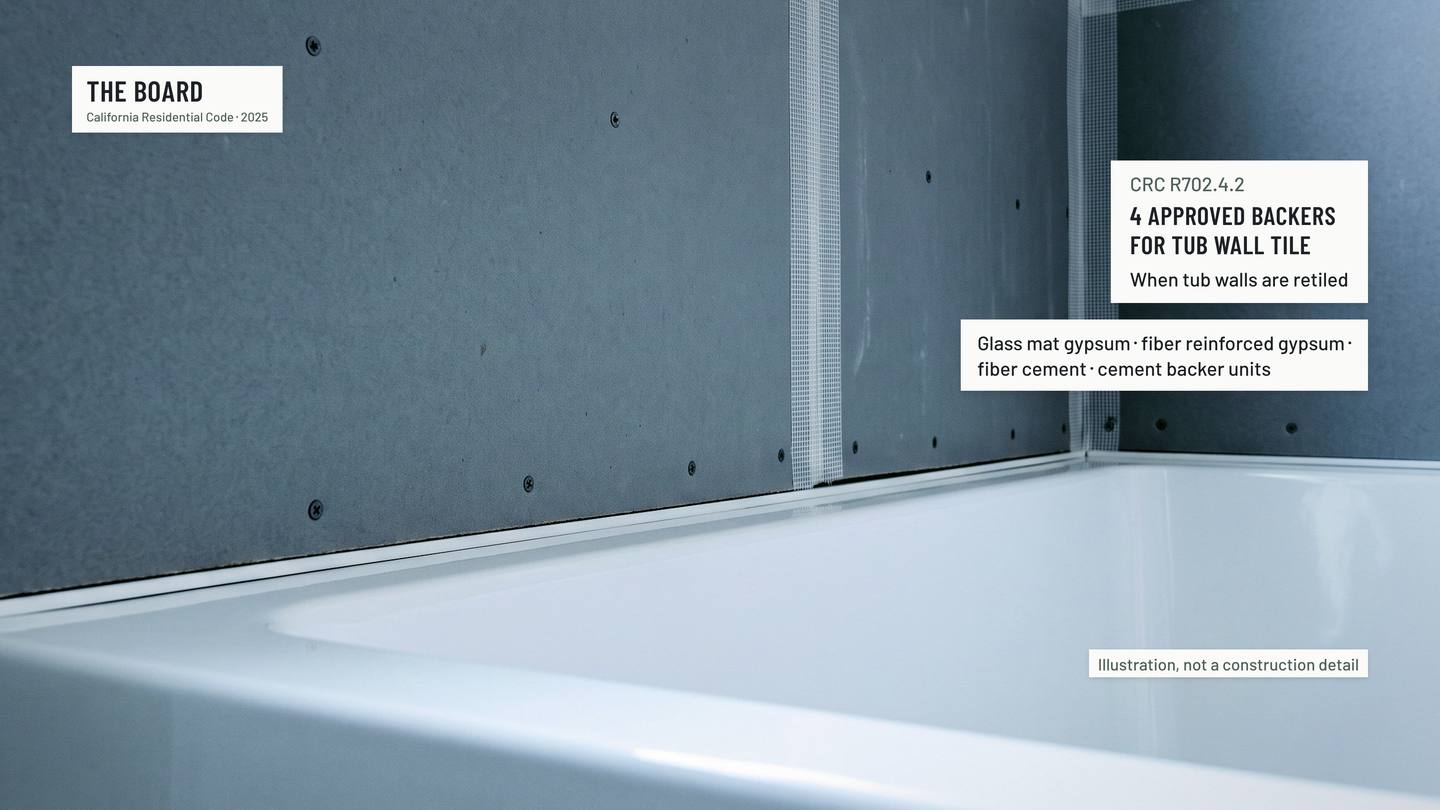
A fan, vented outdoors
The report's job description does not name a fan, so look for one on your bid.
When a bath fan goes in, California's 2025 residential code says its air goes directly to the outdoors. The remodel paperwork in Fremont and Newark wants a fan in a bath with a tub or shower, and the code adds that opening a window does not count.
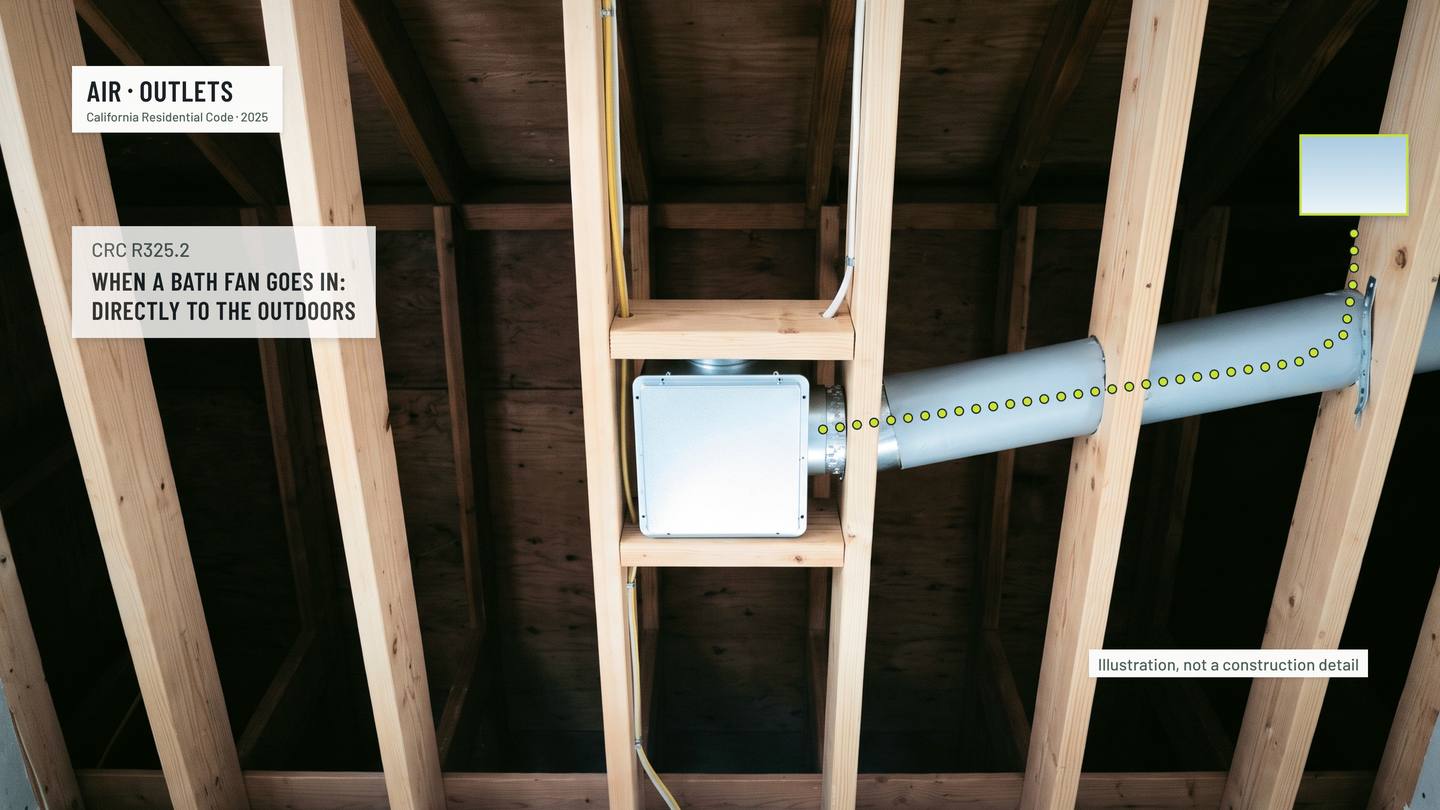
The cities add detail. Fremont's form asks for at least 50 cubic feet a minute, or 20 if the fan runs continuously, on a switch separate from the lights, with the duct ending at least 3 feet from openings into the house. Newark's handout asks for a humidity control and a backdraft damper on every bathroom remodel.
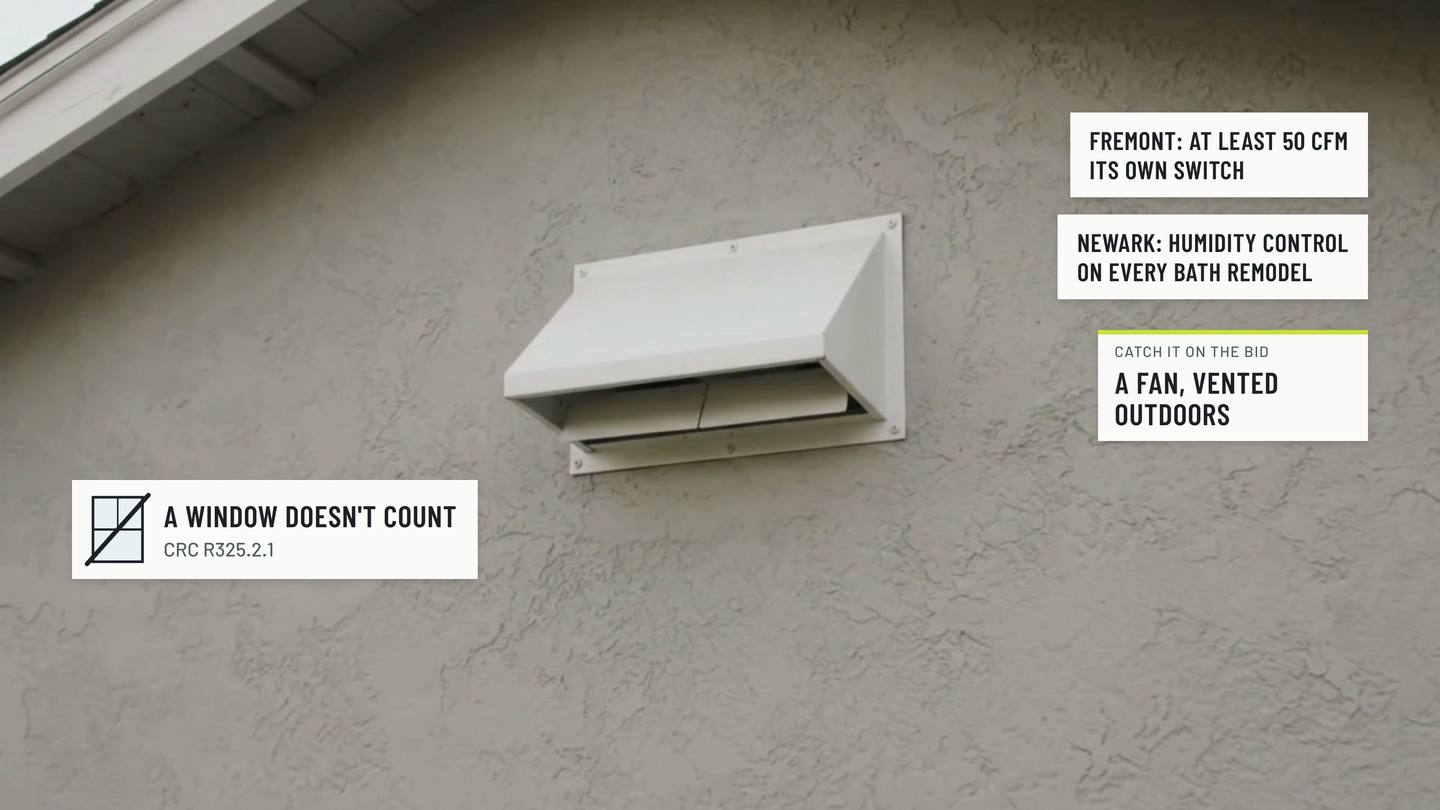
Moisture is the quiet stakes of this project in our older homes. My read: the board and the fan are the parts you cannot photograph, so ask how they will be done before you sign.
GFCI
Fremont's form, citing California's 2025 electrical code, wants bathroom outlets ground fault protected, GFCI for short, and that protection can sit in the outlet or the breaker. Fremont and Newark both call for a 20 amp circuit. If it serves one bathroom, that bathroom's lights and fan can share it.
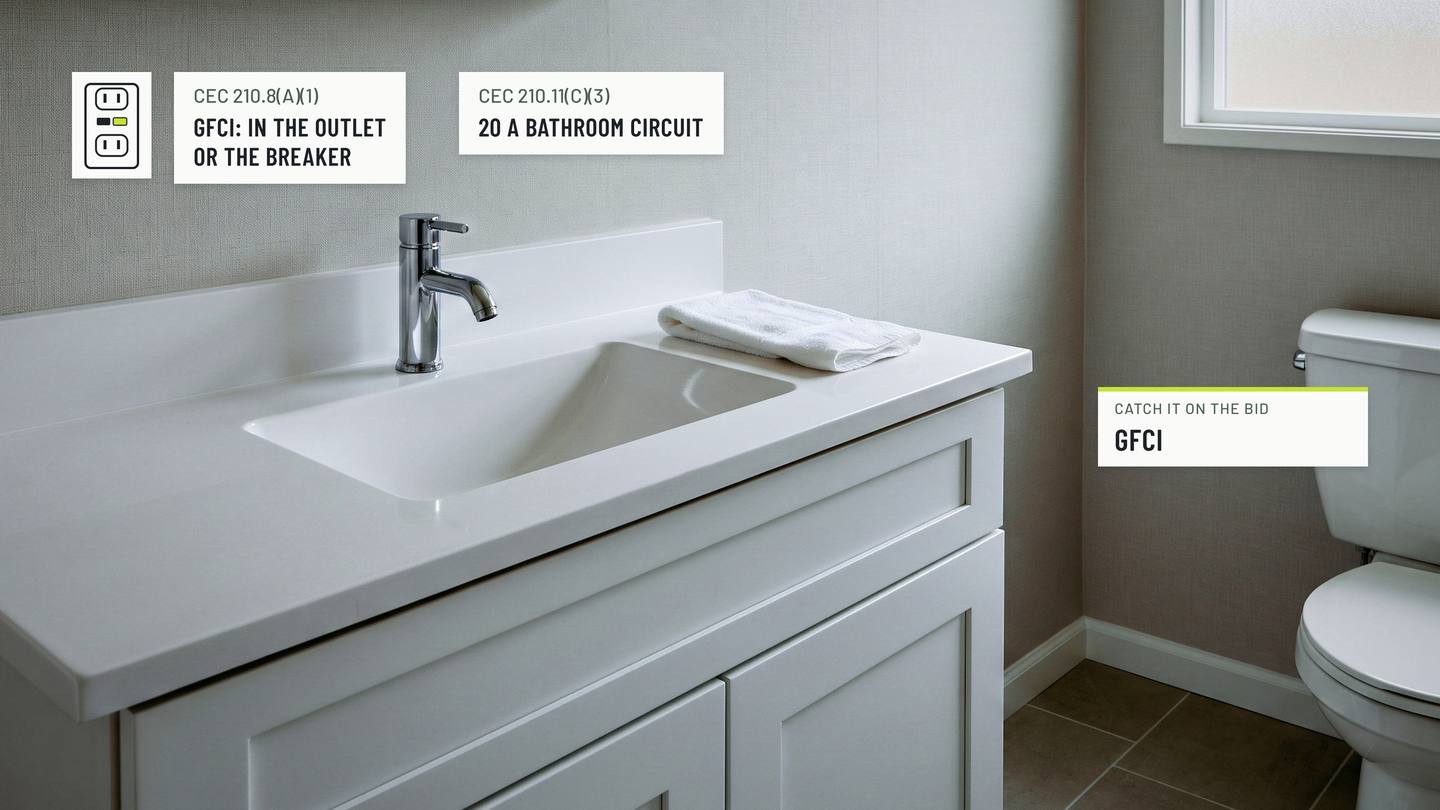
One line on Fremont's form deserves more attention than it gets: because of the added circuits, the main electrical panel "may be required to be upgraded based upon field verification." In an older house, ask about that before the bid is final, not after the inspector does.
A permit
Permits apply once plumbing, electrical or ventilation work enters the scope, which in a real bath remodel it usually does. California's 2025 residential code exempts painting, papering and tiling, but its plumbing exemptions stop where valves, pipes or fixtures get replaced or rearranged, and each city adds its own paperwork. Fremont and Newark both offer an online permit path for a like for like bathroom remodel with no wall or structural changes; in Union City, start with the Building Division at 510-675-5313.
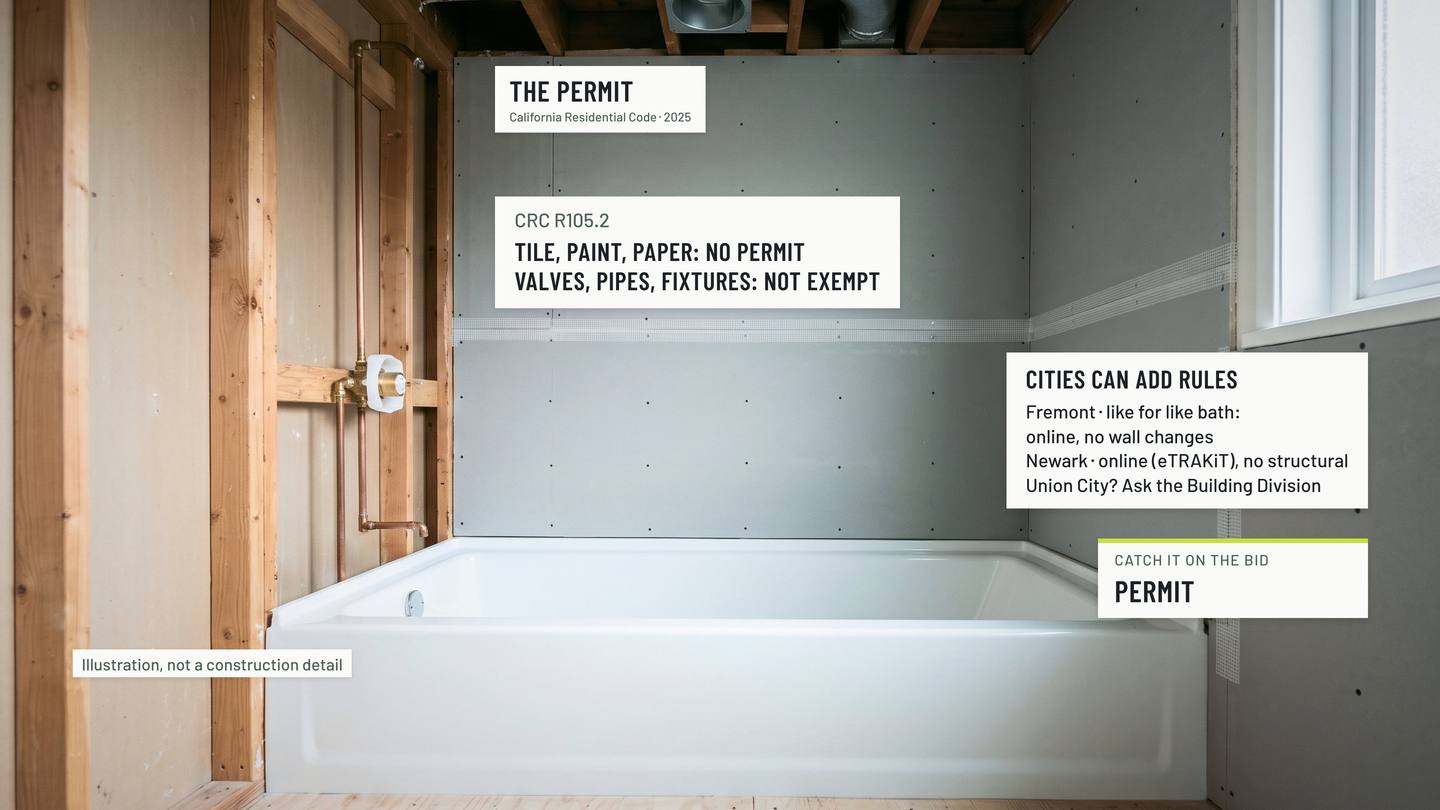
The permit is also what brings an inspector to the open wall. The inspection section of that code, which cities adopt, has the rough inspection of plumbing, mechanical and electrical work made "prior to covering or concealment." Fremont says all permits require an inspection, express permits included. Newark's inspection sheet is blunter: failing to call for a required inspection may mean "having to dismantle completed work." So ask who calls the inspector, and put that visit on the schedule ahead of the tile.
A bathroom permit can reach every fixture in the house
Many of our homes are older than you might think: Census estimates for 2020 to 2024 put the median year built at about 1975 in Newark, 1979 in Fremont and 1980 in Union City. That matters here, because California's water conserving fixture law covers homes built on or before January 1, 1994.
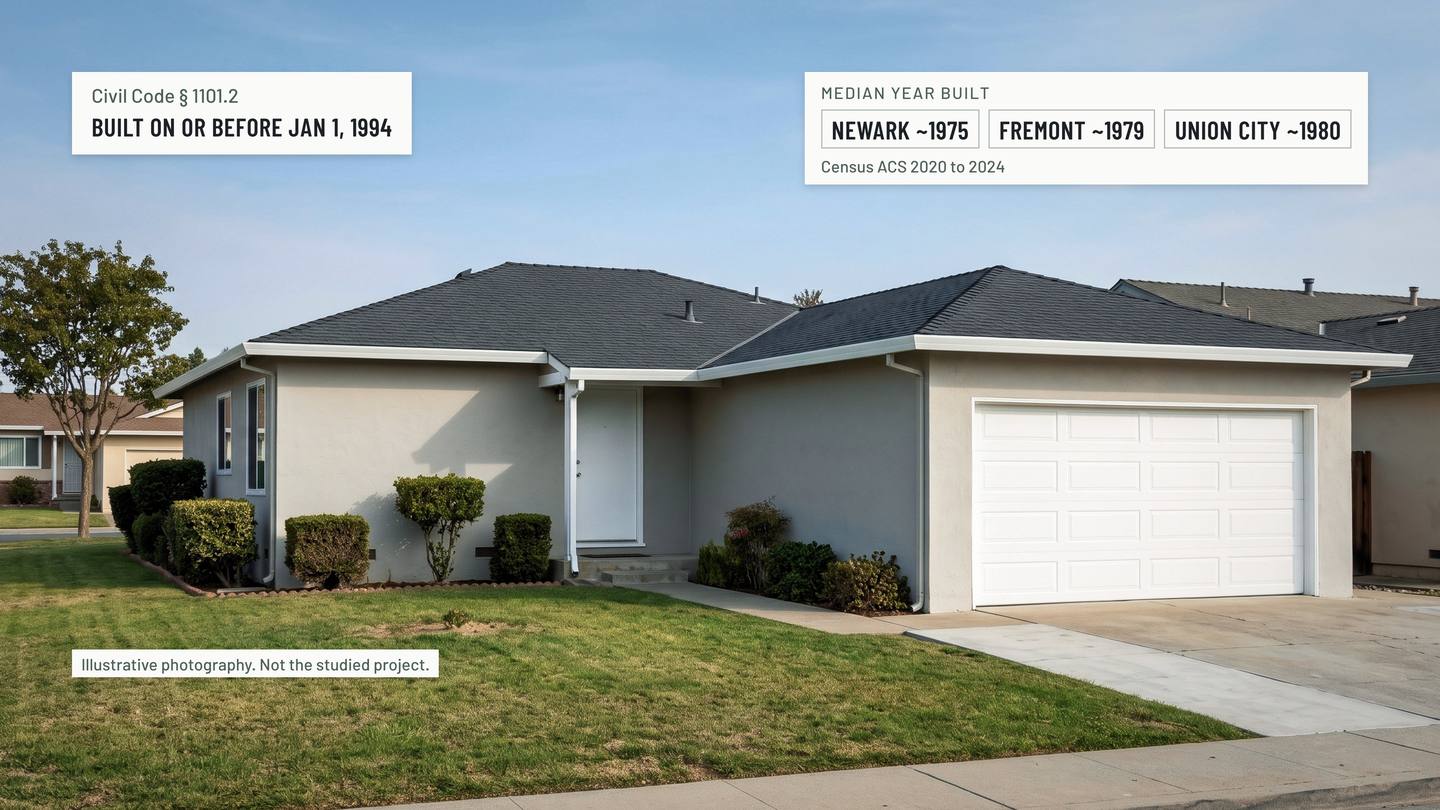
In a house that old, a permitted remodel cannot get its final sign off until every noncompliant fixture is replaced: a toilet over 1.6 gallons a flush, a showerhead over 2.5 gallons a minute, an interior faucet over 2.2.
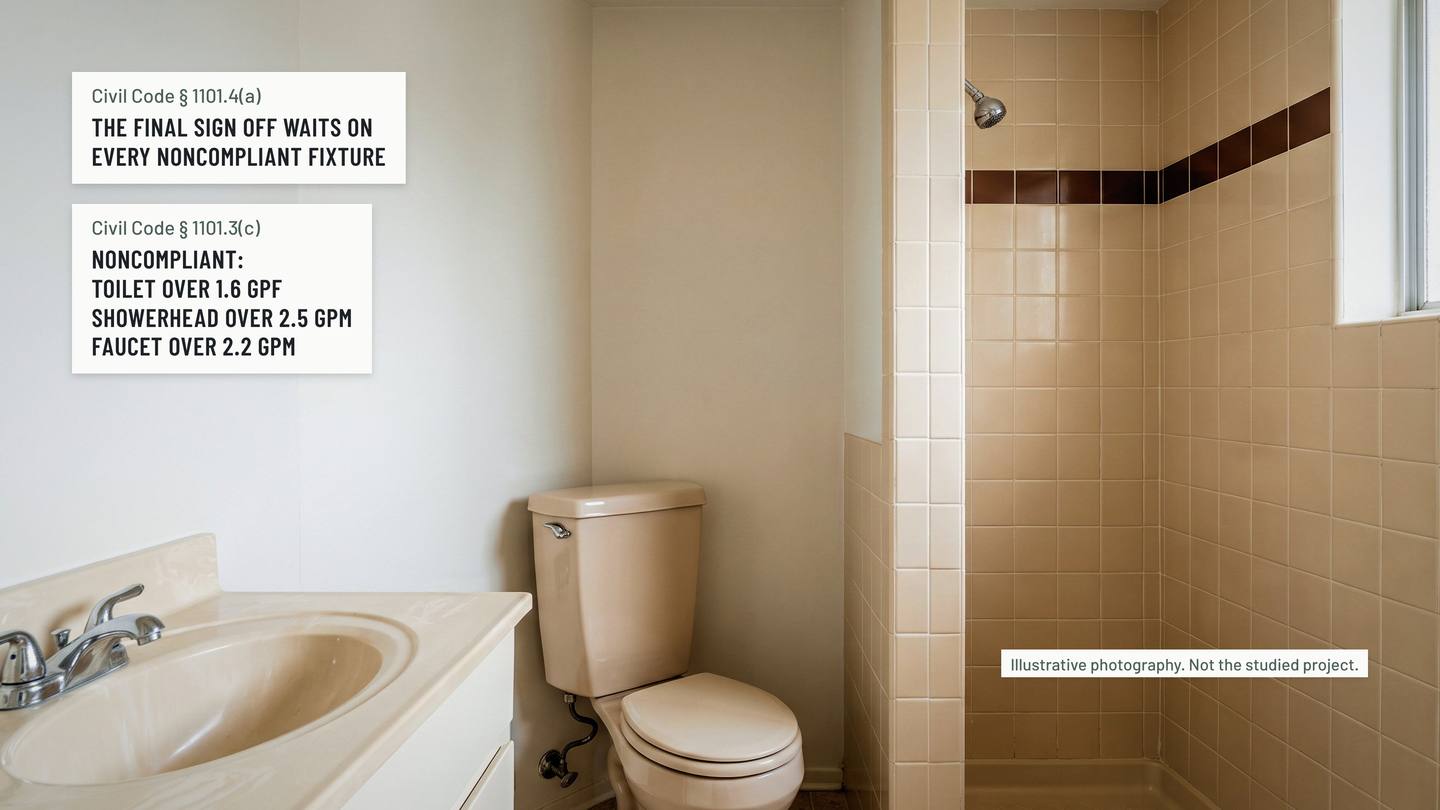
Fremont reads that as every one in the house, not just the bathroom you are redoing. Its handout also carries a form I would want to see before the job starts, not at the end of it. The permit cannot be finaled until the owner signs a certificate, under penalty of perjury, that the noncompliant fixtures have been replaced. That is your signature, not the contractor's, so walk the other baths and the kitchen before the bid is final.
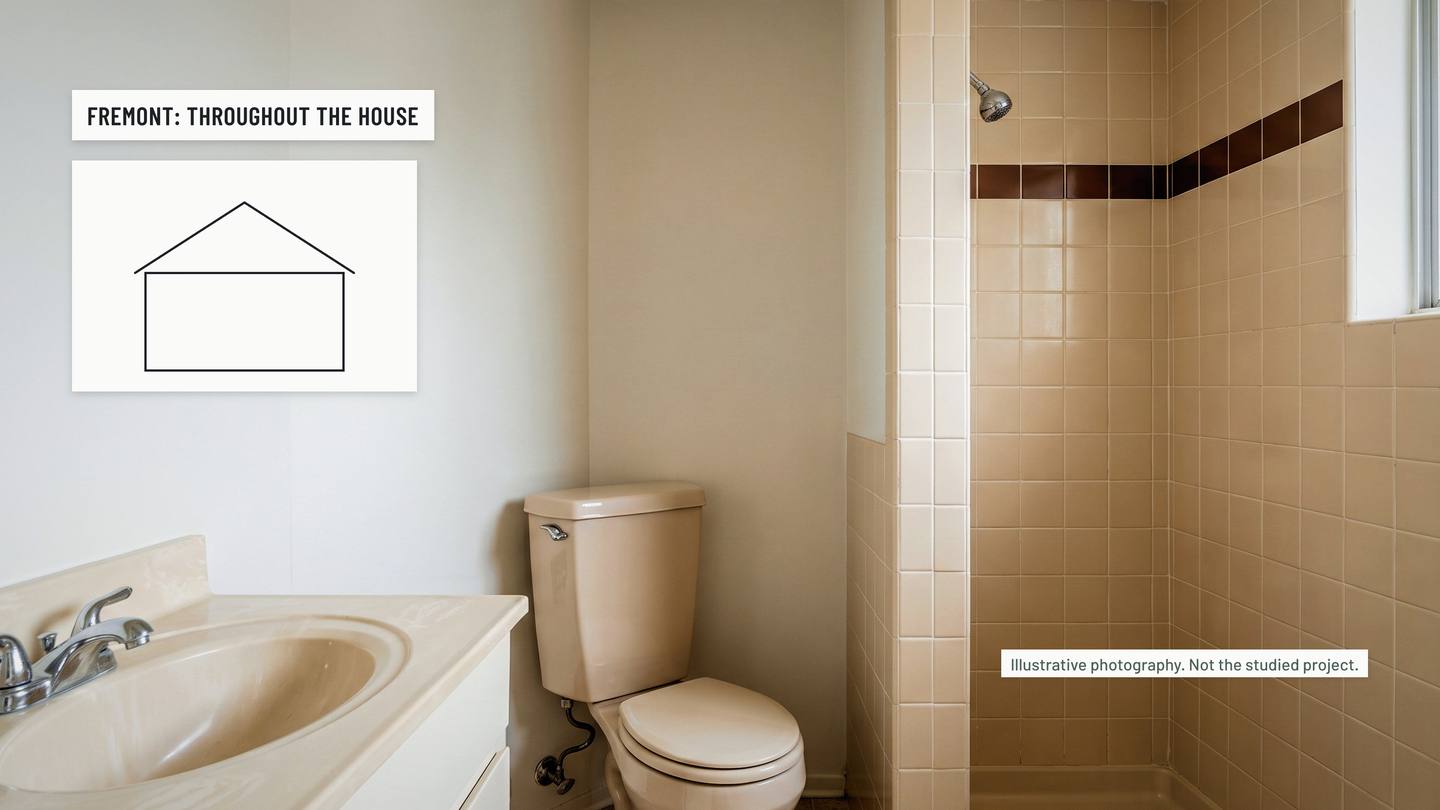
It is not every fixture, and it is not every permit. A fixture at or under those limits can stay. A licensed plumber can certify that the change is not technically feasible. Fremont's list of work that does not trigger the rule includes electrical work, a water heater and windows; a bathroom remodel is not on that list. Anything you buy new has lower limits: Fremont's and Newark's forms say 1.28 gallons a flush, 1.8 gallons a minute at the showerhead and 1.2 at the bathroom faucet. Some cities with an older retrofit ordinance of their own are exempt, and condos and other multifamily buildings follow a different section, so check with your building department.
It also reaches past a remodel. The same law set January 1, 2017 as the date for owners to replace those fixtures, and when a house like that sells, California has the seller say in writing whether any remain.
The local wrinkles
When a contractor is paid to disturb paint in a home built before 1978, the EPA's lead safe rule applies unless the job stays within its small job limit (6 square feet of painted surface per room inside, and no demolition of painted surfaces) or testing shows the painted parts are lead free. The firm must be EPA certified, a certified renovator must direct the work, and you should receive EPA's Renovate Right pamphlet before work starts, so ask early.
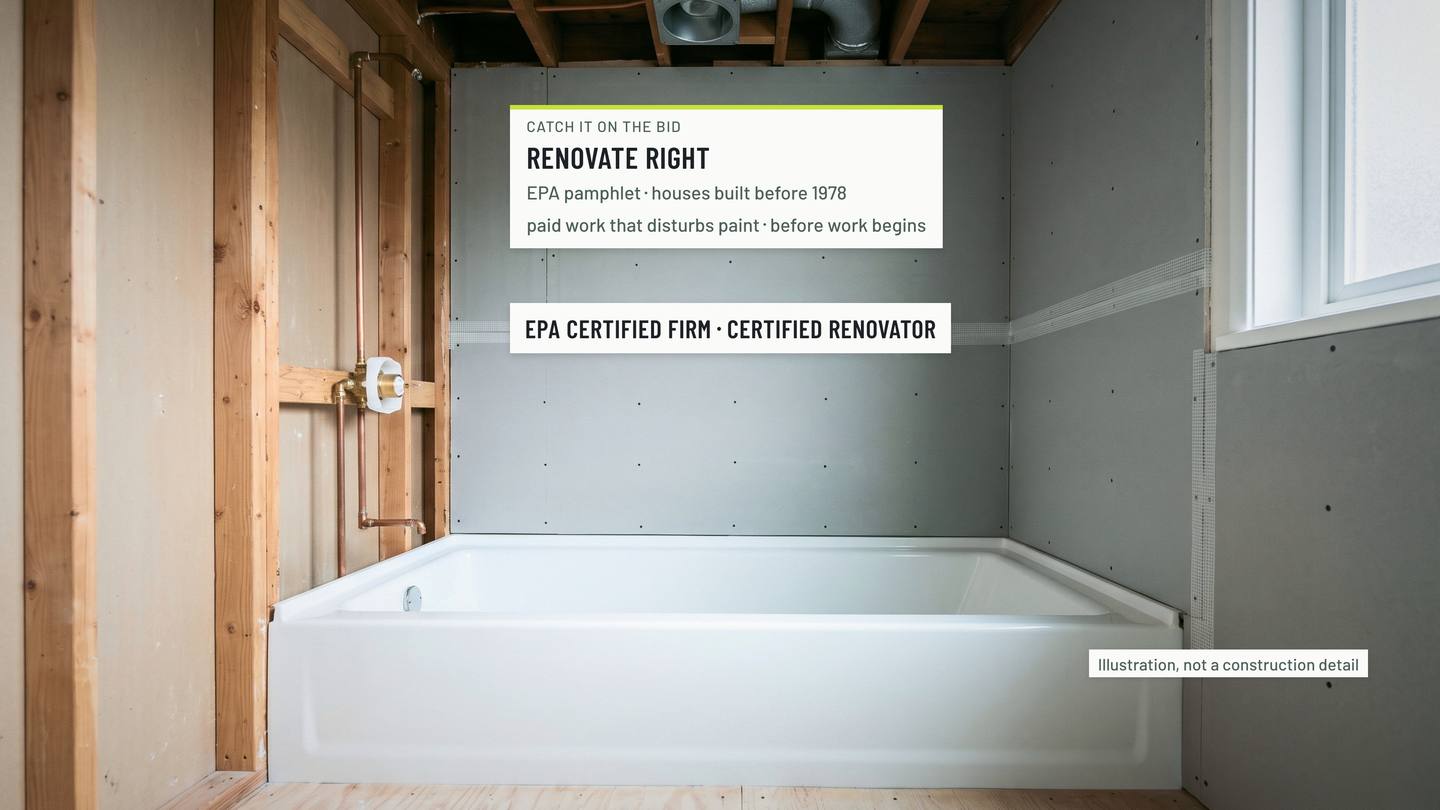
That pamphlet is the sixth word for an older house. The rule has the firm give it to you no more than 60 days before work begins and get your written acknowledgment, or mail it at least 7 days before. In general the rule does not reach owners doing their own work on their own home, but it does if you rent out all or part of it.
The new appraisal report looks at each bathroom
Fannie Mae and Freddie Mac's redesigned appraisal report, required on new reports for their loans from November 2, 2026, with exceptions for some lenders, gets specific here. For every bathroom the appraiser records an update status, a time frame for that update and a condition status, then gives one overall update status for all the bathrooms together.
The wording sits close to this post's question. A bathroom "completely modernized, renovated, refinished, or remodeled to a like new condition" is Fully Updated. One with "some replaced, refinished, or refurbished components" that stops short of total replacement is Partially Updated. For the overall answer, Fully Updated means all of them, so a new hall bath beside an original primary bath lands lower on that scale. On the whole home condition scale, the examples list remodeled bathrooms at C3 and bathrooms that are "dated but fully functional" at C4.
Those are an appraiser's judgment calls, and the guide puts no dollar figure on them. My read: if you do the work, keep the permit and the invoices with their dates, because the report asks when the update happened.
My read, by your timeline
Is it worth it? I would sort your bid into two piles first. Sealed, closed in once the tile goes up: the valve, the tub, the backer board, the wiring, the fan's duct.
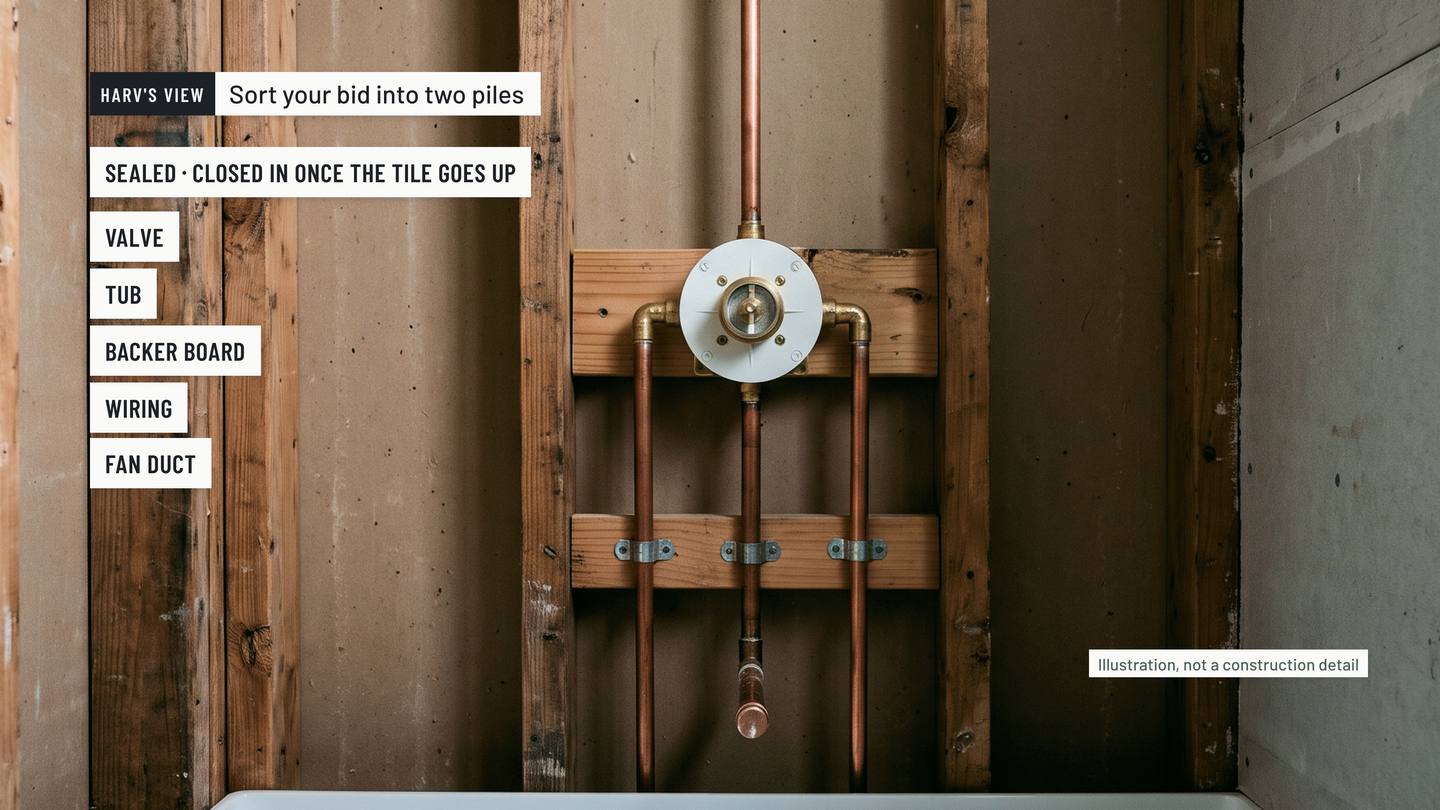
Swappable: the toilet, the vanity top, the wallpaper.
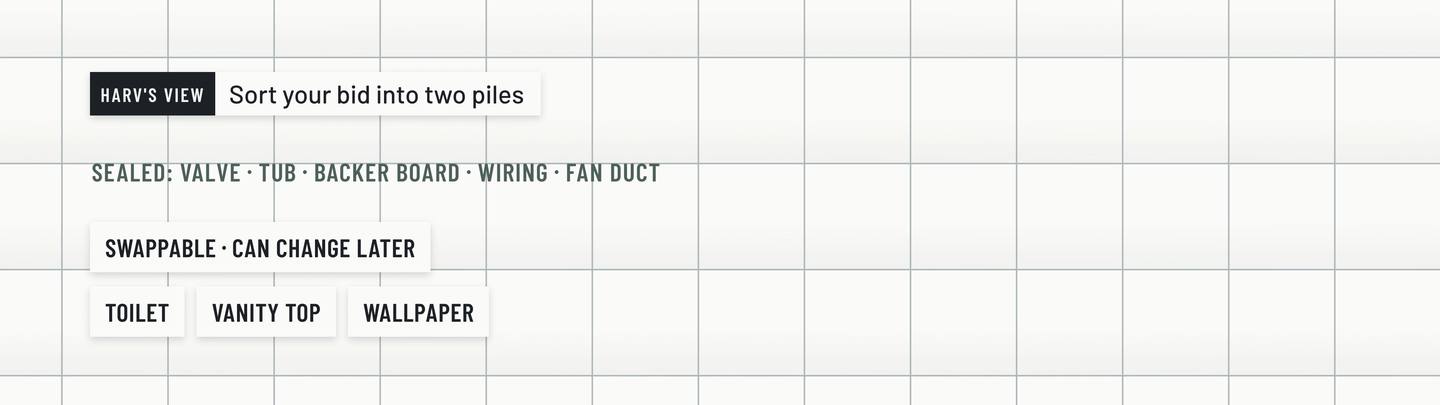
My view: a remodel like this is worth doing when the bid gets the sealed pile right, because that is the pile you get one shot at. The swappable pile can always change later.
Selling soon: refresh, do not remodel. Vanity, faucet, lighting, mirror, hardware, caulk, paint. In my experience, that kit costs a few thousand dollars, shows beautifully, and leaves the full remodel margin in your pocket while your list price does the earning. Check your city's permit rules before you start: Fremont, for one, lists replacing an electrical fixture among the jobs its express electrical permit covers. Remodel only for genuine failure. If selling is part of the plan, text me first, and I will pull what similar homes near you have sold for.
Staying five plus years: my read is that this project's real payoff is measured in mornings. The gap between what it costs and what the 2025 metro data says it adds at resale is money spent knowingly on a room you use every day, on a board where much worse deals live.
What would this midrange bath remodel quote get back?
I apply the 2025 San Francisco metro recoup average for this project, about 73.8 percent, to your real number. A planning picture before you sign, not a valuation.
Plan on about $8,427 of this quote staying in the house on the metro average. If the sale is this close, that money usually works harder in prep, paint and pricing than in a project the next owner reprices anyway.
A planning illustration, not a valuation, appraisal or promise of any outcome. It applies one published metro average (2025 Cost vs. Value Report, Zonda Media / Remodeling, San Francisco metro) to the number you typed, nothing more. Whether a specific project pays on your specific house depends on condition, block and timing; that conversation belongs in a pre listing consult with real comparable sales.
Sources
- Cost vs. Value Report 2025, San Francisco metro, with the Pacific region and national figures (Zonda Media / Remodeling): jlconline.com/cost-vs-value/2025/pacific/san-francisco-ca
- Cost vs. Value Report 2021, San Francisco metro page with the national figures: jlconline.com/cost-vs-value/2021/pacific/san-francisco-ca
- Zonda, 2025 Cost vs. Value Report and its methodology (September 18, 2025): zondahome.com
- Cost vs. Value project description, Bath Remodel, Midrange (June 20, 2025): jlconline.com/cost-vs-value/bath-remodel-midrange
- U.S. Census Bureau, American Community Survey 2020 to 2024 5-year estimates, tables B25034 and B25035 (year built), via Census Reporter: censusreporter.org
- California Plumbing Code (2025), sections 102.4, 408.4 and 408.4.2: epubs.iapmo.org/2025/CPC
- California Residential Code (2025), chapter 1, alterations, permits, exempt work and inspections (R102.6.1, R105.2, R109): up.codes
- California Residential Code (2025), chapter 3, bathroom exhaust and the tub wall finish (R325.2, R325.2.1, R327.2): up.codes
- California Residential Code (2025), chapter 7, tub and shower tile backers (R702.3.7.1, R702.4.2): up.codes
- 2025 Building Energy Efficiency Standards, pipe insulation (Section 150.0(j)1): energy.ca.gov
- Fremont, Express Residential Bathroom Remodel Plan, Like for Like Remodels Only (posted January 15, 2026): fremont.gov
- Fremont, Plumbing Fixture Replacement (SB 407), with the owner's certificate (posted June 28, 2022): fremont.gov
- Fremont, Permit Types (checked November 2, 2026): fremont.gov
- Fremont, Inspections (checked November 2, 2026): fremont.gov
- Newark, Bathroom Remodel Handout (posted October 29, 2025): newarkca.gov
- Newark, eTRAKiT Information (posted November 6, 2025): newarkca.gov
- Newark, Inspection Procedures for Residential Structures (revised July 2008): newarkca.gov
- Union City, Building Division (checked November 2, 2026): unioncityca.gov
- Civil Code 1101.1 to 1101.9, the water conserving fixture law: section 1101.4 on leginfo.legislature.ca.gov
- Civil Code 1102.155, the seller's disclosure: leginfo.legislature.ca.gov
- EPA lead renovation rule, 40 CFR part 745: ecfr.gov
- EPA, Lead Renovation, Repair and Painting Program (updated June 17, 2026): epa.gov
- Fannie Mae, Appendix F-1: URAR Reference Guide, version 1.4, Kitchen and Bathroom Details and Overall Update Status for Bathrooms: Uniform Appraisal Dataset page
- Fannie Mae and Freddie Mac, UAD Condition and Quality Rating Definitions (April 29, 2025): sf.freddiemac.com
- Fannie Mae and Freddie Mac, UAD Inspection and Reporting Tips (October 21, 2025): sf.freddiemac.com
- Freddie Mac, UAD and Forms Redesign FAQ: sf.freddiemac.com
Harv Balu, REALTOR®
- Cell / Text: (510) 600-3425
- Email: homes@HarvRealtor.com
- Web: HarvRealtor.com
- REALTY EXPERTS®, 41051 Mission Blvd, Fremont, CA 94539, DRE# 02195792
Disclosures
This information is educational and general in nature and is not a bid, valuation, appraisal, or guarantee of any outcome. Cost and resale figures are published averages from the Zonda Media and Remodeling magazine Cost vs. Value Report, cited by edition year and geography in the text, current as of November 2026; the report's methodology changed between editions, so figures from different years are not comparable. Lead safety, permit, code and appraisal notes describe general practice as of November 2026; verify with your local building department, your lender and licensed contractors. Equal Housing Opportunity. Information deemed reliable but not guaranteed.
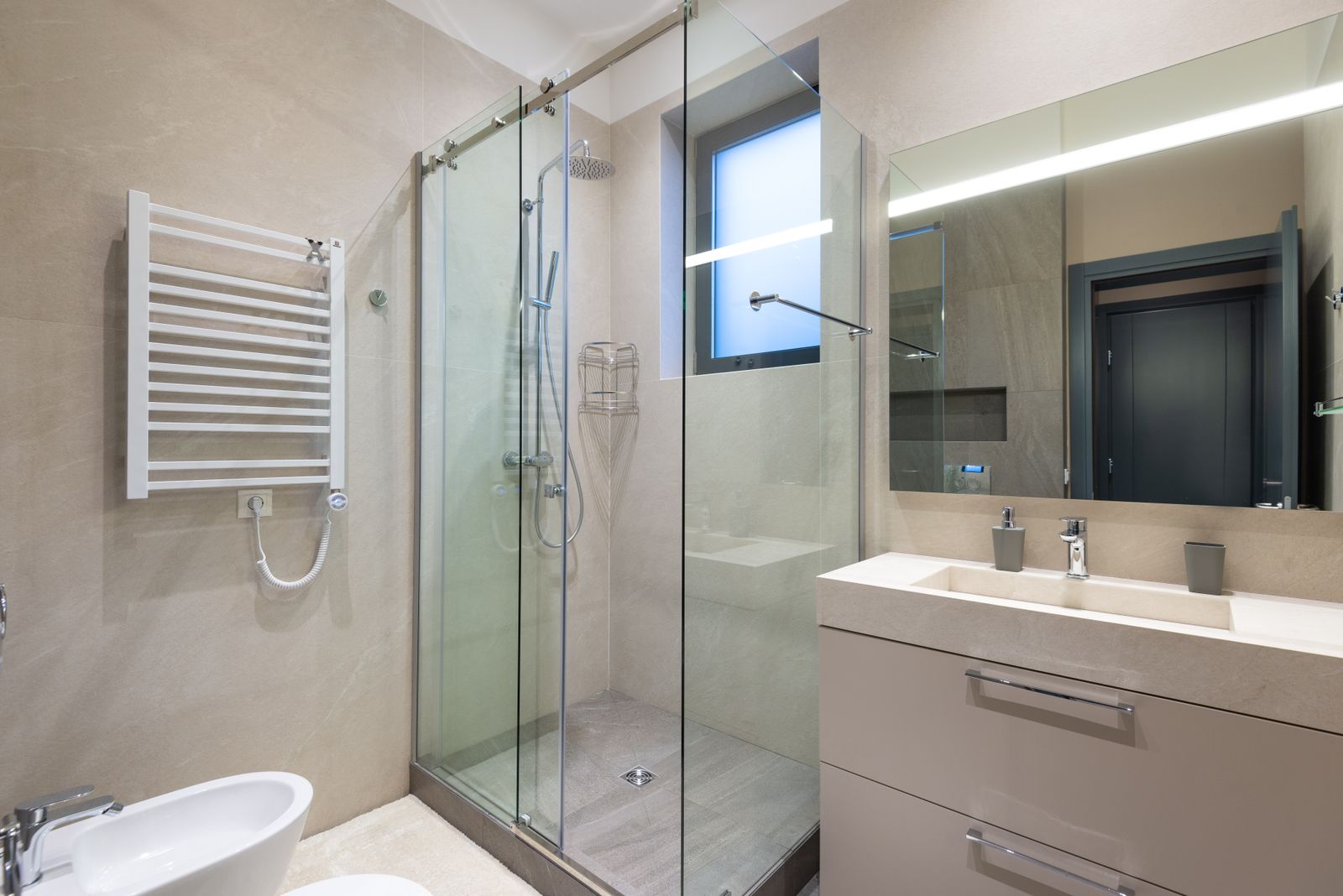
About the images: the header image is a stock photograph. The other pictures in this post come from my video on this topic. Most scenes are AI illustrations generated with Google Gemini, three are stills from AI clips generated with Google Veo, and the cards over them are drawn in code, with figures from the published Cost vs. Value averages and short notes from the codes, the Civil Code and city forms. None of them shows a real home, a listing or a project from the Cost vs. Value study.
Bathroom remodel questions from real hallways
How much does a bathroom remodel return when you sell?
The 2025 Cost vs. Value Report puts the midrange bath remodel in the San Francisco metro at about 32,160 dollars with about 23,733 dollars credited at resale, a 73.8 percent recoup. The report changed its method between editions, so read that as a snapshot, a metro average, not a promise about one house. That is the second best result of the eight indoor projects in this series in those 2025 San Francisco metro numbers, behind only the minor kitchen. In my experience the project also pulls real weight in showings: bathrooms and kitchens are where buyers linger, judge and imagine, so a clean, current bath removes objections even though its resale estimate stays below its cost.
What does a midrange bathroom remodel include?
The studied scope updates an existing 5 by 7 foot bath without moving walls and replaces every fixture: a 30 by 60 inch porcelain on steel tub with a 4 by 4 inch ceramic tile surround, a pressure balanced shower control, a standard white toilet, a solid surface vanity counter with an integral sink, a recessed medicine cabinet with a light, a ceramic tile floor and vinyl wallpaper. The description does not mention moving any fixture, and that is the budget's best friend: in my experience, relocating fixtures is where bathroom budgets balloon. If your remodel quote is wildly above the studied number, the first question to ask is what is moving, and whether it truly needs to.
Should I remodel the bathroom before selling or just refresh it?
Refresh first, remodel only on evidence. In my experience, a refresh (new vanity, faucet, mirror, lighting, hardware, fresh caulk, bright paint) routinely transforms how a dated bath shows for a low four figure spend, and photographs remarkably close to a full remodel; check your city's permit rules first, since Fremont, for one, lists replacing an electrical fixture among the jobs its express electrical permit covers. I recommend the full remodel pre sale only when something is genuinely failing, active leaks, damaged surrounds, or a bath so dated it anchors the whole house in another decade. Otherwise the full remodel, about 32,160 dollars in the 2025 San Francisco metro numbers, is largely a gift to your buyer.

Harv Balu
REALTOR® | GRI, CIPS, PSA, FTBS · REALTY EXPERTS®
CA DRE# 02195792
Read every post in HarvRealtor, my free app, and the words read offline. Download it free from the App Store® (opens in new tab) or Google Play™ (opens in new tab).