You Don't Need 20% Down: The Myth Costing Bay Area Buyers Years
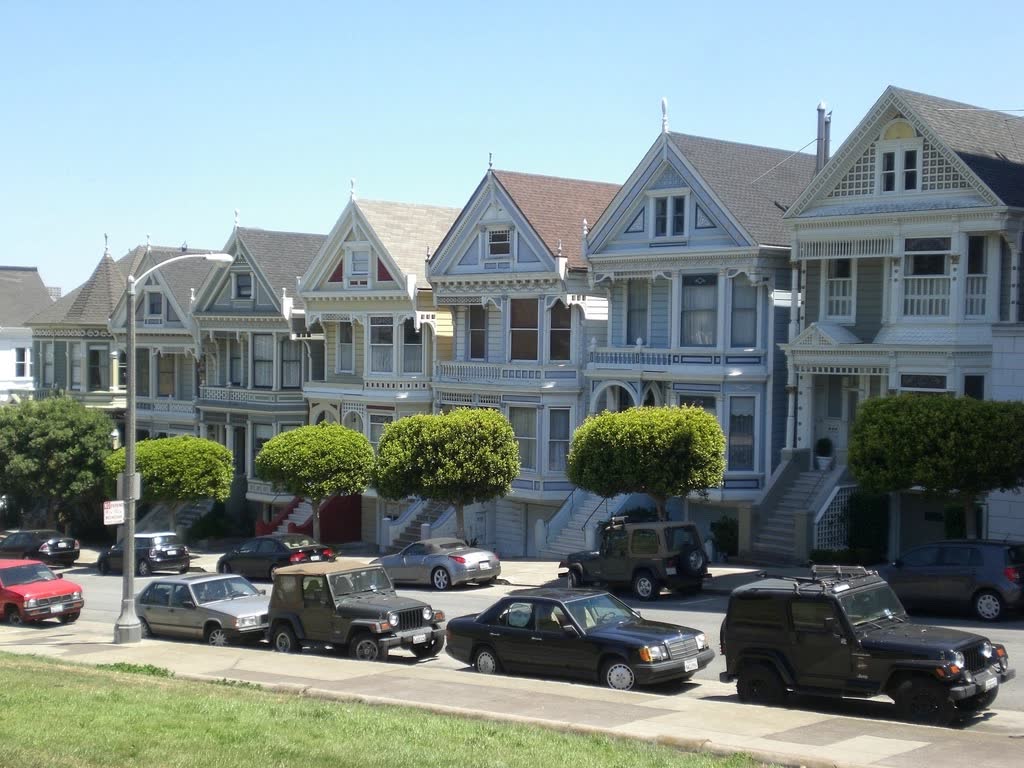
Ask ten renters what it takes to buy a home and most will give you the same number: 20% down. On a typical Bay Area home, that is close to $300,000 in cash. No wonder so many people decide homeownership is years away, or not for them at all. Here is the truth that keeps that fear alive: for most buyers, 20% down was never the rule. It is the single most expensive myth in real estate, and believing it is quietly costing people years of equity.
Prefer to watch? Here is the whole thing in about five minutes.
The myth that keeps renters renting
The number sounds official, so people repeat it. Where does it actually come from? Usually from family. A recent National Association of REALTORS® survey found that 97% of agents are working with buyers who are taking advice from a parent, an aunt, a coworker who bought decades ago. That advice is well meant, and often years out of date.
Here is what that outdated number does to real people. The average age of a first time buyer in the United States just hit an all time high of 38. Not because people in their twenties and early thirties do not want to own. Many of them are ready right now, and they are talking themselves out of it over a down payment figure that does not apply to them.
"That advice could be outdated advice, it could be inaccurate advice." Jessica Lautz, NAR Deputy Chief Economist, on the family guidance so many buyers rely on.
The real numbers tell a different story
The typical home in America now costs more than $400,000. If 20% were truly required, almost no first time buyer could clear the bar. So what are buyers actually putting down?
Around 9%. That is the average down payment for a first time buyer nationwide, less than half the myth. Plenty of buyers go lower than that. The 20% figure is not a floor. It is one option among many, and for most first time buyers it is the wrong one to plan around.
Your real low down payment options
There is not one path into a home. There are several, and each one was built to get qualified buyers in sooner. Here are the big ones.
Two things worth saying plainly. First, more than a third of first time buyers use an FHA or VA loan, so these are not exotic. They are mainstream. Second, down payment assistance from state and local programs is one of the most underused tools out there, simply because buyers do not know it exists. Some of it is career specific. Some has income limits. All of it is worth checking before you assume you cannot afford to buy.
See it for yourself
Numbers on a page are easy to shrug off. So move the slider. Pick a price, and watch the gap between the 20% myth and what you would actually need to get started.
How much do you really need down?
Pick a home price and watch the gap between the 20% myth and what you would actually need to get started.
On a $1,000,000 home, a 3% conventional loan asks for about $30,000 to get started, not the $200,000 the 20% myth demands.
Illustrative only. Each figure is simply the down payment percentage applied to the price you chose. It is not a loan offer, a commitment to lend, or a guarantee of any rate, term, program eligibility, or approval. Loan limits, credit, income, and the property all affect your real number, and at higher price points your available programs and minimum down payment may differ. *The "sooner" figure assumes an illustrative $1,500 saved per month and is for comparison only. Confirm your real numbers with a licensed lender, and let me connect you with one.
What this looks like here at home
Let me make it local, because even within the East Bay, the entry point looks very different from one city to the next.
Take a $1,000,000 home in Hayward. The myth says you need $200,000 down. A 3% conventional loan asks for $30,000. That is not a rounding difference. That is the difference between buying this year and waiting years longer.
Move to a $1,400,000 home in Fremont and the myth balloons to $280,000. Even here, low down payment options bring the entry point down to a fraction of that, often around 5%, though at Bay Area price points your exact program and minimum depend on the loan limits for the county and what a lender approves you for. The headline holds in both cities: the real number to get started is far below 20%. And getting in sooner matters, because in our market well priced homes still move fast, as the latest Fremont market report shows.
The point is not that a smaller down payment is always the right call. It is that you get to choose, with real numbers in front of you, instead of ruling yourself out over a myth.
"But won't I pay mortgage insurance?"
Fair question, and the honest answer is yes, usually. Put down less than 20% on a conventional loan and you will carry private mortgage insurance, PMI, until you build enough equity, at which point it comes off. FHA loans have their own mortgage insurance.
So weigh it. PMI is a real monthly cost. But here is what people miss: waiting years to save a full 20% has a cost too. More rent paid to someone else. More home price appreciation you did not capture. Higher prices and payments if the market climbs while you save. For a lot of buyers, a manageable PMI payment now beats another five years of renting while they chase a number that keeps moving. Run both, do not assume.
How to get ready in the next 90 days
You do not need 20%. You do need to be prepared. This is the short version of the checklist I walk buyers through.
- Know your budget for real. Pull three months of statements and see where your money actually goes. Lenders like to see housing costs land around 25% to 28% of your gross income.
- Check your credit early. Pull your report, fix any errors, and keep balances low. Small moves here can change your rate.
- Trim high interest debt. Your debt to income ratio matters as much as your down payment. Paying down a card can do more than saving another few thousand.
- Gather your paperwork. W-2s, recent pay stubs, and two to four months of bank statements are what a lender needs to pre approve you.
- Ask about help. Down payment assistance, a penalty free IRA withdrawal of up to $10,000 for first time buyers, employer programs, and documented family gifts are all on the table.
- Get pre approved before you shop. It tells you your real number and makes your offer credible when you find the one.
Budget a little extra for closing costs while you are at it, generally 2% to 7% of the price, and you will walk in with no surprises. If you are buying your first home in the area, my first time buyer's guide to Fremont covers the rest of the process step by step.
The bottom line
The 20% rule is a myth, and it is an expensive one. It has convinced a generation of ready buyers that homeownership is further away than it really is. It is not. Between conventional loans at 3%, FHA at 3.5%, zero down VA and USDA loans, and assistance programs most people have never heard of, the real question is not "do I have 20%." It is "which path fits me best."
That is exactly the conversation I have with first time buyers every week, and there is no pressure and no cost to have it. Let me show you your real numbers.
Want to see what is actually on the market in your range right now? Browse live listings anytime at HarvRealtor.com.
Harv Balu, REALTOR® | GRI, CIPS, PSA, FTBS
- Cell / Text: (510) 600-3425
- Email: homes@HarvRealtor.com
- Web: HarvRealtor.com
- REALTY EXPERTS®, 41051 Mission Blvd, Fremont, CA 94539, DRE# 02195792
Disclosures
Loan programs, down payment amounts, and eligibility vary by lender, loan limits, credit, income, and property, and are subject to change. Down payment figures shown here are illustrative and are not a loan offer, a commitment to lend, or a guarantee of any rate, term, or approval. Consult a licensed mortgage professional for numbers specific to your situation. National figures are from the National Association of REALTORS®. Equal Housing Opportunity.
Frequently asked questions about down payments
Do you really not need 20% down to buy a home?
Correct, for most buyers you do not. 20% down is a common myth, not a requirement. Conventional loans allow as little as 3% down, FHA loans start at 3.5%, and VA and USDA loans can go to 0% down for eligible buyers. The average first time buyer in the United States puts down around 9%, less than half the 20% figure most people assume they need.
How much do I actually need to put down on a house in the Bay Area?
It depends on the loan, not on a flat 20% rule. On a $1,000,000 home, 3% down is $30,000 versus $200,000 at 20%. At higher Bay Area price points your exact minimum depends on the county loan limits and what a lender approves, but low down payment options still put the entry point far below 20%. A quick pre approval gives you your real number.
What is the lowest down payment loan available?
VA loans, for veterans, active duty, and eligible spouses, and USDA loans, for eligible areas, can require 0% down. Among widely available options, conventional programs like Conventional 97, HomeReady, and Home Possible start at 3%, and FHA starts at 3.5%.
If I put down less than 20%, do I have to pay PMI?
Usually yes. A conventional loan with less than 20% down carries private mortgage insurance until you reach enough equity, then it drops off. FHA loans have their own mortgage insurance. PMI is a real monthly cost, but it is often far cheaper than waiting years and paying more rent while home prices rise.
Are there down payment assistance programs in California?
Yes. CalHFA and various local and career specific programs can help with down payment and closing costs. Some are aimed at buyers in specific professions such as nurses or first responders, and others have income limits. These programs are widely underused simply because buyers do not know they exist, so it is worth checking before you rule out buying.
How do I get ready to buy if I do not have a big down payment?
Focus on the whole picture, not just cash. Know your budget, check and improve your credit, pay down high interest debt to lower your debt to income ratio, gather your income and bank documents, and get pre approved. Ask about down payment assistance, a penalty free IRA withdrawal of up to $10,000 for first time buyers, and documented gift funds from family.

Harv Balu
REALTOR® | GRI, CIPS, PSA, FTBS · REALTY EXPERTS®
CA DRE# 02195792
Read every post in HarvRealtor, my free app, and the words read offline. Download it free from the App Store® (opens in new tab).