Fair Housing Day 2026 at UC Berkeley, Five Numbers That Rewired My Practice
The keynote, and why the argument landed
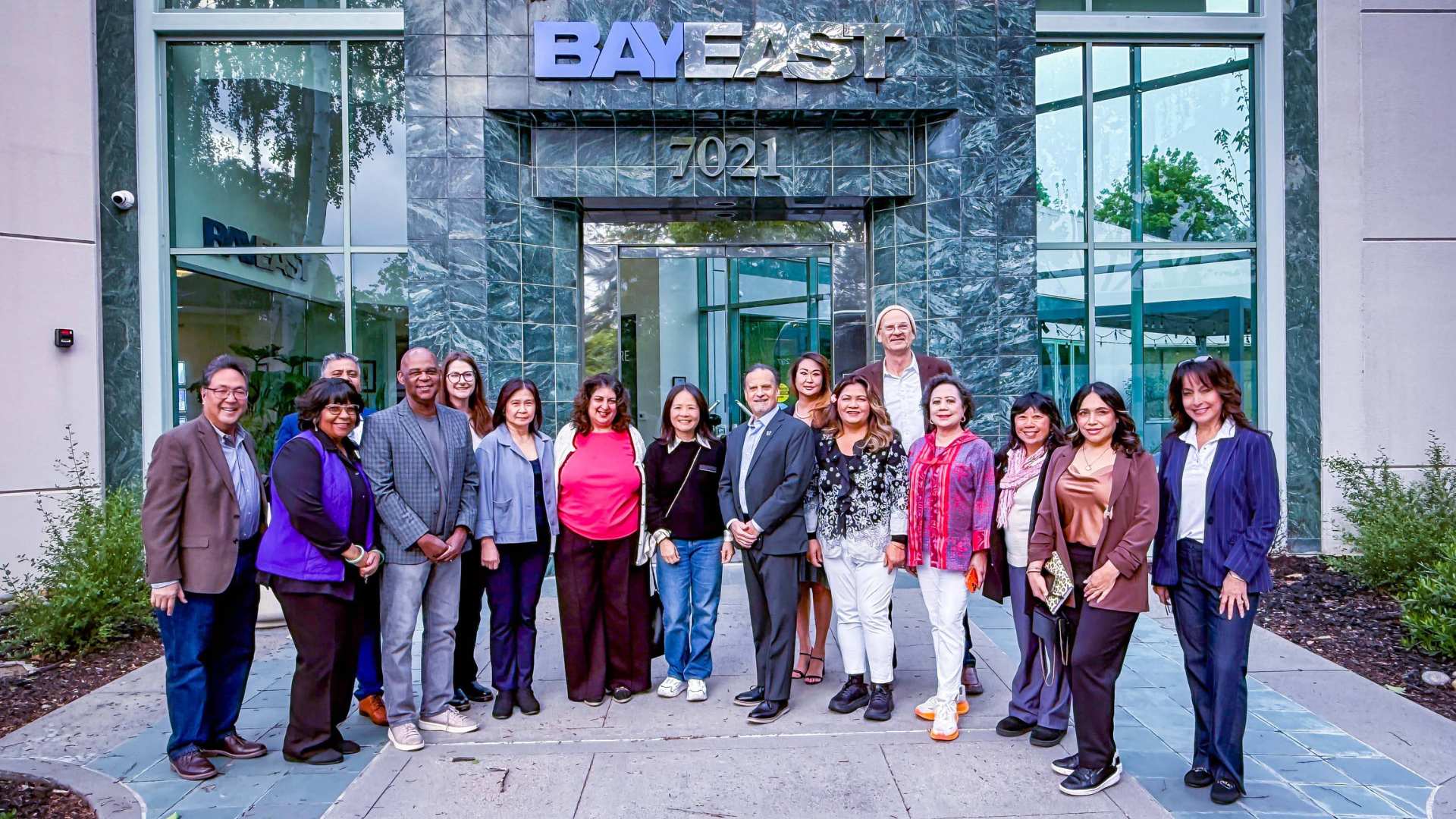
On April 14, I spent the day at UC Berkeley for the 5th Annual California Association of REALTORS® Fair Housing Day. The closing keynote was Oscar Wei, Deputy Chief Economist at C.A.R., and his 11-slide deck did something most CE sessions don't, it reframed the argument.
The pitch was simple: for 15 years, our industry has trained agents on race and sales-side discrimination. Meanwhile, the demographic majority has quietly become "protected classes," and 54.6% of last year's 32,321 fair housing complaints were about disability, not race. The enforcement action is in rentals (83.5%) and on disability. The training has been pointed somewhere else.
I'm writing this for two reasons. First, I want my clients to know I care about this, not as a compliance exercise, but as the core of what "trusted advisor" means. Second, I want Bay Area REALTORS® who weren't in that room to see what I saw, because some of these numbers should rewire how we work.
Here are the five that rewired me.

1. California is already the "protected class" majority
Oscar opened with a demographic table that doesn't get enough airtime. By 2040, California's 85-and-older population is projected to grow +115%, roughly doubling (California Department of Finance, Vintage September 2024). Layer in disability: 28.7% of US adults have at least one disability per the CDC, a larger share than any ethnic group on any of his other slides. Most are invisible.
Then layer in sexual orientation and gender identity. Gen Z identifies as LGBTQ+ at 23.1%, about 12× the 1.8% rate of the Silent Generation (Gallup). That's not a trend. It's a cliff.
Add primary language, protected under California's FEHA, plus immigration status, medical condition, and source of income. When you stack the categories and weight for the Bay Area, the "protected class" framing isn't a corner-case overlay on a mostly-majority transaction. It is the transaction.
What's changing for me: My intake questions. I stopped writing "his and hers" fields a while ago, but I'm also retiring default pronoun assumptions, default marital-status assumptions, and any form that demands immigration documents as a routine part of a housing conversation. If it shouldn't be the deciding factor, it shouldn't be in the form until the client chooses to raise it.
2. The Black-White homeownership gap in California has widened since 1980
This is the slide I can't stop thinking about. Using IPUMS NHGIS data and UC Berkeley's Othering & Belonging Institute numbers, the California White-Black homeownership gap went from 20.45 points in 1980 to 27.46 points in 2020, a +7-point widening over 40 years. Every other gap, Hispanic, AAPI, multiracial, is narrowing or nearly closed. AAPI went from 5.10 to 4.47 points. Near-parity.
The Black-White line didn't just stall. It moved in the wrong direction.
Then slide 9 delivered the punchline I wrote in my notebook twice: Black Californians made up 4% of first-time buyers in 2010. They made up 4% of first-time buyers in 2025 (C.A.R. 2025 Housing Market Survey). Fifteen years of Fair Housing Day, ACT Plan, Fairhaven, bias training. Zero movement at the entry point.
Oscar's chart title had a question mark on the word "Improvement?" He didn't need to say what he was thinking. The question mark did it.
What's changing for me: I'm taking down-payment-assistance programs more seriously than I used to, not as a nice-to-know, but as something I proactively walk every first-time buyer through, especially in East Bay markets where the structural headwinds compound. If you're a first-time buyer reading this, I have a short list of programs I'll hand you on day one.
3. The LGBTQ+ homeownership gap holds at every age
Slide 7 killed the "give it time and it'll equalize" story.
Urban Institute's work on the Household Pulse Survey shows straight/cisgender households owning at 71%, LGBQ households at 50.4%, and transgender or nonbinary households at 47.5%, a 20-to-23-point gap overall. Break it out by age and the gap holds at every bracket. LGBTQ+ 65+ households own at 73%, still eleven points below straight/cis 65+ at 84%, and barely ahead of straight/cis under-35 who are already at 50%.
That's not a cohort effect. That's a structural barrier that moves with each generation rather than fading.
What's changing for me: Escrow and lender briefings get done ahead of the contract, not after. Joint tenancy vs. community property vs. TIC, the right names on every document, pronouns in writing and in speech. I don't want a same-sex couple's first homeownership conversation with me to be the one where they explain the paperwork to me instead of the other way around.

4. Disability is where the enforcement actually lives
This was the closing slide, and it's the one Oscar wanted everybody to walk out thinking about.
Of the 32,321 fair housing complaints filed in 2024 (National Fair Housing Alliance, 2025 Fair Housing Trends Report), 54.6% were disability-based. Race was 15.6%. Sex was 7.1%. National origin was 5.7%. Disability alone was larger than race, sex, and national origin combined, nearly 2:1.
And 83.5% of complaints were in rental transactions. Real estate sales? 2%.
That's not a comfortable number for our side of the business to dismiss. The regulatory eye is mostly on landlords, but the sales-side's "we're not the main target" reasoning is exactly the kind of distance-making that gets an agent mystery-shopped into a California Civil Rights Department file. The enforcement floor is lower than most agents assume, especially around assistance animals (no breed restrictions, no size limits, no pet deposits) and reasonable accommodation requests.
What's changing for me: Every transaction gets a disability-dimension check, because every transaction has one somewhere, we're just not always told. That means accessible-path documentation on listings, clear accommodation-request language in buyer consults, and a written protocol with my lender and escrow partners on service animals, medical conditions, and aging-in-place modifications.
5. AI tenant screening is the 2026 version of redlining
The final slide walked through 90 years of technology in fair housing. 1930s-60s: FHA redlining math, the first algorithmic risk models in American housing, used to formalize racial exclusion. 1970s-90s: mainframe data mining. 2000s: internet MLS, briefly a democratizing force. 2010s: social media ad targeting, which produced the Facebook / HUD lawsuits over discriminatory targeting.
Now: AI and prop-tech tenant screening. Black-box algorithms ingesting eviction records and credit histories that already reflect discrimination, then projecting those patterns forward as "risk."
Generative AI reached ~80% adoption in about 8 years. PCs took 30 (Federal Reserve Bank of St. Louis). Regulators are structurally behind, California's Civil Rights Department issued algorithmic-discrimination regulations in October 2025, with AB 1018 and SB 52 pending, but the tools are already in-market.
"AI tenant screening is the 2026 version of FHA redlining, same algorithmic discrimination, just with better PR.", Oscar Wei, Deputy Chief Economist, C.A.R.
What's changing for me: I ask investor clients what screening service they're using, and I ask tenant-applicant clients what a "score" or "decline" actually means before we accept it. If a human can't explain the decision, a judge will have the same problem later.
The "15-year indictment", and where I land
Oscar closed with a line I've been repeating all week: the 5-year reflection should be called the 15-year indictment. The demographics say California is already the future. The outcome data says fair housing hasn't moved the number that matters most. The enforcement data says the industry's attention and the regulator's attention are pointed at different places.
I think he's right. And I think the answer isn't more performative training, it's protocols, sourcing, and client-level behavior change. Intake forms, accommodation workflows, in-language service, down-payment-assistance routing, AI-screening due diligence, done consistently, at the agent level, across every transaction.
If you're a Bay Area homeowner, buyer, seller, or investor reading this, the takeaway isn't that fair housing is broken and we're all helpless. It's that the work to fix it is granular and it belongs to each of us, and that you should expect the REALTOR® you hire to already be doing it.
Walk through Oscar's full deck
I rebuilt Oscar's 11-slide deck as an interactive site so anyone can click through the charts, tables, and sources at their own pace. Every number above is in there, cited to primary data, C.A.R., Census, PPIC, Gallup, CDC, UC Berkeley's Othering & Belonging Institute, Urban Institute, and NFHA.
And if you want to talk about what any of this means for your transaction, as a buyer, seller, landlord, or investor in the East Bay or South Bay, reach out.
Your Local Real Estate Team

Harv Balu
REALTOR® | GRI, CIPS, PSA, FTBS · REALTY EXPERTS®
CA DRE# 02195792
REALTY EXPERTS® · 41051 Mission Blvd, Fremont, CA 94539